
On Tomatoes, Both Thrown and Served With Wine
What pairs with pomodoro? With 20 bottle recommendations.
It’s been nine days since Caroline and I posted “The Sysco-ification of Wine,” our call-to-arms dealing with shady corporate distribution, wine culture’s lazy “drink what you like” ethos, and why it’s time to break out the pitchforks. Clearly, we struck a lil chord. The comments, both here and on social media, keep coming in hot. I’ve been called a “snob,” a “wanker,” an “asshole,” among other things. “You two argue like evangelical Christians,” whined one wine writer. Prominent Men In Wine have been sliding into my co-author’s DMs (though not mine lol) to mansplain how they disagree with our points. The whole thing has made me slightly worried about Americans’ reading comprehension abilities, but here we are.

Yet here’s the thing. Ever since I hit the publish button, I’ve felt lighter, as though I’ve gotten something heavy off my chest. Like I can finally start my relaxing deep summer beach life. I haven’t worn shoes very much since that post. I’ve been going for long walks on the beach, and watching soccer and tennis and the Phillies when it gets too hot. I’ve been drinking Mexican beer, and listening to the old reggae songs in praise of Jah and sensimilla. My friend Bryan has been making a beach happy hour drink with bourbon, Lillet, and Aperol called the Golden Hour (“not to be confused with a golden shower,” is the groaner dad-joke he makes when mixing them). The Golden Hour has become the cocktail of the summer.
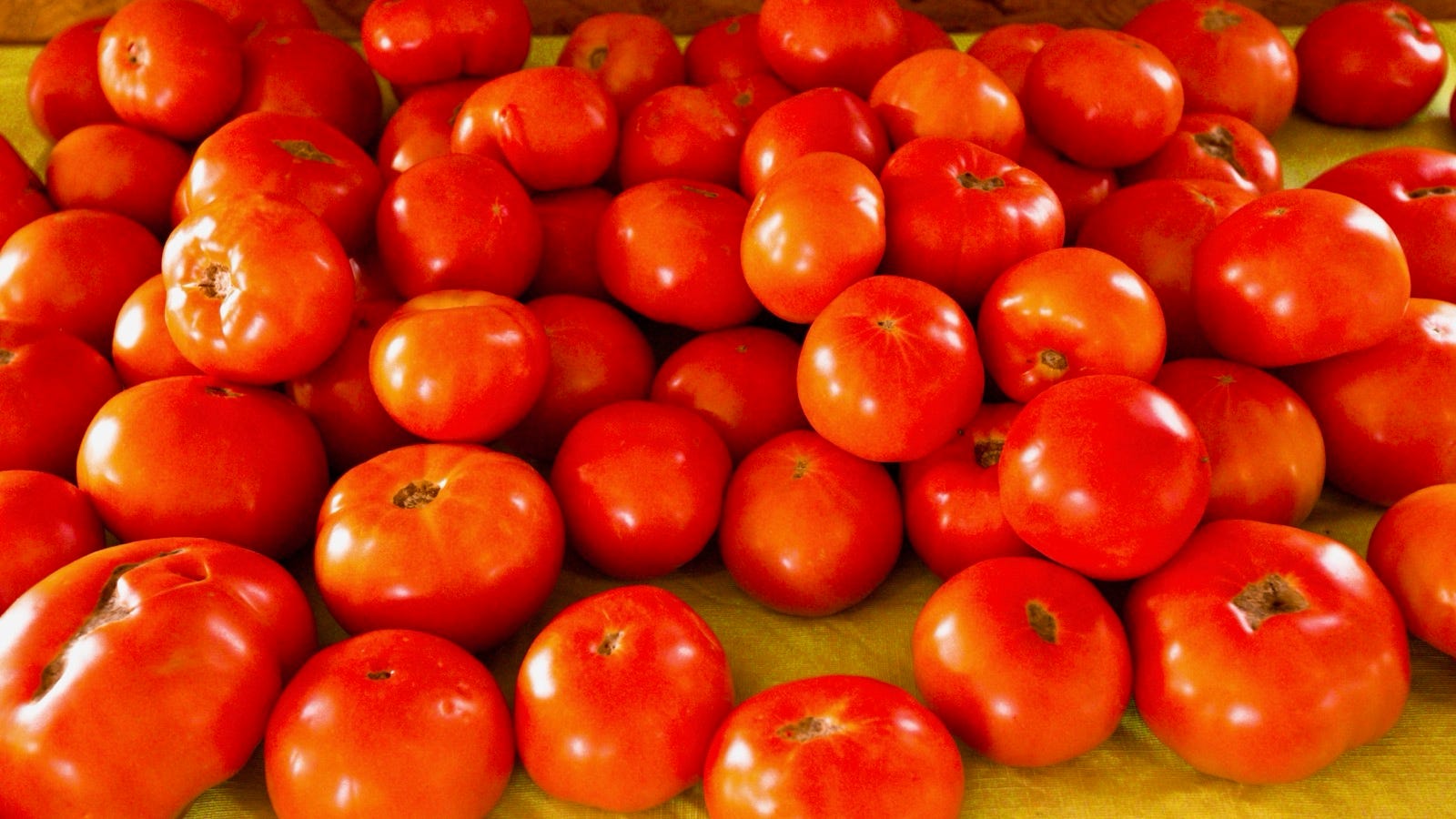
Perhaps the most tangible sign that we’re moving into deep summer is the debut of ripe, juicy local tomatoes in the farm markets. Yes, the corn and the melons and the blueberries and the peaches around here are all wonderful. But it’s the tomatoes that mark the season when I can finally turn my brain off a little bit. The other day the only thing I ate was a tomato-and-pork roll sandwich (mayo and white bread, thank you) and then a tomato risotto that I adapted from David Tanis’ vegetarian recipe (sorry veg friends, I used chicken stock because I am not using…*checks notes*…boiling water…in a risotto). Anyway, stirring tomato risotto is as close to zen as I may get.
Of course, since this is a twice-weekly newsletter, I can’t turn off my brain entirely, and so my summer-addled thoughts inevitably turn to…what wine do I pair with tomatoes.
Yes, I know, wine-and-food pairings can be such a banal topic. A while back I asked, “Are Food & Drink Pairings Ridiculous?” Spoiler alert: They are not more ridiculous than life itself.

Tomatoes are always highlighted as one of the most “challenging” wine pairings, right up there with artichokes, asparagus, and spicy dishes. A lot of ink has been spilled on how to pair tomatoes with wine. The common advice is to match the acidity of the tomatoes with a higher-acid wine, and that seems sound. Dry rosé, and sauvignon blanc pop up. Because of the Italy-tomato connection, barbera and sangiovese are inevitably mentioned. Sometimes a wine with earthy or herbal notes is suggested, syrah or cabernet franc. I’ve even seen off-dry riesling suggested.
For me, when I think about tomatoes and wine, I think about the ones I ate a few years ago at a restaurant in Madrid, called Angelita. I had lunch there with my friend François after visiting the Prado. I wrote about that lunch in my essay “Still Life With Wine.” I had been looking at Juan Sánchez Cotán’s austere bodegón “Still Life With Game, Vegetables and Fruit,” a strange still life from 1602. The objects in the painting, according to the audio tour on my headphones, were “precise and sober, and at the same time, poetic and strange. They highlight everyday simplicity.” About 17th-century still life, the audio tour narrator suggested, in full sincerity and with zero irony, that “one could see the creative hand of God in even the most trivial of objects.”

As for the tomatoes I ate afterwards:
François insisted we order tomatoes as our first course. “These are the best tomatoes you will ever eat in your life,” he insisted. There are not many times in life where someone says something so hyperbolic and it turns out to be true. That two-hour lunch was among the most memorable meals I have eaten. And those tomatoes! They were a variety called Corazón de Buey that were grown in Zamora at the family farm of Angelita’s owners. They were so red, so meaty, so juicy, that one bite nearly brought tears to my eyes. Is it ridiculous to say that one of the most exciting, inspiring things I’ve done in Spain was eat that tomato? In any case, Cotán still life and that tomato are somehow intertwined in my memory.


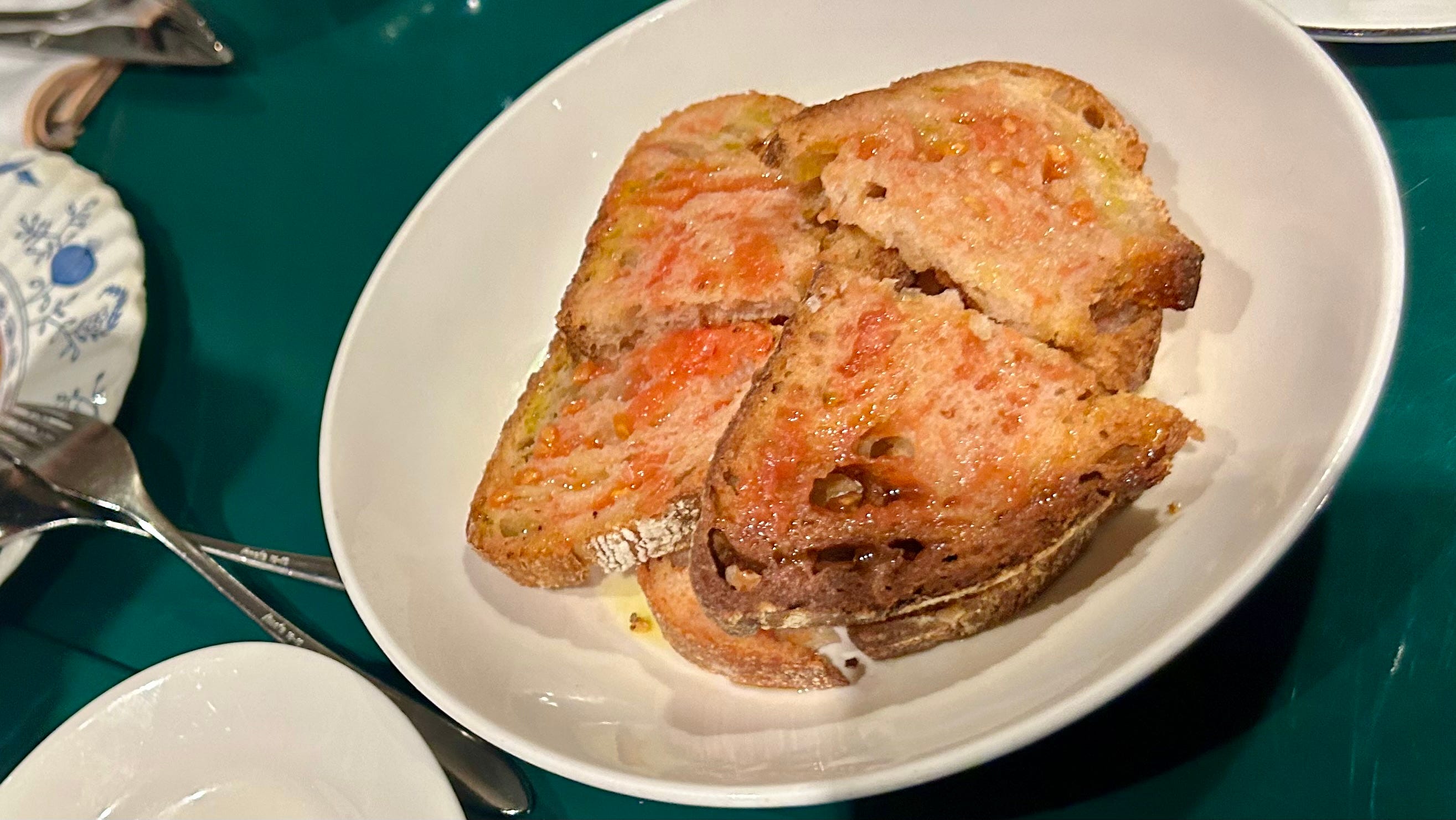
Once I think about that, I’m off and running thinking about Spain and tomatoes. I think about gazpacho or pisto, or about the simple pan amb tomàquet that’s served first at every Catalan restaurant—the small ripe tomatoes you rub vigorously on bread with garlic, a drizzle of oil, and a pinch of salt.
And so any pairing recommendations from me, regarding tomatoes, begins in Spain. I would point you toward Catalonia’s whites from grapes like xarel·lo, malvasia de Sitges, or garnacha blanca. I will even steer you toward albariño and verdejo, though much more carefully. For rosé, I will swing toward Italian grapes, such as montepulciano, or earthy mourvèdre-driven Bandol rosé, as well as some mashup blends of white and red grapes.
The reds are always trickier, but I do like the brighter, juicier, more savory examples of Chianti Classico, as well as ciliegiolo, the local grape of the coastal Tuscany. And then, of course, there is always Chinon, among my dearest wine loves. You see the tasting note descriptor “tomato” more with Chinon than another wine. After all, tomato—as I always point out in talking about Chinon—is a fruit. And so matching fruit on fruit always seems like a sound pairing way to go.
Let us know what you pair with tomatoes!
The Tomato Pairings
The Pa Amb Tomàquet Pairing: Catalan Whites
Celler Pardas Pur Xarel·lo 2022 ($30)
Xarel·lo is swiftly becoming Catalonia’s world-class white grape. From two vineyards that are more than 50 years old and aged half in concrete and half in oak, this is serious xarel·lo, precise, full of tension, with layers of minerality. Aromas of blossom, cut flower, and hints of spice, and a core of saltiness leading to a long finish. An amazing value for an age-worthy white wine of this caliber.
Celler Frisach ‘La Foradada’ 2023 ($28)
‘La Foradada’ is a wonderful example of skin-contact garnacha blanca—herbal, citrusy, tropical. In Catalonia, skin-contact or “orange” wine is not trendy, but rather a traditional style dating back centuries, called brisat. Celler Frisach is in Terra Alta, just over 2 hours from Barcelona. “The most important region in the world for garnacha blanca,” says winemaker Francesc Frisach.
Celler Pardas Blau Cru 2022 ($24)
Malvasia de Sitges (not to be confused with other varieties of Malvasia) is an ancient white grape variety in Catalonia that nearly went extinct—by the 1970s, there was only vineyard remaining. It’s been painstakingly revived by Ramon Parera and Jodri Annan of Celler Pardas, who have shared cuttings with numerous other wineries in Penedès. “Malvasia de Sitges is a difficult grape. That’s why our grandfathers preferred to plant something else,” says Parera. Vibrant, crisp, and intense, with notes of stone fruit and bright citrus with underlying saline and smoke, and a chalky texture and electric acidity.
Pepe Raventos ‘Vinya la Plana’ Malvasia de Sitges ($36)
Another great example of malvasia di Sitges. Delicate, textured, full of herbs, bright lemon, and sea salt. From a tiny single vineyard (1.4 ha) of young vines, with 15 days of skin contact, and aged in foudre for 8 months.
The Gazpacho Pairing: Verdejo and Albariño
Barco del Corneta ‘Cucu’ ($25)
“Verdejo has great potential and is a great grape, but it’s been in bad hands,” Barco del Corneta’s winemaker Félix Crespo Álvarez told me. This bottle is a good (and good value) intro to a vibrant, higher-level of verdejo—zesty, floral, and fresh, with racy acidity.
Esmeralda García SantYuste 2023 ($37)
This is verdejo like you’ve never tasted. A beautiful natural wine from 200-year-old vines at an elevation of more than 2,600 feet, aged in amphora and steel tank, slight skin contact. It’s complex, floral, tropical, with great acidity, notes of nectarine and warm citrus, and an attractive salty backbone.

Granbazán ‘Etiqueta Ambar’ 2024 ($30)
A classic expression of albariño from this benchmark Rias Baixas producer. Made with free-run juice, aged on the lees for five months, ripe and complex, with deep warm citrus, herbal and floral, cut grass, talc with underlying salinity.
Zárate ‘El Palomar’ Albariño 2024 ($59)
A more complex side of albariño, from half-hectare vineyard named after the large granite dovecote that overlooks it. The oldest of Zárate’s plots, with vines dating to around 1850 and grown on their own rootstocks. Fermented in large oak foudre. Slightly tropical, with grapefruit pith and a hint of honeycomb.

Rosato con Pomodoro
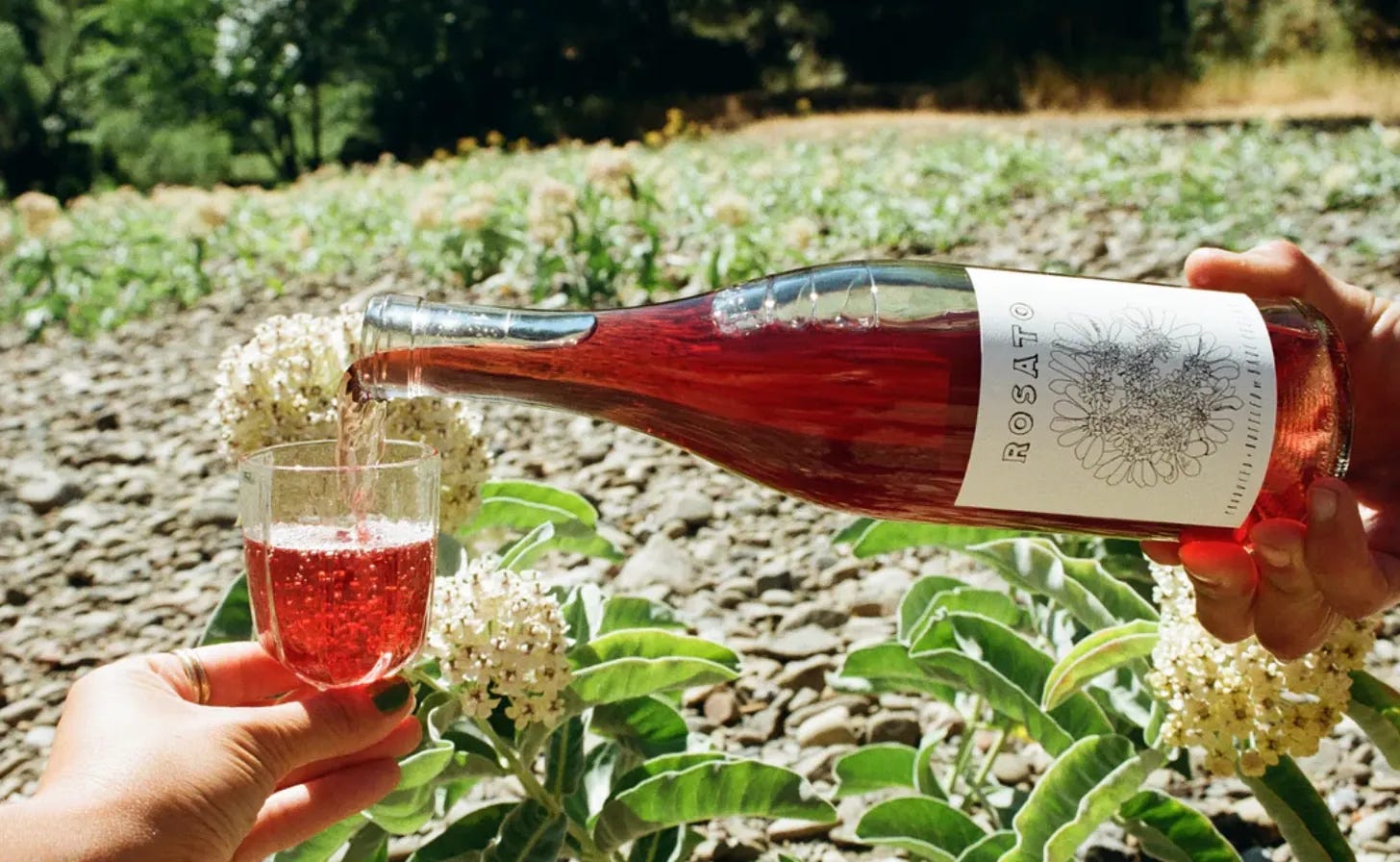
Broc Cellars Rosato 2024 ($30)
The only non-Abruzzo bottle here is from Broc Cellars, one of my favorite California wineries. Made from 100% montepulciano, this rosato is savory, floral and herbal on the nose, with rose, sage, and a hint of forest floor. On the palate it’s deep cherry, maraschino, and even a hit of cherry Coke, with a crisp, dry finish. My friend who I tasted this with called it “a boy’s rosé. It’s giving handlebar mustache.” Broc Cellars gets its montepulciano grapes from Fox Hill, an organic vineyard above the Russian River in Mendocino County, known for its Italian varieties.
Tiberio Cerasuolo d’Abruzzo 2024 ($25)
Sibling winemakers Cristiana and Antonio Tiberio make this lovely rosato from the free-run juice of destemmed, massal selection montepulciano grapes. Ripe strawberry, cherry, and pomegranate, with fresh rose petals and fragrant herbs, a little earthy and spicy. It’s crisp and juicy, but structured, with a nice mineral-driven finish. Good value, and great with all kinds of food.
Château Pradeaux Bandol Rosé 2024 ($32)
Château Pradeaux is a benchmark Bandol winery. This is their flagship rosé blend of 70% mourvèdre, 27% cinsault, and 3% grenache, from the domaine’s younger vines. After a direct pressing of 24 hours, it’s fermented by native yeasts in cement or enameled stainless steel tanks, with no malolactic fermentation to preserve acidity, before it spends some time on the fine lees. Moreish, with concentrated fruit: strawberries on the vine, peaches, ruby red grapefruit, raspberries, dried herbs, salt. A gastronomic rosé, and an incredible value for such an ageworthy wine. —Sarah Parker Jang
Stirm ‘Neptunite’ Rosé 2024 ($25)
One of the best rosés I’ve tasted over the past year or so, from a crazy blend of riesling, chenin blanc, cabernet pfeffer from San Benito County—tart, fruity, earthy, and savory. The chenin comes from 30-year-old vines and the riesling comes from 60-year-old vines.
Christian Tschida Birdscape Pink 2025 ($44)
Anyone who follows my work knows how much I love the wines of Christian Tschida. I had this bottle on numerous occasions, and its quickly become a favorite. So, is this a rosé or a light red? Honestly, who cares? Tschida’s “pink maceration” wine—a mashup blend of blaufränkisch, pinot noir, and a few white varieties—is the dictionary definition of the wine term “crunchy.” Savory, spicy, with notes of dill, tarragon, forest floor, cranberry, pomegranate, and rhubarb. Simply delightful.
Tinto, Rosso, To-may-to, To-mah-to
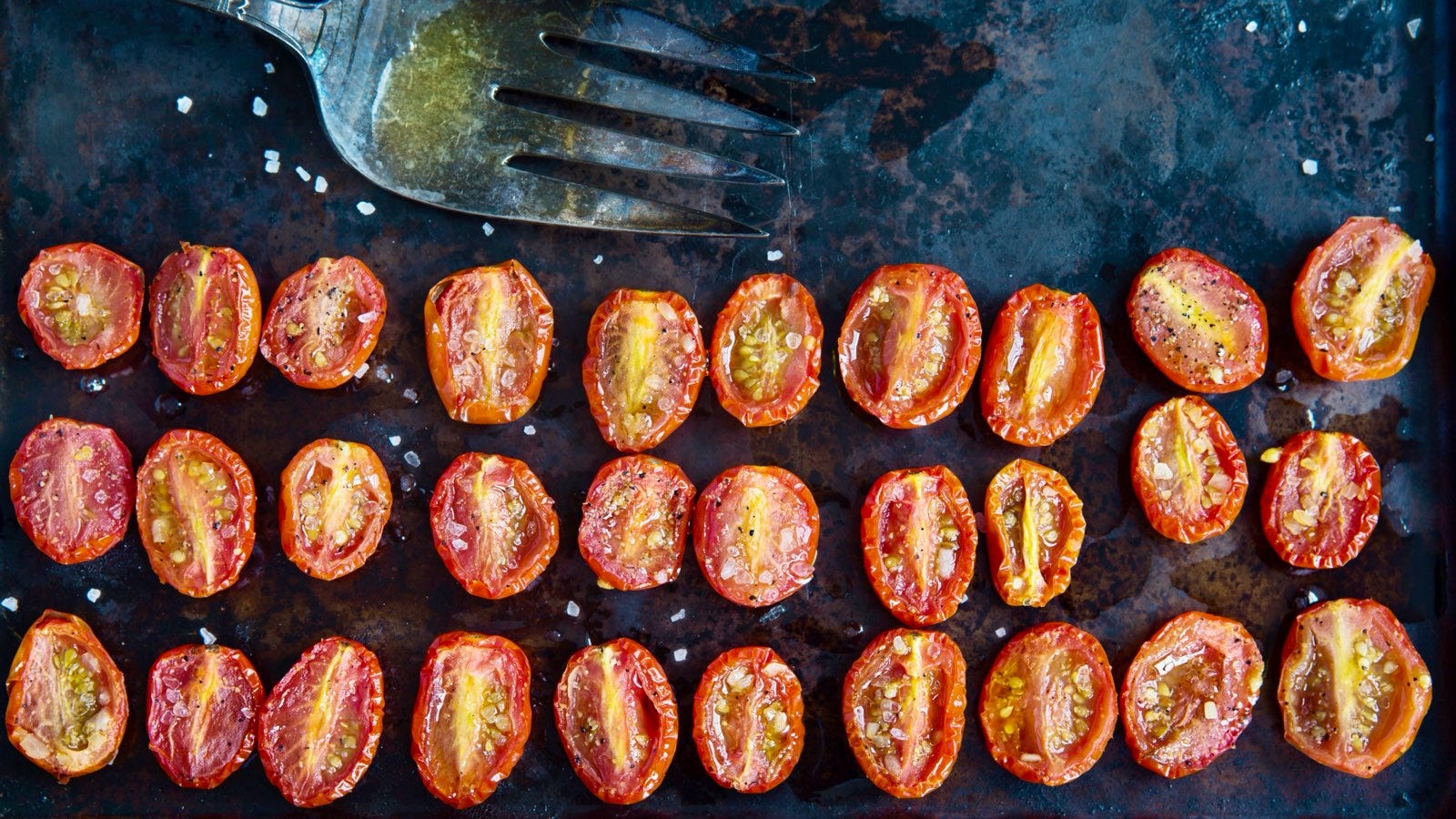
Raúl Moreno 'La Esencia' 2024 ($36)
This field blend from Andalusian experimentalist Raul Moreno presents as a red wine, and drinks like a white wine. A mix of palomino, Pedro Ximénez, and arinto, along with the local red grape tintilla, it’s fermented whole cluster and then aged in amphora.Perfumed and lifted, fresh and vibrant, dense and salty, with notes of blood orange, sour cherry, and a hint of Campari.
Tenuta di Lilliano Chianti Classico 2022 ($20)
How can we have a tomato pairing article without a Chianti Classico? This is one of my favorites from the major Tuscan tasting report I did last year. 90% sangiovese, 5% colorino, 5% merlot, aged in large casks for 12 months. Nose of wild berries, dried herbs, and rose, flavors of black cherry and cherry tomato, and an underlying spice note, and supple tannins.

Castello di Volpaia Chianti Classico 2023 ($28)
A fantastic Chianti that’s fresh, savory, with bright fruit and fragrant flowers on the nose, great energy on the palate, juicy red fruit, and an underlying savory note of cherry tomato and herb. 90% sangiovese, 10% merlot.
Alberto Motta Ciliegiolo Rosso Toscana 2022 ($23)
Ciliegiolo (which takes its name from the Italian word for “cherry”) was once just a grape to blend with sangiovese. Now, one of the most exciting trends in Tuscany is the emergence of red wines in Maremma made from 100 percent ciliegiolo. This delightful, of-the-moment wine from organic producer Alberto Motta is cool, savory, and mineral, but also bursting with juicy cherry (of course), great acidity and balance and a hint of amaro on the finish.
Bernard Baudry ‘Les Granges’ 2024 ($23)
When I think of “tomato” wines, I always think of Chinon. Expressive aromas of dried herb and pepper, with swirling fruity-savory notes of blackberry, grilled tomato, black olive, tobacco, and a spicy finish.Organic, spontaneous fermentation with native yeasts, and aged seven to 10 months in concrete. Amazing value for such a complex wine.
Domaine de la Noblaie ‘Les Chiens-Chiens’ 2022 ($33)
From 30-year-old vines of a vineyard that translates to “The Dogs-Dogs.” An example of understated oak aging in Chinon (this spends 12 months in 400-liter neutral barrels). Textured, serious, dark, and chewy with dried herb, plum, black olive, blistered tomato, and even a hint of espresso. Super complex, and spectacular wine for the price.
And One Tomato Spirit
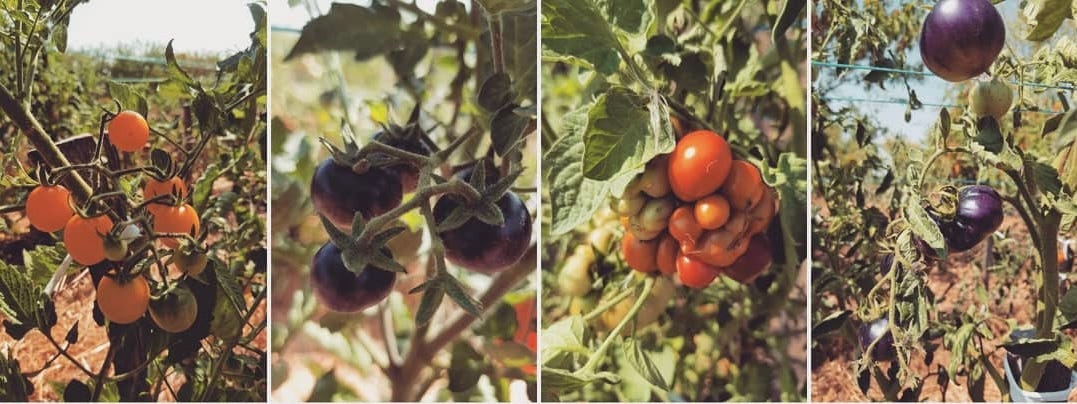
Cazottes Tomates ($70/375 ml)
Cazottes includes more than 280 varieties of tomatoes in this liqueur (18% abv). Handpicked at peak ripeness, they are destemmed and quartered (also by hand), and macerated in Cazottes’s eau de vie—made from Jurançon Noir grapes—for 10 months. It’s redolent of fresh summer tomatoes, olive tapenade, oregano, sultanas, tomato leaf, even a touch of fish sauce. The rich flavor, almost sweet, is balanced by refreshing acidity. It’s bright, saline, and incredibly detailed. There’s unlimited potential here for cocktails and food pairings. It’s also the basis for the best martini in New York. —Sarah Parker Jang

Snobs are good. The world would be a more uniform, uglier, tasteless place without people who are unimpressed with the status quo and think greater aesthetic or olfactory achievements are possible. Without people who think film as a medium can achieve soaring beauty, we'd be stuck with only Marvel movies (forgive me, fans of the movies). Without visionaries who look at our built form and see its potential to dazzle us, we'd be stuck with drab fast casual apartment buildings and Khruschyovkas. Not a world I would want to live in.
I think people have such negative reactions to "snobs" (or really anyone who insists there are better things out there to enjoy) for one of two reasons. The first is they often just don't actually care about having refined consumption for some category of good/service (I'll admit that I am to a small degree this way with tea), so when a snob comes around and puts down whatever replacement-level thing they're buying, they feel as if they're being forced to care about something that wasn't even on their radar. The second, I suspect, is that people often have an internal fear that they're part of the lowest common denominator, something they want to view as beneath them. When someone comes by and says that there are, in fact, better things, their position in the consumption refinement ladder is put into sharp focus. I think even people who *are* into good wine aren't free from this, as there's always a ladder of people with *more* refined taste that they might be intimidated by.
Not everyone who's like this is trapped though! Some people are more than willing to open their mind when you approach them with a little tact and cater to their curiosity. None of this matters for a written article, of course, and I think the people mad at your are just annoying. Keep doing what you're doing.