
"There's Always a New Wave"
What Rioja teaches us about what's "classic," what's "traditional," and what's "revolutionary."
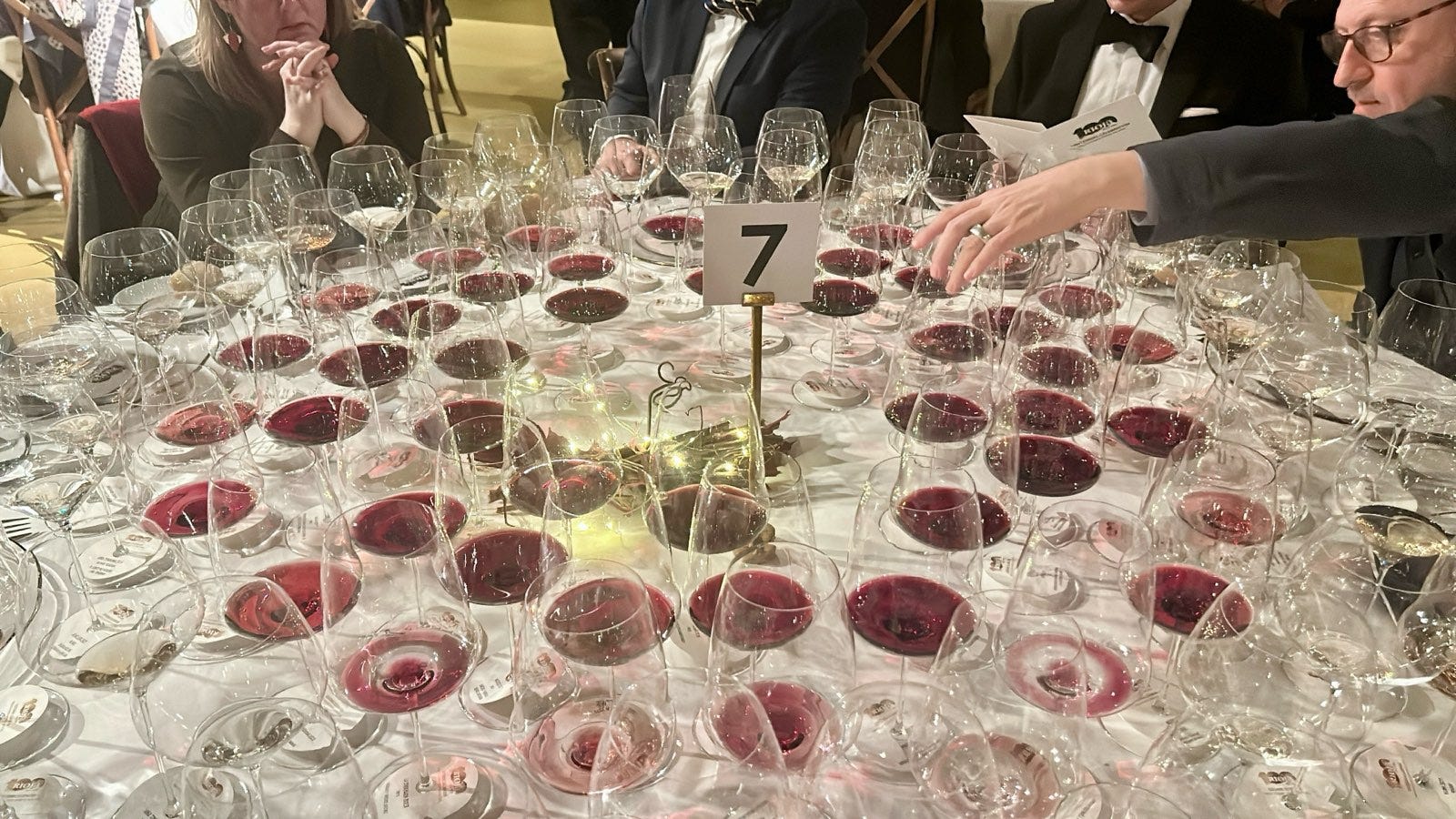
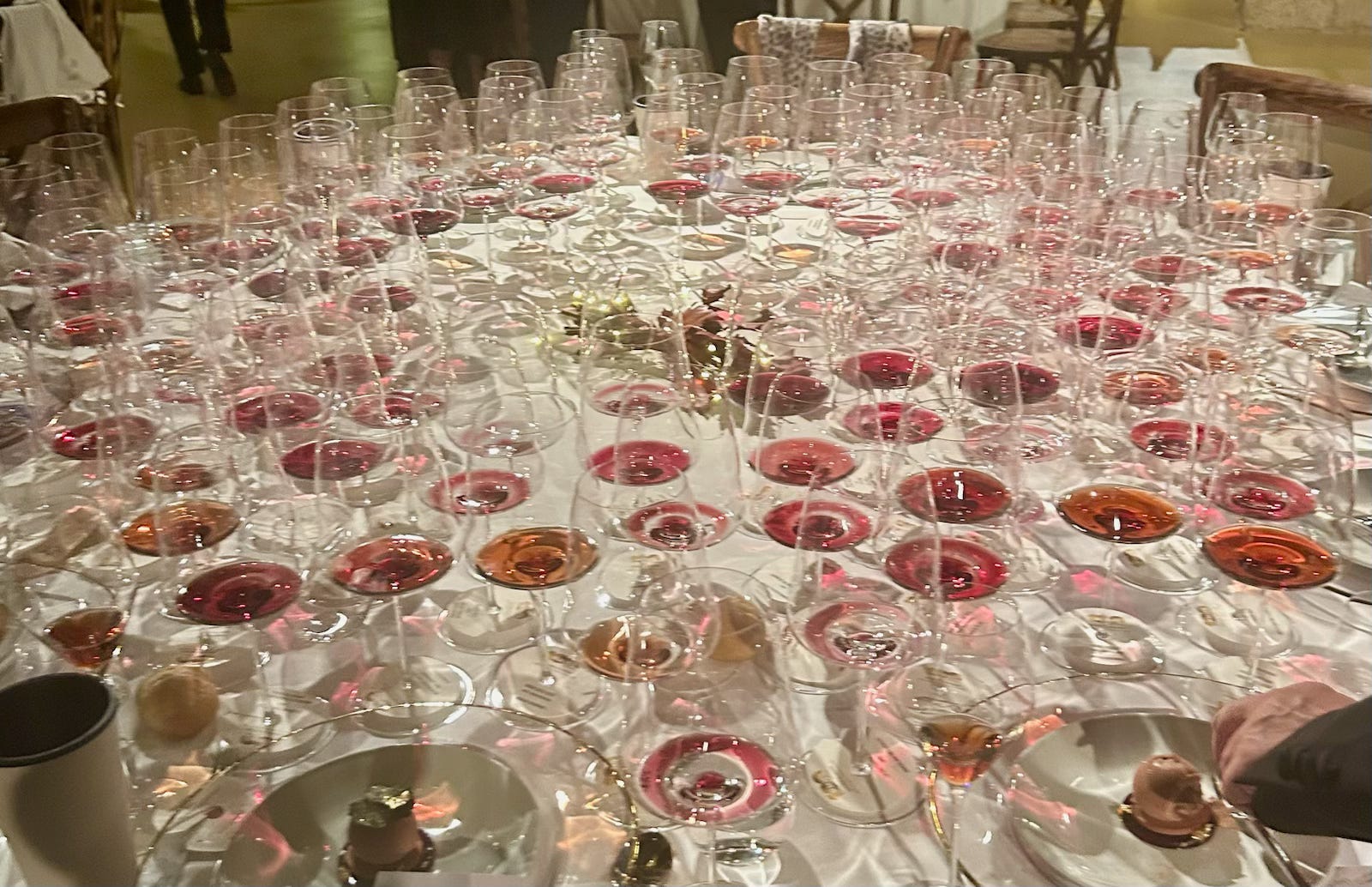
I was definitely the worst-dressed person at the gala dinner for the Rioja Centennial earlier this year. The event, thrown by the Rioja DOCa to celebrate the appellation’s 100th anniversary, could only be described as lavish: elegantly hosted at the Vivanco Museum of Wine Culture, with food by the region’s five Michelin-starred restaurants (Venta Moncalvillo, Ikaro, Ajonegro, El Portal de Echaurren, and Nublo), over 100 wines at the cocktail hour and a dinner table laden with 15 more stunning, classic Rioja pours.
I’d already been in Spain for a few weeks when I received an email explaining that the gala was to be black tie and I’d need a smoking (what they call a tuxedo in Spain). What a darned coincidence!—I’d not packed my smoking into my carry-on bag (note: I do not own a tuxedo). I bought a cheap dark suit at a vintage store in Barcelona, and then a white dress shirt and shiny black tie at a clothing stall next to the produce vendors at the Mercat de Sant Antoni. But on the evening of the event, as I was dressing, I realized the suit was ill-fitting, and the white shirt was so sheer that you could see my chest hair through the fabric. Luckily, there was a Zara across the street from my hotel in Logroño. With minutes to spare, I outfitted myself in a passable fast-fashion outfit, accessorized with worn black New Balance sneakers.
If my attire hadn’t identified me as an outlier, my body of work on Rioja surely did. Over the past five years, I’ve chronicled the new wave of younger winemakers who are redefining what Rioja wine means. In numerous articles, I’ve drawn a line in the sand, advocating for the new wave and throwing a bit of shade on the classic, old-school Rioja wines.

For years, [we’ve] been conditioned to think one way about Rioja, all based on barrel aging: crianza, reserva, gran reserva. For too many wine lovers, Rioja means a big, oaky red that’s reliable but unexciting, especially in an era when big, oaky reds aren’t in fashion.
The wine from Rioja that I’m excited about is something completely different: freshness and energy over wood and power, cool wines grown at higher altitudes, blends of several grapes over monovarietal tempranillo, a commitment to organic or biodynamic farming, and, most importantly, a sense of place that’s not dictated by barrel aging…
The new generation largely eschews the traditional Rioja aging designations of crianza, reserva, and gran reserva. “If you put the wine in a barrel as long as the regulations say, you will lose all the fruit, all the freshness, everything that’s interesting about the wine,” says Sandra Bravo of Sierra de Toloño, whose first vintage was in 2012. Most of the new-wave producers mostly choose to bottle as cosecha or genérico (meaning no aging requirements).
At times, Rioja’s new-wave winemakers suggest a revolutionary air. Of Rioja’s crianza system, one winemaker told me: “We need to destroy this system and start over.” Of its oaky wines, another winemaker told me: “Rioja has become a flavor, not a region.”
The new wave has pushed Rioja to focus on terroir over cellar aging. Oxer Bastegieta, who arrived in Rioja from Basque Country in 2009 and now makes some of the region’s most coveted bottles, told me:
“Nowhere else in the world has the old vineyards that we have here in Rioja—some of the oldest vines in the world. The problem is that people here don’t believe in themselves. There are so many mediocre wines here because people don’t believe they can make better. They are standing in front of the best vineyards in the world. I believed it from the first fucking moment I got here.”
Of course, there’s always something magnetic and attractive about revolutionaries. For a romantic like me, it’s easy to be drawn to the seeming moral clarity and fearlessness of the rebel.
Having cast my lot with the new wave, it was slightly unnerving to be sitting, poorly dressed, at a table teeming with a who’s-who of classic, traditional Rioja wines:
2021 Sierra Cantabria Mágico
2020 Marqués de Riscal ‘Baron de Chirel’
2018 CVNE Monopole Clásico Gran Reserva
2016 Bodega Contador
2014 López de Heredia Viña Tondonia Gran Reserva\
2011 La Rioja Alta Gran Reserva 890
1978 Bilbaínas ‘Gran Zaco’
1964 Bodegas Riojanas Monte Real Gran Reserva.
I sat next to Álvaro Palacios, the winemaker who’d made his reputation among the new wave in Priorat in the 1990s, with powerful, full-throttled reds. Álvaro was at the Centennial Celebration to present his gorgeous, benchmark 2023 Quiñón de Valdelareina, made from 103-year-old vines of garnacha from his family’s Palacios Remondo estate in Rioja Oriental.
This was followed by the only wine at the gala that I would consider to be “new-wave”: 2023 Artuke ‘La Condenada’ —among Spain’s greatest reds, a field blend from vines planted in 1920. In his presentation, Artuke’s winemaker Arturo de Miguel, cited Álvaro as a role model.
As everyone at the table swooned over the Artuke, I asked Álvaro what he thought of Rioja’s new wave, and he said with a wink and a shrug, “There’s always a new wave.”


There’s always a new wave. That statement has stayed with me in the months since the Rioja Centennial Celebration. It’s true: All of the world’s great established wine regions eventually go through a generational shift, a reconsideration of the past. A reigning style has always received critical acclaim. But at some point, it becomes stodgy, outdated—your grandfather’s wine. A restlessness among the younger generation stirs. Ideas filter in from other regions. A new philosophy emerges. But when that happens, what do we do with the great wines of the “old wave”?
Ironically, those big 1990s “new wave” Priorat wines of Álvaro Palacios and his contemporaries—which became the darlings of critics like Robert Parker—now feel out of fashion in 2026. I can remember tasting Álvaro Palacios’s L’Ermita (priced at $1,300 a bottle) at a tasting of baller Priorat during Barcelona Wine Week a few years ago. This was a high-octane grand tasting, full of muscle and machismo, and I had to chuckle when the guy moderating told the audience that one bottle—Terroir al Límit “Les Manyes,” from the newest of Priorat’s new wave, awarded 100 points by several critics—was “muy feminina.”
Perhaps this is the way things will always go with wine, each generation endlessly casting shade on each other, back and forth. Over the years, I’ve certainly done my share to fuel this sort of intergenerational antagonism. So maybe it’s hypocritical for me to say this, but I’m starting to wonder if our framing of wine as “new wave versus old wave” is misguided.
For instance, what does talk of new-wave-versus-old-wave do for our appreciation of a stunning bottle like the 1978 Bodegas Bilbaínas ‘Gran Zaco’ that was poured at the Rioja gala, a profound gran reserva that spent nearly a decade aging in American oak. By our stupid, cool-kid 2026 wine standards, this wine would be ignored. But the 1978 Gran Zaco was impossible to ignore and simply brilliant, combining freshness with unique flavors of bergamot, soy sauce, cigar wrapper, and antique furniture varnish. It left a deep impression on me.
What does a new-school-versus-old-school framing do for our understanding of Remírez de Ganuza’s breathtaking 2018 Olagar Gran Reserva? It’s one of Rioja’s greatest white wines, from a 40-year-old vineyard sited 2,300 feet above sea level. It spends nearly a year in oak, and the nose is almost chenin-blanc-like, with aromas of bees wax, lavender, and yellow apple. On the palate, there’s ripe apple and pear, and an underlying and appealing waxy, unctuous quality. Is it Rioja by way of trendy Loire Valley? Or is it something else entirely?
I regard Remírez de Ganuza’s winemaker, Jesús Mendoza, among Rioja’s new wave. Yet Mendoza describes Remírez de Ganuza like this: “of the modern side we are the most classic, and of the classic side, we are the most modern.”
Of course, in even setting the terms of a “new wave,” the term new is also up for debate. “People say, ‘Oh, you’re the new style of Rioja,’ but we’re actually the real classic style,” Arturo de Miguel of Artuke once told me. “People think new oak and vanilla is the classic style. But it’s not. Consider us as the traditional way they worked a hundred years ago.”
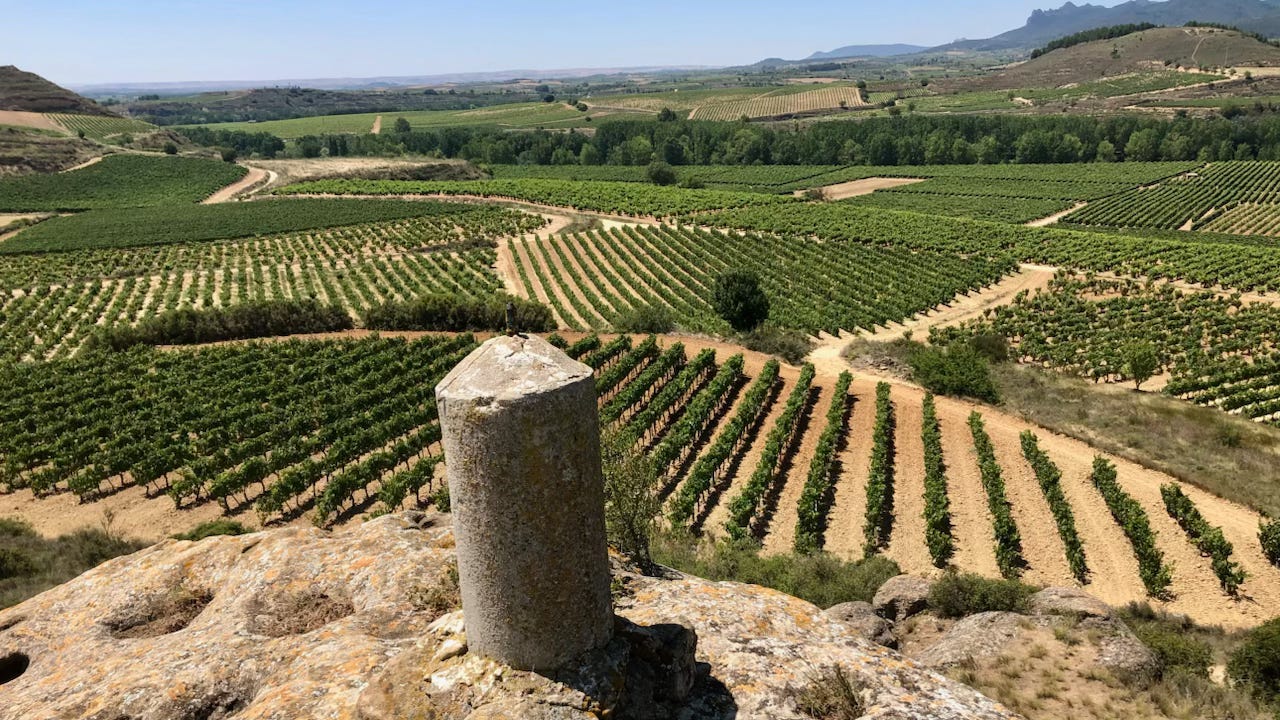
The Rioja we think we know—the “old wave”—really only dates to the late 19th century. When the phylloxera plague devastated France, Bordeaux needed wine to sell and looked south to Rioja. Many important historic wineries, such as Muga, CVNE, López de Heredia, and La Rioja Alta, operate in the area near the old train station in Haro, which was built during that era to connect to Bordeaux. So is that 19th-century French influence really the “classic” or “traditional” style—in a centuries-old wine region that dates back to the Phoenicians?
The real issue in Rioja isn’t new versus old. The real conflict—as it is for wine regions around the world—is quality wines versus manipulated industrial wines. Rioja’s wine industry transformed during the mid-20th century, as growers started cooperatives and the traditional small cellars disappeared after the Spanish Civil War. By the late 20th century, growers in Rioja were ripping out nearly all other grapes and planting tempranillo, often in places it should not be planted. Today, tempranillo accounts for more than 80 percent of all vines, making the region basically a monoculture. The area under vine in the region has grown from around 38,000 hectares in 1985 to over 66,000 hectares today, an increase of more than 70 percent in four decades. In 2023, there were about 150 million liters of bulk wine, unwanted by the market, sitting in cellars. There’s simply too much middling wine, and it’s created a crisis.

Earlier in the day of the Rioja Centennial gala, there had been a grand “prestige” tasting of two dozen benchmark wines. The tasting was organized and emceed by Pedro Ballesteros, a legendary Spanish Master of Wine, who insisted there was no particular order to the lineup. “Order destroys beauty,” Ballesteros said.
I was surprised to see how many “new wave producers” had been included in this anniversary tasting. These were standout bottles such as Jose Gil’s 2024 El Bardallo (“the kind of wine people like to drink now,” said Ballesteros), Bodegas Luis Cañas’ bottling of 100 percent benedicto, a historic, nearly-lost grape, and Miguel Merino’s 2022 La Loma, an elegant, precise blend of tempranillo and garnacha, which Ballesteros described as “one of the most moving wines in Rioja.”
Those new-wave wines shared the stage with classic such as 2021 CVNE ‘Imperial’ Gran Reserva, 2008 Contino Viña del Olivo (“the first single vineyard wine in Spain”), 2004 López de Heredia Viña Tondonia, 1986 Marqués de Murrieta Castillo de Ygay, and 1964 Faustino I (considered Rioja’s greatest 20th century vintage).
The showstopper, however, was the 1956 vintage of Marqués de Riscal, so deep, meaty, and savory, and yet so much freshness for a 70-year-old wine. We maybe now think of Marqués de Riscal as a wine factory, cranking out more than six million bottles a year, or maybe its flashy, garish Frank Gehry-designed hotel. But only a fool who doesn’t like wine could taste that 1956 and not appreciate its beauty. “They invented Rioja,” Ballesteros said. “This was not a classic region before them.”
The tasting, Ballesteros insisted numerous times, was about expressing Rioja’s “diversity” of styles. Perhaps it’s easy to roll one’s eyes about tossing a loaded term like “diversity” into a wine tasting. But his larger point stands. “To say ‘Rioja’ means nothing,” he told the audience. How can one sum up “Rioja” in an easy, orderly fashion? A region like Rioja is big enough and great enough to embrace both the new wave and the old wave of quality wines.
There’s always a new wave. I may never own a tuxedo, but I hope I live long enough to see what the next new wave will be, as well as the one after that.
Look for my report on my top-25 favorite “new wave” Rioja wines, coming next Friday, for paid subscribers only.


Re: “We need to destroy this system and start over.” Another winemaker reportedly said of Rioja’s oak-aged wines, “Rioja has become a flavor, not a region.”
This is rather like a Tuscan winemaker arguing that, because Brunello has become associated with a particular style of Sangiovese and extended aging, its traditional classification system should be destroyed. Rioja’s traditional character is not an unfortunate accident that needs to be dismantled. It is the product of terroir, the natural greatness of Tempranillo, and a long-established approach to maturation in oak.
That combination is one reason the best Spanish reds can hold their own against great Cabernet-based wines from Bordeaux and California—often at substantially lower prices. Oak aging is costly, but more importantly, it can give Tempranillo complexity, structure, and longevity. Some varieties may be at their best with little or no oak; Tempranillo, in my experience, is rarely one of them.
There is certainly room in Rioja for experimentation—with other varieties, different vessels, and less oak. But innovation does not require treating the region’s traditional style as a mistake. Revolutionary winemakers should be free to make the wines they want. They should also recognize that many wine drinkers value Rioja precisely for the character they seem determined to overthrow.
I love that you didn't wear a tux, and I love that you found some of the traditional, oaky Gran Reserva wines to be showstoppers.