
Riding Rioja’s New Wave
A new generation of winemakers in Rioja is remaking Spain’s greatest wine region. Plus 19 bottle recommendations.

People often ask me what wines I’m most excited about, and over the past few years I’ve never hesitated in my answer: new-wave Rioja. The generational shift in winemaking that’s happening in Rioja is one of the most dynamic stories in wine.
Too often, though, I can tell that this answer disappoints people—particularly those deep inside the wine scene. For years, they’ve been conditioned to think one way about Rioja, all based on barrel aging: crianza, reserva, gran reserva. For too many wine lovers, Rioja means a big, oaky red that’s reliable but unexciting, especially in an era when big, oaky reds aren’t in fashion.
The wine from Rioja that I’m excited about is something completely different: freshness and energy over wood and power, cool wines grown at higher altitudes, blends of several grapes over monovarietal tempranillo, a commitment to organic or biodynamic farming, and, most importantly, a sense of place that’s not dictated by barrel aging. But this new-wave Rioja has been slow to gain traction, especially in the U.S.
“The problem is that too many sommeliers are still saying, ‘Rioja is boring,’” Arturo de Miguel of Artuke told me, over steaming bowls of rustic potato-and-chorizo Riojan stew in his small tasting room in the village of Baños de Ebro. He seemed exasperated—as I often am—by the outdated perception of Rioja that persists in the wine business. “We need people to explain these wines,” he said.
By “these wines,” Arturo means the sort of Rioja that he and his brother Kike make, with blends of tempranillo, garnacha, graciano, and mazuelo (and often also with white grapes) grown in decades-old, high-elevation vineyards. These are exactly the kinds of fresh, bright, mineral, and complex wines that contemporary wine lovers prefer right now. If you care about scores, the past two vintages of Artuke’s top single-vineyard La Condenada have been awarded 100 points by the U.K. critic Tim Atkin, who called it “one of the world’s greatest reds.” I agree, but even Artuke’s widely available $15 carbonic maceration blend of tempranillo with a smidge of viura is delicious, and an excellent choice for a Tuesday night wine.
After we’d tasted the 2022 vintage of La Condenada—a field blend from a small parcel in a vineyard planted in 1920—Arturo wanted to open something older. He chose a 2007 bottling called K4 (it’s since been renamed El Escolladero). “This was our first single-vineyard wine,” he told me, with a warm smile. This 2007 was full of spice, forest floor, dusty leather, something animal, all those classic old Rioja notes—the kind that many sommeliers and wine buyers apparently find boring. It was lovely, but very different from what’s come to be known as Artuke’s style. Back then, they aged in smaller oak barrels, using newer wood.
“During my studies, my professors were very influenced by the Jay Miller style,” Arturo said, referring to the once-powerful critic who reviewed Spain for Robert Parker’s Wine Advocate, and whose influence still persists for wineries making big, oaky reds. During the mid-2010s, Arturo and Kike decided that new oak barrels didn’t work, and the winery’s current style began to emerge. “For me, now, this is a little too oaky,” Artuke said, as we tasted his 2007. “But we need to understand our past.”

A reconsideration of the past—and the inevitable evolution and innovation that follows such reconsideration—is exactly what’s happening in Rioja. All the world’s great established wine regions eventually go through a similar generational shift. A reigning style has always received critical acclaim. But at some point, it becomes stodgy, outdated—your grandfather’s wine. A restlessness among the younger generation stirs. Ideas filter in from other regions. A new philosophy emerges.
The biggest development at the appellation level is that Rioja is finally focusing on terroir. In 2017, the Rioja DOCa officially unveiled a new system of “grand cru” single vineyards, Viñedos Singulares. They also permitted local villages to be listed on the label, so now important wine-growing towns such as Laguardia, Labastida, San Vicente de la Sonsierra, Lanciego, Baños de Ebro, Villabuena, and others are finally winning well-deserved attention. There’s also a clearer geographic divide coming into focus between Rioja Alavesa (to the north, in Basque Country) and Rioja Alta on the other side of the Ebro River, as well as Rioja Oriental to the east and south. “There are so many more people now trying to show the diversity of Rioja. People want to show more about the place, less about the aging,” says Neza Skrt of Aiurri.
The new generation largely eschews the traditional Rioja aging designations of crianza, reserva, and gran reserva. “If you put the wine in a barrel as long as the regulations say, you will lose all the fruit, all the freshness, everything that’s interesting about the wine,” says Sandra Bravo of Sierra de Toloño, whose first vintage was in 2012. Most of the new-wave producers mostly choose to bottle as cosecha or genérico (meaning no aging requirements).
Of course, in talking about a “new wave,” the term new is also up for debate. “People say, ‘Oh, you’re the new style of Rioja,’ but we’re actually the real classic style,” Arturo de Miguel says. “People think new oak and vanilla is the classic style. But it’s not. Consider us as the traditional way they worked a hundred years ago.”
Whether the emerging style is new, or old, or new again, there’s no debating the winemaking talent. Anyone creating a wine list, or building a cellar, should check out new-wave producers like Artuke, Sierra de Toloño, Oxer Wines, Miguel Merino, Arizcuren, José Gil, Tentenublo, or Elena Corzana.
Among the godfathers of this movement is Abel Mendoza, who has made wine in San Vicente de la Sonsierra with his wife Maite in the “new style” since 1989. But many well-established estates—among them Remírez de Ganuza, Bodegas Valdemar, and Pujanza, Gómez Cruzado—are employing more new-style approaches. “What is classic and what is modern?” asked Jesús Mendoza of Remírez de Ganuza when I visited last month. Mendoza poured a carbonic maceration whole-cluster red, a fresh, cool high-altitude 100 percent garnacha, as well as some unbelievable whites. “Of the modern side we are the most classic, and of the classic side, we are the most modern,” he says.
To be clear, we’re talking about a small slice of Rioja when we talk about its new wave. The wine industry here is a machine, churning out 270 million liters each year, encompassing nearly 600 wineries spanning more than 66,000 hectares (up from 38,000 in 1985). Yet only 40 wineries produce more than 70 percent of the region’s wine. Roberto Oliván of Tentenublo describes the kinds of wines that come out of such an industry bluntly: “Rioja has become a flavor, not a region.”
History and Crisis
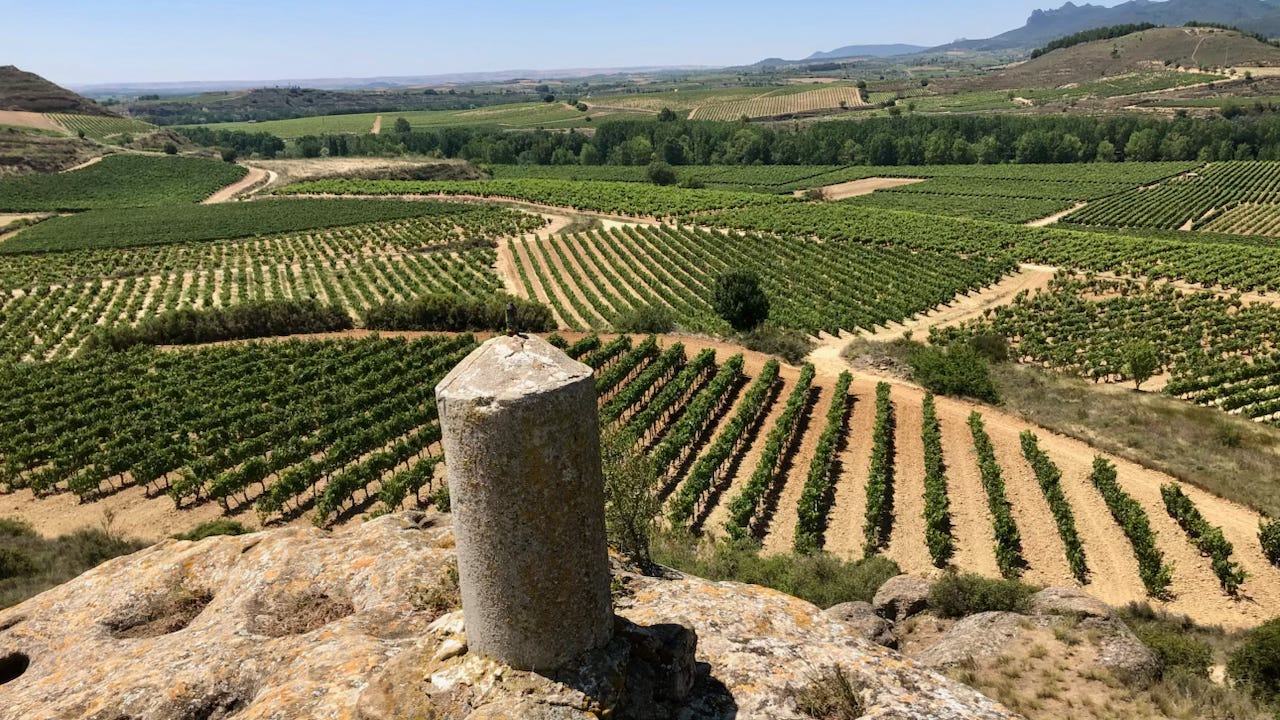
Rioja’s wine industry transformed during the mid-20th century, as growers started cooperatives and the traditional small cellars disappeared. “This was after the Civil War, and Spain was a really poor country, so the cooperatives played a big role,” says Javier Arizcuren, an architect whose father and grandfather were winegrowers and who has produced wine under his own label since 2013. “At the same time, it was a small disaster. You lost the traditional grape varieties, and a lot of other things.”
By the late 20th century, growers in Rioja were ripping out nearly all other grapes and planting tempranillo. Today, tempranillo accounts for 88 percent of all vines, making the region basically a monoculture. The region also honed its messaging for the burgeoning American market. “Rioja decided that for the American market that they would only talk about tempranillo and the aging process, to make it a simple message,” Arizcuren said.
Sixty years of making wine and doing business this way in Rioja has led to a crisis. As Tim Atkin reported in October, the regional governments of La Rioja and the Basque Country plan to destroy 30 million liters of surplus wine to try to balance supply and demand. Another 150 million liters languishes in cellars, unwanted and unsold. The 2023 harvest was terrible, and on top of that, grape prices are at unsustainable lows. Several large wineries operate under threat of bankruptcy. Influential voices in Rioja have proposed cutting out 10,000 hectares of vines, similar to how much is to be uprooted in Bordeaux. And, in recent years, some larger producers in Rioja Alavesa have been trying to break away from Rioja and create their own Basque appellation.
Despite this crisis, the wines have never been better. 2019 is considered by many to be the best vintage in a decade. Many also see 2021 as an outstanding vintage.
Much of the new wave is about undoing the damage of the last half-century in Rioja. “The potential in this area is huge, but you have to see it,” says Bravo, who has previously worked in Bordeaux, Tuscany, New Zealand, California, and Priorat. “Rioja is like two worlds. The world where I live is hopeful for a successful future. Tradition is the basis, but you have to have the mentality of evolution. You have to keep improving. You have to keep talking to people in other regions. You have to be in constant evolution.”
“I think it’s important for winemakers from Rioja to know wines from other places,” says Elena Corzana, who’s worked in New Zealand, Australia, and South Africa, and whose first vintage under her own label was in 2019. “I’ve tasted more delicate, fresh wines from other places. That’s the style of wine I want to make.”
As further evidence of the influx of ideas, winemakers from outside Rioja are establishing themselves here, such as Olivier Rivière from France, and up-and-coming newcomers like Slovenian Neza Skrt of Aiurri or Chinese-American Jade Gross, who previously was head chef at Michelin-starred Mugaritz.
High-Altitude Vineyards

Oxer Bastegieta, who arrived in Rioja from Basque Country in 2009, now makes some of the region’s most coveted bottles. “Nowhere else in the world has the old vineyards that we have here in Rioja—some of the oldest vines in the world,” Bastegieta says. “The problem is that people here don’t believe in themselves. There are so many mediocre wines here because people don’t believe they can make better. They are standing in front of the best vineyards in the world. I believed it from the first fucking moment I got here.”
These amazing vineyards were the thing that first struck me. and continue to strike me every time I come here. Without fail, some winemaker will take me to yet another vineyard that’s 80 years old, or 100 years old, or older. “These vines are survivors,” Bastegieta says. “Can you imagine what a 100-year-old vineyard knows? He learns the climate, he learns the conditions, the patterns. He begins to regulate himself.”
Before my first visit, like a lot of Americans, I’d never realized just how mountainous the region is. These days, high-elevation vineyards are a hot topic within the wine industry, and Rioja has much vineyard land sitting more than 2,000 feet above sea level. When you take altitude into account, Rioja is well-situated for the climate change era.
But a half-century ago, growers abandoned high-altitude vineyards and began growing tempranillo in the valley. “Winegrowing only moved to the valley along the river during the mid-20th century with the rise of cooperatives, because the cooperatives needed higher yields and they had to work in an easier, more comfortable way,” says Arizcuren. “The old tradition was really in the mountains.”
The new wave, according to Arizcuren, is not really a revolution. “It’s a movement to recover our roots,” he says. “This is maybe an impolite idea, but there are growing areas in Rioja that should be moved or removed. In the future, we must move back to the mountains. And we should think about Rioja producing less, but even better wines.”
Bravo of Sierra de Toloño took me to visit several of her vineyards that are over 2,000 feet in elevation. One 95-year-old vineyard Bravo showed me was called Malpuesta, meaning “badly located.” It is an area of small plots that had been avoided by the large wineries. “These were the plots of poor people, who planted where they could,” she said. Now, sites like this are the key to Rioja’s future. “Everyone wants to say their vineyards are high altitude,” she says, joking that high altitude will soon become the new old vines. “People got interested in old vines, and then everything was old vines,” she adds. “Suddenly, there were no more young vines in the whole world.”
Beyond Tempranillo
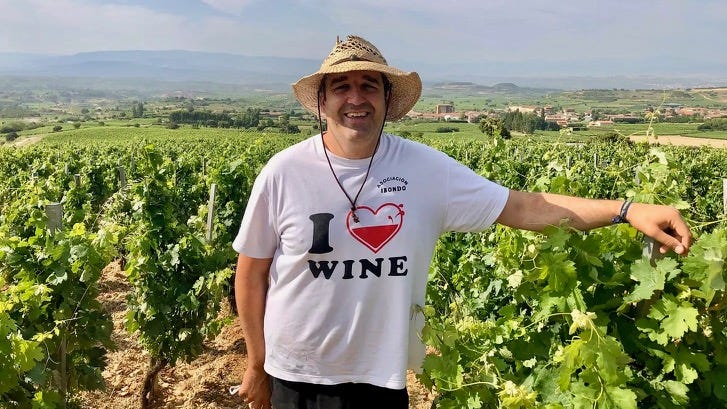
Just as exciting is the new wave’s embrace of varieties beyond tempranillo. More producers are committing to garnacha. “For Rioja, people think of tempranillo as the main grape, but it’s not always been this way,” says Antonio Orte, the technical director at Bodegas Valdemar. “Garnacha used to be the main grape.”
Arturo de Miguel at Artuke suggests that growing a mix of grapes on various soils, at various altitudes, is the best way forward. Tempranillo, he believes, grows best at elevations at least around 2,000 feet. Meanwhile, garnacha, graciano, and mazuelo can do better below 1,600 feet. Some producers go even deeper on rare varieties. Bodegas Valdemar is making single-varietal bottlings of graciano, as well as a red grape called maturana.
The maturana queen, however, is Elena Corzana in the village of Navarrete, where maturana is a native variety. “We lost a lot of varieties when people pulled out all the old grapes and planted Tempranillo,” says Corzana. Maturana is related to cabernet franc and has similar characteristics. Corzana ferments her maturana in amphora made from local clay. It has serious Loire vibes, elegant and savory. Though there are only 170 hectares planted, the appellation approved its planting in 2007, and many believe there’s great potential for more maturana in coming years.
White Rioja Rising
Beyond reds, plenty of people even believe that Rioja can become a world-class wine region. (I am one of them.) Fans of López de Heredia’s Viña Gravonia or CVNE’s Monopole Classico (perhaps Rioja’s most famous whites) already understand the potential of Rioja Blanco. But the embrace of these wines is a relatively recent phenomenon. “When I first got here (in the mid-2000s) nobody drank López de Heredia white,” says Olivier Rivière. “This could be a great white wine region. There are a lot of sites that are planted for reds that should be planted for whites.”
Orte of Bodegas Valdemar drove me up to their Finca Alto Cantabria vineyard, a designated Viñedo Singular—1,700 feet above sea level and overlooking the city of Logroño, with the Sierra Cantabria looming in the distance. Finca Alto Cantabria is planted with about nine hectares of 50-year-old vines of viura, the key white grape of Rioja. “Fifty years ago, people were not thinking about white wines,” says Orte. “People said, ‘You’re crazy. What the hell are you doing planting nine hectares of viura?’” Now, very few think white wine in Rioja is a crazy proposition.
“Viura is one of the most delicate and sensitive grapes,” says Mendoza of Remírez de Ganuza. “It really shows the terroir. This is just a super grape: the acidity, the pH, the long aging. Grown the right way, it has wonderful aromas.” Remírez de Ganuza’s two whites, Blanco Reserva and Olagar Gran Reserva, are simply stunning—and can stand up against any in the world.
Rioja’s white grapes are also increasingly popping up in blends. “Each grape variety creates an anthem of the vineyard,” says José Gil. “Tempranillo is just the bass.” Gil took me to a vineyard he’s renting from a 90-year-old man. It’s planted with tempranillo and garnacha, but around 15 percent of this “red” vineyard is planted with several white varieties, including palomino and moscatel. As we move deeper into the climate change era, a bit of white grapes in the red blends may be key to keeping Rioja reds fresh and full of acidity.
“Now this is the fashion, to make red wines with some white in the blend,” says Gil. But the 90-year-old owner told him “this is how they planted vineyards years ago.”
It’s just further proof that the way forward for Rioja is to look back to the past. But to look back at the right past. Which is exactly what the new wave in this region is doing.
Nineteen New-Wave Rioja To Know
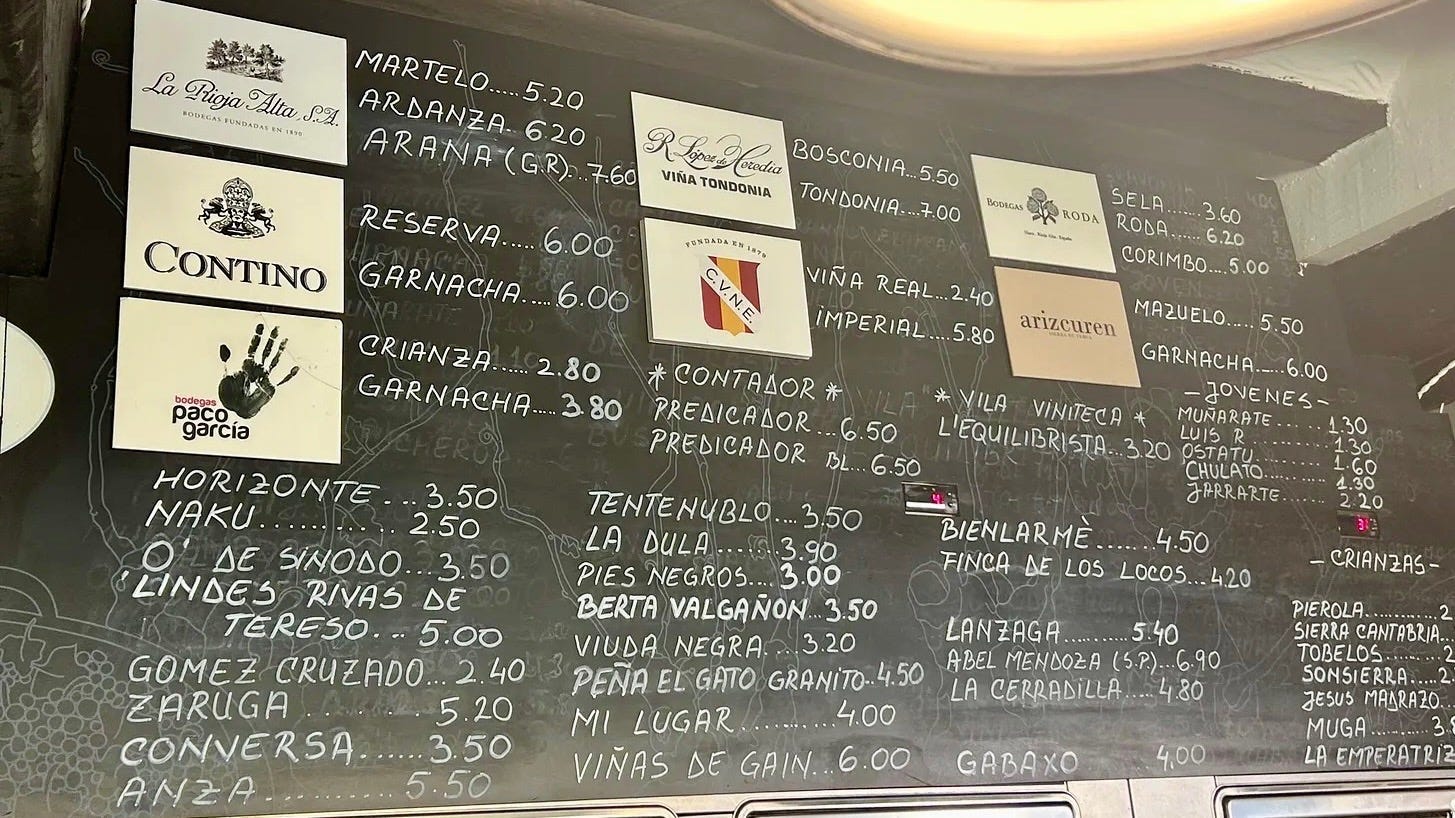
The generational shift in winemaking that’s happening in Rioja is one of the most exciting stories in wine right now. The new-wave wines from Rioja that I’m excited about are completely different than what we’ve come to expect: freshness and energy over wood and power, cool-climate wines grown at higher altitudes, blends of several grapes over monovarietal Tempranillo, a commitment to organic or biodynamic farming, and, most importantly, a sense of place that’s not dictated by barrel aging. Anyone seeking to learn more about this movement can start with any of the below
Reds
Artuke ‘La Condenada’ ($111)
A field blend from a small parcel in a vineyard planted in 1920, this is one of the most coveted reds in Rioja, and a stunning example of the region’s new wave. Complex, intense, nuanced; by turns herbal, earthy, and ripe. Notes of blackberry and black cherry, with thrilling acidity and elegant tannins, and an incredibly long finish. Totally balanced and seamless, with a long life ahead of it. Not cheap, but a shockingly good value for one of the finest reds in the world. This will only get harder to find in years to come.
Oxer Wines ‘Kalamity’ ($150)
Another of the most coveted bottles of new-wave Rioja, Kalamity’s label offers a challenge (via Shakespeare in Edward III): “Shame be to him who thinks evil of it.” A blend of 48 percent tempranillo, 48 percent barnacha, 2 percent viura,and 2 percent garnacha blanca, and such a complex wine, layered with black fruit, forest notes, wild herbs, spice, and black pepper. There’s an undercurrent that’s wild and untamed, but this remains precise, balanced, and long. A truly incredible bottle.
Remírez de Ganuza ‘Iraila’ ($100)
Beautiful high-altitude garnacha from winemaker Jesús Mendoza, who says “of the modern side we are the most classic, and of the classic side, we are the most modern.” From 50-year-old vines and aged six months in a mix of ceramic and cigar-shaped barrels, this is delicate, mineral, juicy, and absolutely delightful.
Arizcuren ‘Barranco del Prado’ ($85)
Amazing red from a 130-year-old vineyard that sits more than 2,500 feet above sea level. Mostly garnacha, with a tiny percentage of graciano and local white varieties. It’s wild, intense, dense, with aromas of fresh mountain herbs and flowers, crunchy red fruit on the palate, white pepper, juicy acidity, and full of great tension.
Pujanza ‘Norte’ ($85)
Great illustration of thrilling high-elevation tempranillo, fresh and full of finesse, with lots of wild berry and mint, along with floral and forest notes.
Arizcuren ‘Finca El Foro’ ($65)
Complex, pretty field blend of 60 percent garnacha with 35 percent mazuelo, a little viura, and a smidge of tempranillo and obscure local grapes garnacha gris and Miguel de Arco. Fresh, bright, and floral at first, with berry and violet notes. Then comes the black pepper, graphite, and deeper savory notes leading to a long mineral finish. A great example of the potential in Rioja Baja.
Gómez Cruzado ‘Cerro Las Cuevas’ ($50)
Cool, complex blend of tempranillo, graciano, garnacha, and mazeulo. Floral, dark minerality, fresh plum, a touch of spice. Both classic and modern.


Bodegas Valdemar ‘Balcón de Pilates’ Maturana ($57)
Unique bottling of 100 percent maturana, a grape that was only approved by the appellation in 2007, of which there are only 170 hectares planted. Dark and savory—think cabernet franc—with notes of plum, piquillo pepper, and a stony finish.
José Gil ‘San Vicente de la Sonsierra’ ($50)
A blend of Tempranillo with 20 percent garnacha and a tiny percentage of white varieties, this is José Gil’s village wine, from grapes grown around 1,600 feet above sea level. Gorgeous floral, blackberry, and cherry aromas and flavors, tinged with earthy and savory notes, and balanced by spice and mineral.
Artuke ‘Finca de los Locos’ ($40)
This is Artuke’s village wine, from the Baños de Ebro, a blend of 75 percent tempranillo, 20 percent graciano, and 5 percent viura from a 40-year-old vineyard. Bright and fresh, with lots of power and complexity, with notes of wild berry, herbs, and spice.
Olivier Rivière ‘Gabaxo’ ($35)
“Gabaxo” is a term for French border jumper, a cheeky nickname for Olivier Rivière, who came to Rioja from France. This blend of tempranillo and garnacha from high-altitude vineyards is linear and precise. Black fruit with spice and black pepper, and an attractive underlying earthiness.
Sierra de Toloño ‘Raposo’ ($30)
A wonderful introduction to new-wave Rioja, and at an incredible price for such complexity. This is tempranillo with classic notes of leather and dusty tannins, but with a freshness and bright, juicy fruit that you’ve rarely tasted. The forthcoming 2021 may be the best-ever version of this.
Sierra de Toloño ‘La Dula’ ($27)
A terrific example of how fresh, drinkable, and pure garnacha in Rioja can be. And yet another great-value bottle from winemaker Sandra Bravo. From a 70-year-old high-elevation vineyard (2,300 feet above sea level), pretty and crunchy, with juicy notes of berry and blood orange, and an intense, long finish.
Tentenublo Tinto ($25)
Roberto Oliván of Tentenublo began adding whites to most of his red blends after the extremely hot vintage of 2012—an old tradition in Rioja that the new-wave producers have brought back. Oliván’s entry-level red is an old-school blend of garnacha, tempranillo, and 10 percent white varieties. It’s rich, fruity, and chalky, with an underlying tobacco note. Great balance of bright and earthy, fruity and mineral—and a great value. Keep an eye out for Tentenublo’s Escondite del Ardacho single-vineyard series, which is difficult to find in the U.S.
Whites
Fans of López de Heredia’s Viña Gravonia or CVNE’s Monopole Classico (perhaps Rioja’s most famous whites) already understand the potential of Rioja Blanco. But the embrace of these wines is a relatively recent phenomenon. Among the benchmarks of the new wave: Here are five to look for.
Remírez de Ganuza ‘Olagar’ Gran Reserva ($112)
A stunning world-class white from a 40-year-old vineyard sited 2,300 feet above sea level. Elegant and complex; released with some age on it. The nose is chenin blanc-like, with aromas of bees wax, lavender, and yellow apple. On the palate, there’s ripe apple and pear, and an underlying and appealing waxy, unctuous quality.
Abel Mendoza ‘5V’ Blanco ($60)
A blend of five grapes—viura, malvasía, garnacha blanca, tempranillo blanco, turruntés– and one of Rioja’s greatest whites.
Artuke ‘Trascuevas’ ($50)
This was the first white made by Artuke, and it’s elegant and delicious. A complex blend of 90 percent viura, with some malvasia and palomino, aged in both oak and concrete egg for 10 months. Juicy, floral, with notes of nectarine, tangerine, alongside bright acidity and underlying notes of struck stone.
Conde de Valdemar ‘Finca Alto Cantabria’ ($40)
From a Viñedo Singular, with nine hectares of 50-year-old viura. This is seamless, with aromas of wax, pear, and honeysuckle. On the palate there’s warm citrus notes, a lovely rainwater texture, and a chalky, salty finish. Valdemar also makes a terrific sparkling wine from this special vineyard.
Sierra de Toloño Blanco ($20)
Super expressive viura, with aromas of apricot and pineapple. On the palate, it’s straight and elegant, with lots of finesse, and underlying minerality that gives it fine structure. A great introduction to Rioja whites.
This piece originally appeared in The New Wine Review (now owned by Unicorn Auctions).
I was stuck in Logroño in 2016 while hiking the Camino de Santiago. I had acquired major tendonitis and a terrible cold at once, but a week in the Hotel Marques de Vallejo and nightly sojourns on Calle Laurel really helped (even if I was totally unable to go big). Mostly I rested and watched Spanish TV - reruns of the Marisol movies, lots of fortune tellers/astrologers, and some NBA telecasts which were hilarious dubbed in Spanish. But, the garlicky mushrooms of Bar Angel, the elevated pintxos at Torres Gastrobar, as well as the amazing sushi/pintxos at Ummm Logroño were amazing. Received a full Riojo education at La Taverna where I was asked "desde alli o de alli" = "from there or from there" - meaning, do you want one from 3 km away or 10 km away. And when I was finally able to get back on the Camino, I was in love with the rocky red earth everywhere...
I'm still a big fan of the traditional bodegas in Rioja but it's true what you say - the new wave movement in the region, and across the country, is really exciting and there are so many talented producers in Spain. Thanks for spreading the word!