
The Vermouth Confusion
Vermouth is supposed to be having a moment. So why does it feel like nobody knows what to do with it?
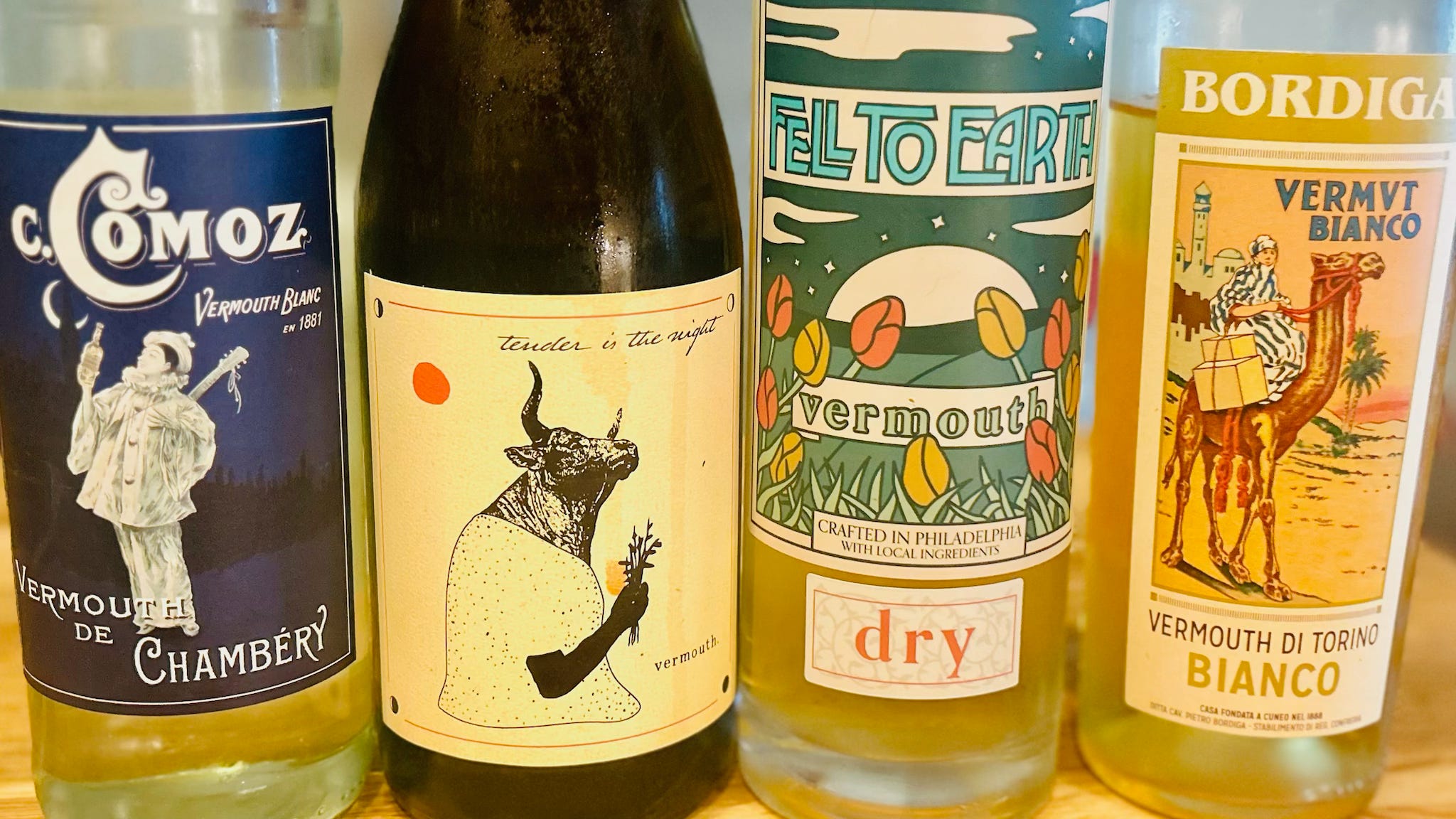
A couple of weekends ago, standing in a boutique bottle shop, I was confronted with a deep sense of confusion as I became hypnotized by their many-hued vermouth section. Between the artistic labels—many of which feature illustrations of animals and saturated color palettes—I recognized words I know: dry, sweet, rosso, blanc. But beyond that I was befuddled, even after asking the clerk for guidance. Two from Pennsylvania, one from New York, one from Spain, one from France, a few from Italy. I didn’t have a plan that day, just a thirst for an aromatized discovery, so after many minutes of deliberation I left with three bottles I had never seen before: one dry, one bianco, and one sweet (black?) for a grand total of $140.
According to Vogue, “everyone” is drinking vermouth. The Spirits Business says vermouth is finally getting its “starring role.” Hell, I even predicted this would be the year of vermouth on Business of Drinks’ 2026 predictions episode. These claims are based on recent data showing a 28.7 percent increase in vermouth sales beyond the traditional strongholds of France, Italy, and Spain from 2019 to 2025. In North America specifically, the vermouth market size is projected to reach $9.51 billion by 2034 from $5.06 billion in 2026.
On the surface you may, like Vogue, think this suggests tangible and widespread changes in the way vermouth is being consumed in the United States. You may think La Hora del Vermut has finally taken hold of the masses like the New York Times has claimed it will for years. But no, that is not what is happening. What I am observing is a bifurcation in the vermouth category—driven by a misinterpretation of the data—that conflates a real rising demand for classic cocktail vermouth with the much lesser demand for new-age sipping vermouth. This is inadvertently leaving producers and drinkers of vermouth as confused as I was in the bottle shop.

Though the craft cocktail revival originally launched in bigger American cities in the mid-2000s, it never stopped spreading. In 2026, you’d be hard pressed to find a suburban American downtown without a New American small plates restaurant serving craft cocktails—the kind of place where a too-large group of millennial moms gathers for a rare night out over riffed-on classics with clever names. Vermouth is the defining difference between a nonsense cocktail and a quality classic, something that almost any cocktail bar is getting right today. The craft cocktail culture eventually left the headlines and colonized the suburbs. Now it’s clear vermouth’s astounding growth metrics may simply be riding that wave instead of reflecting something specific to vermouth at all. Could the billions of dollars of growth be just the slow, steady spread of normal Americans learning how to make a proper drink?
However, everything I have read about vermouth’s re-emergence locates its relevance in something outside the product itself: wellness, moderation, European aperitivo culture. In Vogue they say, “the growth of a lower-ABV drink like vermouth feels aligned with larger cultural conversations around wellness, decreased indulgence, and mindful drinking.” The Spirits Business says, “many other markets are using apéritifs as opportunities for flexible, early‐ evening imbibing.” This is allowing the category—and vermouth in particular—to travel globally.
The only people I hear praising vermouth on its own are a relatively small number of devoted vermouth fans running obscure beverage programs—and they’ve been saying it for years. This is not unlike the “explosion” of craft non-alcoholic drinks, marketed as the answer to the sobriety movement, until we learned that most craft NA products are consumed by people who also drink alcohol. There is a lot of noise in this category, and despite there being a seemingly infinite array of NA options, most people just buy a rack of Athletic Brewing and call it a day.
The prevailing narrative and the actual consumer are two different things. Vermouth has its own version of this: a new wave of restaurants in Los Angeles, New York, and beyond are running genuinely interesting vermouth-by-the-glass programs. Vogue cites a handful—Dom’s Taverna in Santa Barbara pours a house vermouth made in Barcelona, Bar Siesta in Los Angeles offers vermouth flights, Park Rose in New York runs a tableside vermouth cart, and Eleven Madison Park makes a house-made, zero-proof vermouth with seasonal variations. This might feel like a watershed to anyone who remembers a time (the aughts?) when vermouth had no presence on a menu at all (I don’t). But I cannot fathom that a dozen restaurants committing to vermouth by the glass is what’s driving billions of dollars in category growth. This is where the narrative gets hijacked: the growth gets credited to what is, in reality, a vast minority of vermouth drinking—new, but minor. It feeds the culture of vermouth in the US, but it isn’t what’s paying for that $9.51 billion projection.
Once I returned home that weekend, hands pulverized from carrying a double paper bag of vermouth and bitters fifteen blocks in the summer sun, I unloaded and immediately poured the cloudy Philadelphia-made dry vermouth over ice. Ripe ruby red grapefruit exploded from the glass, carrying me back to winter mornings watching my mother eat her half grapefruit with a serrated spoon and a steaming cup of herbal tea. A minty mid-palate, a mellow finish, grapefruit bitterness lingering. Delicious? Yes. Would I mix this in a martini? Absolutely not.
Many vermouth advocates point to vermouth culture in Spain as the case study for drinking vermouth on its own. The Spanish style, less bitter and more sweet, is made to be drunk solo. I think almost anyone could enjoy vermouth this way if it was presented to them. I also love a siesta and a 10 pm dinner, but will these cultural phenomena ever really penetrate American daily life? I don’t think so. The reality is that most Americans are not regularly putting themselves in scenarios where they might discover this way of enjoying vermouth.


The concept of drinking vermouth on its own has piggybacked on the “no and low” conversation, positioning vermouth as a lower-alcohol alternative to sipping a spirit—but when you sit with that idea, it’s clear that not many people would reach for three ounces of 16 percent vermouth to moderate when they could just have a 12 percent abv grüner veltiner. I’ve amplified this narrative myself, so I understand its appeal. Once, at a bachelorette party in Charleston, I asked the bartender to sneakily trade out my tequila shots with blanc vermouth so I could “keep up” with the group. That worked for me, but that is some real 20-something industry girl stuff, not a normal use case. From what I can see, the moderation conversation is already falling out of fashion as younger people push back on optimization culture and embrace the “party girl” aesthetic once again.
American vermouth culture may be, for now, more aspiration than reality. Many of the new-wave vermouth producers may be making a product for which there is far less demand than they realize. Take Matthiasson, the pioneering winery behind new-age, organic, European-style Napa wines, which produces a vermouth from mostly a rare and obscure grape called flora, infused with homegrown botanicals. It changes with every vintage—marked not by year but by number—and costs $50 for a half bottle. It has become something of a benchmark for American sipping vermouth, and no shortage of producers have followed in its wake. But these vermouths are more at competition with natural wine than with other styles of vermouth. They’re vintage-driven, producer-specific, priced for occasion, opened like a bottle of something special and drunk slowly—and at that price and in that context, they make complete sense. The noise and the confusion come from the fact that they share a label with something that costs $12 and lives in a speed rail.
The classic vermouths—Martini and Cinzano on the low end, Dolin, Cocchi, and Carpano on the higher end—are winning the game that’s actually being played in bars across America: predictable and precise classic cocktails with low overhead and high margin. Most hover between $14 and $18 a bottle—a price point that delivers outsized value in a martini or negroni program, where a single bottle goes a long way. Most bottle shops offer half bottles too, which cost around $6 to $12 a bottle. Carpano Antica ($35/liter) or Cocchi’s excellent Vermouth di Torino Extra Dry ($26) are the exceptions.
Something unique and respectable about vermouth is that the big names have reached global scale while maintaining their provenance, quality, and reputation. Unlike, say, Barefoot in wine or Jose Cuervo in spirits, even the “worst” vermouths are good enough to mix a solid cocktail with and most pros wouldn’t sweat over it.


Nothing about this type of cocktailing vermouth is new or trendy. Jason’s first column for the Washington Post in 2007 tracks the earliest days of the modern vermouth “revival”—nearly two decades ago, before most people had heard the word craft applied to a cocktail. The previous generation of bartenders did the work. They single-handedly rescued these dusty, turned-to-vinegar vermouth bottles from the back bars and home bars of boomers, who were more interested in the other brightly, fruit-juiced drinks of the 1980s and 1990s. That restoration was completed more than a decade ago. Vermouth’s place in the cocktail canon was settled long before anyone called it a trend.
So where does that leave this new wave of artisan producers whose vermouths are too expensive for most bars to pour in a cocktail? Do I think they should concern themselves with “the market”? Well, yes and no. I do believe in the inherent value of creative experimentation and think that our late capitalist hellhole is the death of creativity. I believe in the value of making beautiful things just for the sake of enjoying the beauty. Yet, I have also watched the wine industry deal with the fallout of what happens when you stop listening to what people want in the endless pursuit of imposing one’s will upon others.
This is why the artisan world of vermouth—creative and experimental—must be separated from the vermouths operating at scale. Confusing these two worlds risks either overselling the experimental vermouth world for something more universal than it is, or judging it against a standard of mass appeal it was never trying to meet.
Back home on a Saturday evening, changed and cooled down, I tasted through the rest of my strange vermouth bounty alongside the Dolin already in my fridge. There was no clear through line between the Pennsylvania dry, the Pennsylvania-made, Spanish-style sweet, the Italian bianco, and the French blanc, which made for a lively mixing and sipping session that night. More bottles were pulled from the fridge to compare. I love how raucous and diverse the vermouth category has become. But I’m still very confused.
Seven New-Wave Vermouths


Hubba Dry ($25/375ml)
This is a single-vineyard, white-colored dry vermouth produced in Paso Robles from the verdelho grape. The nose is extremely mentholated, with undertones of mushroom, juniper, smoke, and an almost meaty finish. Dryer than a French style dry, though with the addition of anise, cardamom, and coriander it could be an interesting addition to a gin martini.
Fell to Earth Dry ($47)
Philadelphia-made with spontaneously fermented wine from Andrews Bridge, Pennsylvania, with botanicals from a low-impact farm in Lancaster County. Ripe ruby red grapefruit on the nose, mint and coriander on the mid-palate, with a mild finish where a pithy bitterness lingers. After a moment in the glass, aromas of chamomile become very apparent and the fruit becomes more fleshy. Pleasant on its own in a way that many dry vermouths are not. Would sip over rocks with a grapefruit slice and a sprig of mint. But does it work in martini?
Bordiga Bianco ($33)
Piemontese white sweet vermouth crafted from trebbiano, moscato, and cortese from the Langhe. It has a mouth coating texture, rich with orange peel, elderflower, and an array of warm spices. Aromas of cardamom, vanilla, and honeyed white flower make for a very rich vermouth. It doesn’t stand up well mixed in a spirit forward cocktail. I recommend enjoying over ice with a lemon.
Comoz Blanc ($19)
Not exactly “new wave,” but newly back in the market. Comoz is the first Vermouth de Chambery to produce a crystal-clear style, a quality that was highly prized in the mid-20th-century. Comoz didn’t survive the vermouth downturn of the 1980s, but was curiously revived by its former rival Dolin and reintroduced to the US market through importer Haus Alpenz in 2020. The flavor is semi-sweet, rich with stone fruit, alpine flowers, and herbs like tarragon and rosemary, with a pleasant undercurrent of wormwood uniting it all.
Casa Carmen ‘Tender is the Night’ ($35)
A so-called “black vermouth” from Casa Carmen, a winery located in West Grove, Pennsylvania. Bitter, nutty, and herbal. Not overly sweet or cloying. Actually quite light on the palate for a sweet vermouth. Infused with black walnuts from their farm and orange peel from Seville, this is an interesting American answer to a Spanish-style sipping vermouth.
Partida Creus MUZ ($35)
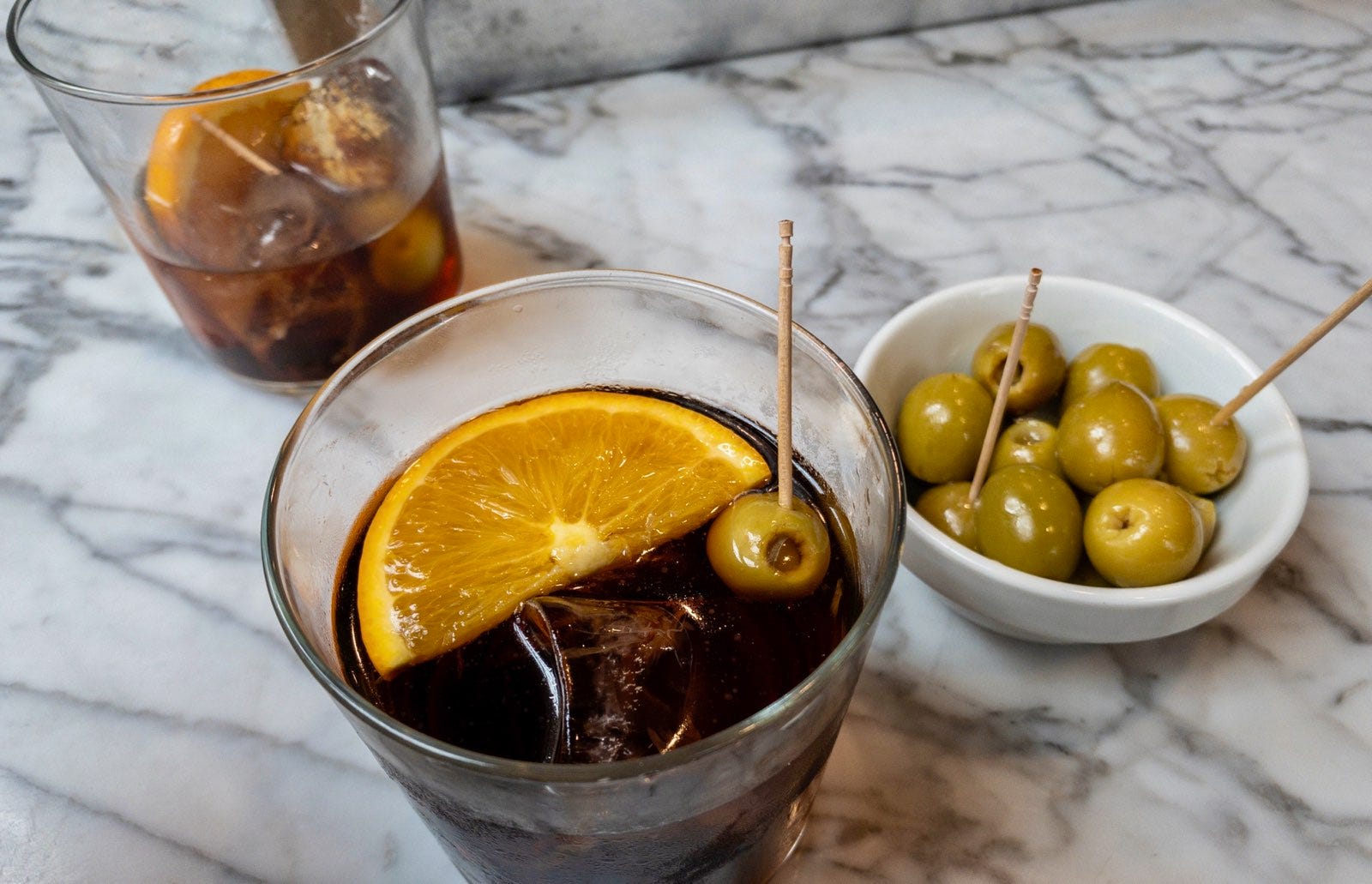
Organic Spanish vermouth made by Italian duo Massimo Marchiori and Antonella Gerona. Lighter in alcohol (13% abv) and body than most traditional Spanish vermouths, without sacrificing the rich flavors of orange peel and oregano that are so endearing about this style of vermouth to begin with. Serve over ice with an orange and olive.
Matthiasson Sweet No. 9
Late picked, semi-botrytis affected flora, muscat of alexandria, and viognier compose the base of this vermouth. The young wine is folded into the solera providing the finished vermouth a base of nutty and dried fruit flavors to balance the vibrancy of the fresh wine. Homegrown blood oranges, cardoons, wormwood, and sour cherries are infused with neutral grape brandy to fortify the vermouth and organic cane sugar added as needed to balance. The result is a sublimely layered, though-provoking sweet vermouth, highly reflective of the Matthiasson’s regenerative organic farm and garden in the Napa Valley.


This piece nails the bifurcation problem. At Klocke Estate Distillery in the Hudson Valley, we make three vermouths from our own Vidal Blanc wine, and what we've learned through our cocktail program backs up Caroline's point: the demand for sipping vermouth is real, but it has to be experienced to be discovered. We regularly see guests who'd otherwise default to an Aperol spritz choose our vermouth on the rocks or in a spritz instead, once it's actually in front of them. And a vermouth spritz with soda or tonic is genuinely one of the lowest-ABV refreshers you can hand someone, which makes the conversion pretty easy once they try it. It's less about convincing people vermouth deserves a "moment" and more about giving them a low-stakes way to taste it themselves.
I think Americans, “are…putting themselves in scenarios where they might discover this way of enjoying vermouth,” if a bar poured it. The same bar could be offering the Adonis or a marianito and maybe that would create more interest. For a drink that is poured in every old man bar across from every train station, I find it frustrating the number of bars here in the states that will have a one non-speedrack vermouth but it’s partida creus or one of the other pricier ones (which can be great, I’m not against them) rather than a less expensive option that people might be more willing to blow some time with. Jason, I want that wine dive bar in my neighborhood.