
In Defense of Barcelona's Bodegas
In the face of overtourism, gentrification, and social media, these are still the places where the city drinks, and these are the people who keep them alive.
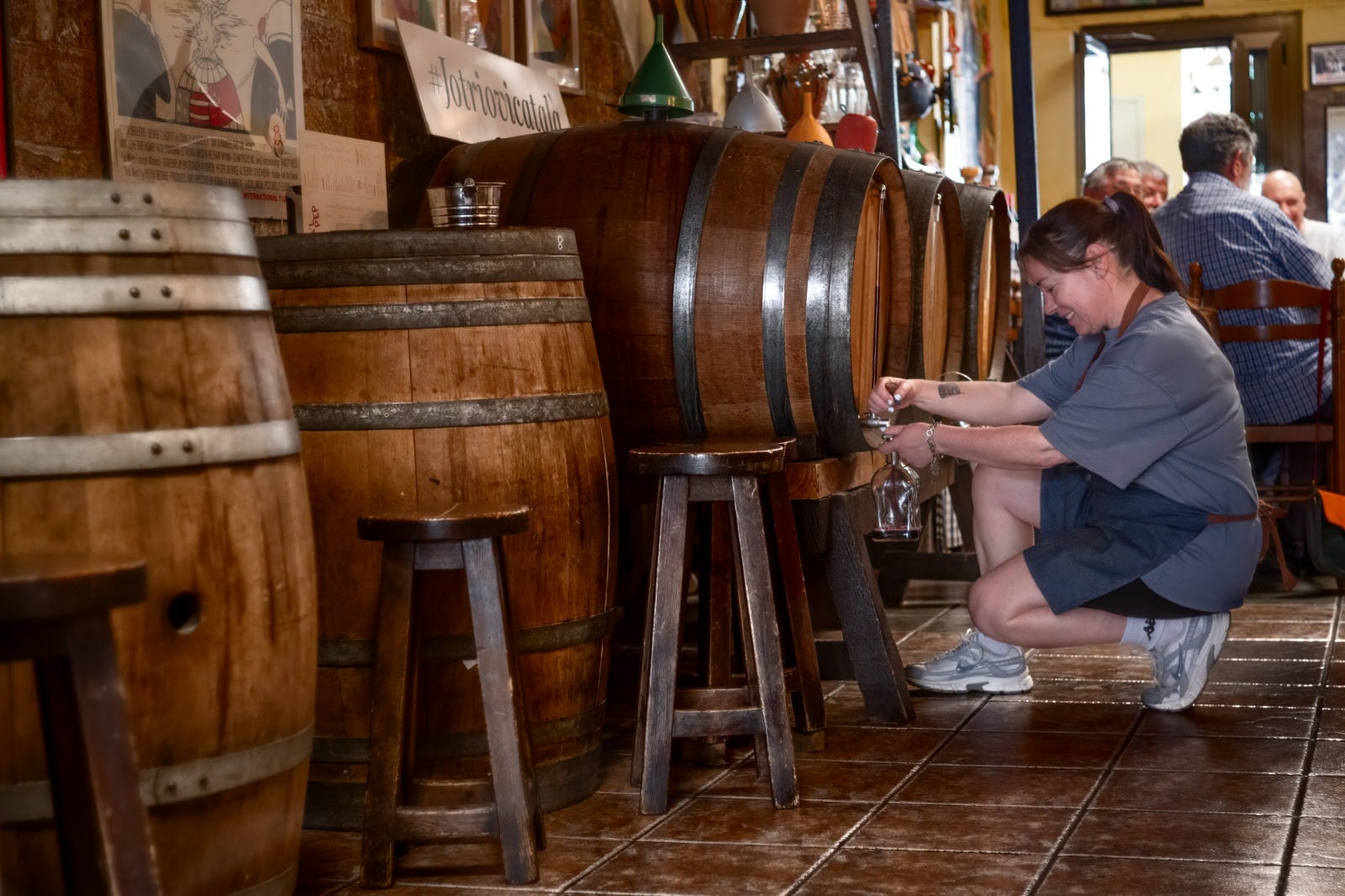
Our Barcelona-themed week continues with this essay on the city’s bodegas, by Nika Shevela, a Barcelona-based wine consultant and educator, and a close part of the Everyday Drinking family. This follows my travel guide to the city on Sunday, and an essay on the tension between local and modern bars by Sarah Sioli coming Thursday.

Every New Yorker friend of mine has their favorite bodega. Dubbed by a recent New York Times piece “the ultimate symbol of a city constantly evolving and on the move,” these corner stores started out selling nostalgia (plantains, chorizo) before becoming radically adaptable neighborhood fixtures.
In Barcelona, a bodega has always been about wine. Same word, different worlds. Here, the word means both the cellar where it’s made, and the place where it’s sold—originally by the liter, into your own bottle, cheap. Over the years, they’ve evolved in response to the city’s overtourism, soaring rents and gentrification, as well as the onslaught of social media. Before bodegas were “heritage”—and Instagram-able—they were just how a neighborhood drank. I went looking for what’s left of that.
“At its core, the Spanish bodega is a community space; an idea that exists in cultures all over the world, with parallels in Japan’s tea houses, the bouchons of Lyon, neighborhood taverns in Greece, or local pubs in Ireland,” offers Cesar Rodríguez, architect, designer and co-founder of Taula Vermuts, a natural vermouth brand.
David León Himelfarb, journalist and editor at Barcelona Secreta, traces it further back: “The Barcelona bodega was born as a drinks business, a despacho de bebidas, a place to buy bulk wine in a city that ran on it. It’s the customers who came to fill their bottles who first stayed to chat, then asked for something to nibble.”
For Neus Pérez Estal, fifth generation of Quimet i Quimet in Poble Sec, bodegas are “hubs for culinary discovery, for sharing moments and stories and learning about local cuisine.” Her family opened their bodega as La Brugalesa in 1914, pouring their own bulk wine alongside soft drinks. Alberto García Moyano of Bodega Montferry, a few streets up in Sants, gets unapologetically specific: “Bulk wine is the one differentiating trait. Without it, it’s not worse than a bar, but it’s not quite a bodega either.”


The Movement for the Defense of Neighborhood Bodegas, MeDeDeBeBé to its friends, was founded back in 2011 to say exactly that, and then some. Their manifesto is very specific. Among the requirements: a bodega must have wooden fridge doors with metal handles, house vermut, olives, anchovies and berberechos with house sauce. A marble bar is preferred. “If you are a regular at Starbucks, Dunkin Donuts, Frankfurts, Hamburgers, etc.,” it reads, “this is probably not your place.”
Alberto García Moyano, who joined the movement before co-founding Bodega Carol in Clot, started his activist work almost by accident: Mapping Barcelona’s historic bars on Google Maps, then organizing neighborhood treasure hunts to introduce locals to places on their own doorstep.
The movement’s most significant achievement was convincing Barcelona City Council, in 2019, to grant protected status to 31 historic bars, suspending major renovation or even demolition licenses to shield them from being replaced by franchises, whether Starbucks or Zara. “Protecting our bodegas,” Alberto said, “has helped us preserved the neighborhood soul of the city.” But what gave the bodega its soul in the first place?
Albert Rial, who runs Bodega La Palma, an iconic “gastrobodega” in the Gòtic, reminds us that “bodegas were the bridge between wineries and consumers.” La Brugalesa—better known as Quimet & Quimet today—opened so the family could sell their wine from the village of Bruc directly, without distributors. The original short supply chain, and one that persists. In a handful of Barcelona bodegas, regulars still bring an empty plastic bottle to fill with a liter of Terra Alta white, vi ranci from the Empordà, or vermut. (My local bodega de barrio proudly notes that none of its bulk wine is “for cooking”). Today the same gesture sells as zero-waste virtue over necessity. “In an era where so much feels manufactured or performative, authenticity has become a form of social capital,” observes Cesar Rodríguez.
What Barcelona’s bodegas do with that inheritance depends entirely on which bodega you’re standing in. At Cal Pep in Gràcia, Griselda López is unequivocal: “Cal Pep started selling bulk wine, and that can’t be lost. My regulars still draw heavily on it, both to take away and to drink there.” Bodega Montferry keeps its barrels similarly full: mainly red wine, “Priorat style,” that’s bold, muscular, heady (though not actually Priorat; post-Parker and post-Ermita, that region doesn’t come at bulk prices anymore). Less popular styles, like white vermouth, go in bag-in-box. At Bodega La Palma, the old wooden butts simply stopped keeping wine when Albert and Judit took over. So they chose not to update the installations, and kept the barrels on the walls for spirit, if not function.
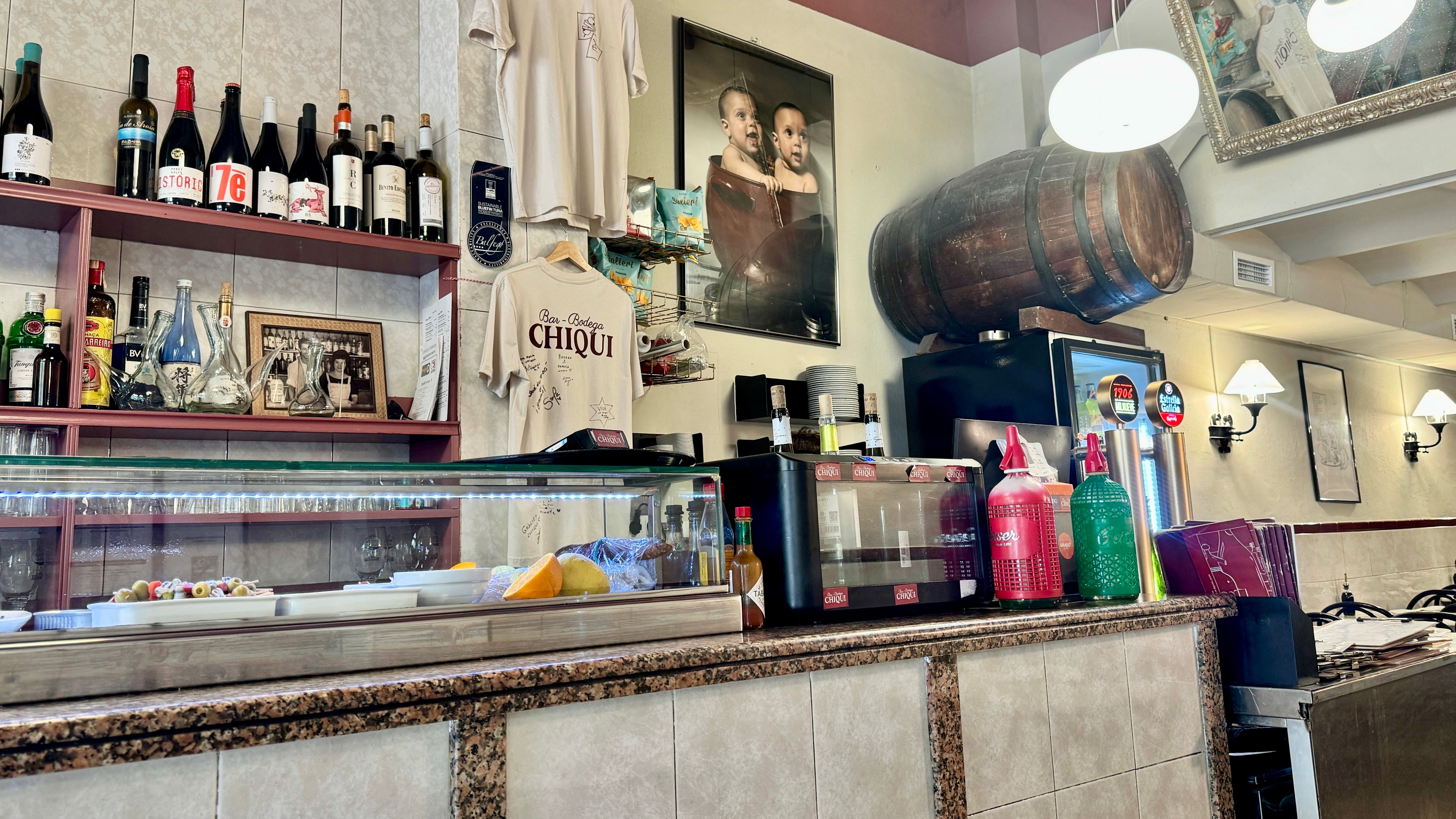
Then there’s what I’ve been calling bar manolo nouveau (the term has been adopted by Everyday Drinking): Same walls and same marble, but new wine list and new generation. Bar Bodega Chiqui in Sant Antoni is the purest example. Sònia Riasol, third generation, serves brisat wine from Tarragonès by the glass alongside inherited vi ranci in barrels; her partner Douglas, Nobu-trained, runs Grado Sushi from the same kitchen. Delta del Ebro eel and foie nigiri born as pandemic takeaway, never left. Chiqui opened in 1959, two decades after the Spanish Civil War. Johann Wald, producer and host of Brasas, a gastronomy podcast on Radio Primavera Sound, and a trained chef himself, provides some context: ‘The post-civil war years produced much displacement of humble families seeking prosperity in cities, willing to sacrifice their lives to run a daily operation restaurant.” They chose to stay.
“Now the humble Spanish family who knew no other option but hard work has been replaced by the restaurant group, made up of a few people with savings, usually from comfortable families, savvy enough to capitalize, at the expense of poorly compensated labor,” adds Johann Wald.
Still, someone has to pick up the keys. Formerly family-run classics like Bar Muy Buenas or Bar Cèntric, both in Raval, are now managed by Group La Confiteria, “working for the survival of the bars with the most history in Barcelona” since 2015. Today, fifteen establishments deep (among them Paradiso, the world-famous cocktail speakeasy) and Bodega Molina, a modern Catalan tavern.
Bodega Solera, just off Passeig de Gràcia, is restaurateur Kim Díaz’s bodega built around a fictional Andalusian family, right down to the espacio Lola, a shrine to Lola Flores, that often works as a clubhouse for the trade. Sommelier Guillermo Leal runs an encyclopedic list of “honest wines without makeup: free-style natural wines alongside the classics, something for everyone.” Among their recent must-tries: a Vidonia VP from Suertes del Marqués and Verónica Ortega’s Cáreo. The granel is gone. The spirit, yet again, remains.
In the Gòtic, Bodega La Palma has survived long enough to become a destination: Rosalía’s eaten there, our former mayor Ada Colau has governed from nearby, tourist groups now share the marble with the regulars. Albert still holds the line: “The challenge is to walk into a bodega and feel at home. As long as we keep that feeling, the bodega will survive.” Twelve-year-old Alex, Griselda’s daughter, has already promised herself she’ll keep Cal Pep alive, even if she has to pay someone to run it. For David León, the focus is more on the city model rather than its individual operators, who have tirelessly adapted to whatever comes. “The bodeguers made their living without tourism. If it disappeared, they’d go back to living off the Barcelonians.” Maybe.
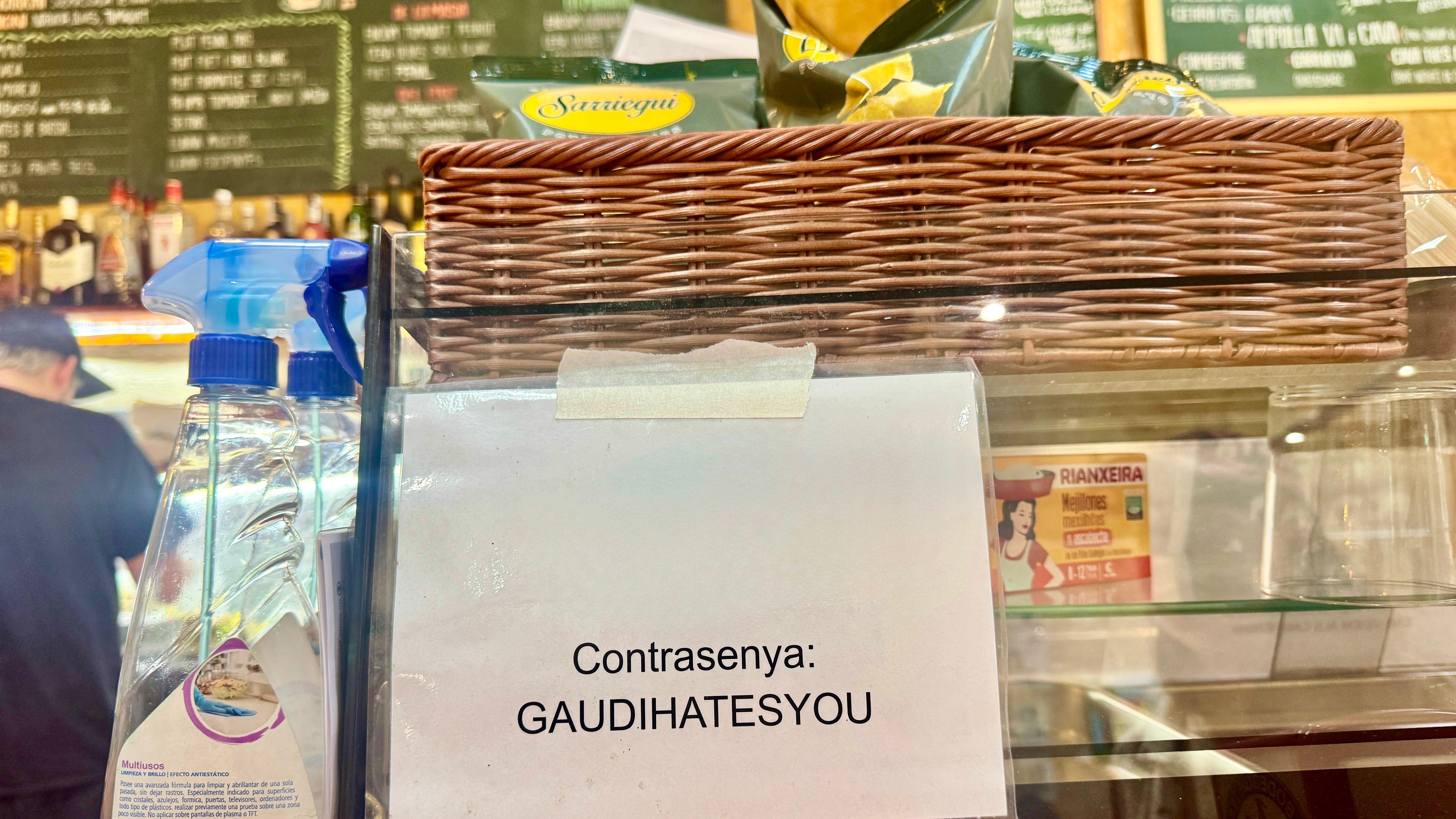
On a recent Sunday, I visited a friend who lives in a working-class neighborhood a stone’s throw from Park Güell. She took me to an anarchist-spirit co-op bodega I won’t name, fined by the city it serves, saved by the neighbors it pours for. GAUDIHATESYOU is their Wi-Fi password.
5 Barcelona Bodegas To Explore
You’ve met some of the people keeping Barcelona’s bodegas alive. Here are five more places they love, and so do I. Good news: You won’t need any kind of password to get in.
Bar Bodega Quimet
Everything a Barcelona bodega should be: filled with wine barrels, original tiled floors, loud conversations, vermut. No relation to the Quimet i Quimet in Poble Sec: this one is in Gràcia, taken over by two brothers fifteen years ago when the founders retired. Don’t miss their ‘variado de vermut’, featuring tinned razor clams, anchovies, roast red peppers and other vermouth-friendly bites, and try the heartier options like the traditional beef cheek stew too.
Bodega Vidal
Ninety years of history, briefly shuttered when the family retired, now back with a long tapas counter run by the famed Bodega Gol team. Order the empedrat, Catalan cold salt cod and white bean salad, or the salpicón de cap i pota, a cold salad of slow-braised pig’s head and trotters that sounds more alarming than it is. The wine list by the glass offers a rotating selection of Spanish whites and reds, from Terra Alta to Bierzo.
Bodega Carol
A bodega a punk soul, with bulk wine restored and a Street Fighter arcade in the corner. Easily the best embutido selection in town: morcilla, chorizo from León, Catalan fuet and chicharrón from Cádiz. Alberto García Moyano of Bodega Montferry, co-owner here, calls it “subversive underneath and yet for everyone.” Get a rebujito or kalimotxo, and stay longer than planned.
Bodega Fermín
In the same neighborhood,Clot, Bodega Fermín offers gildas, meatballs, esqueixada (shredded salt cod salad) and a solid choice of Catalan bottles. Johann Wald puts it best: “it has everything you would expect from a Catalan bodega’s food menu, and it’s in an area that is kind of tourist-proof because it’s not near any significant museum or attraction.”
Bodega Bonay
A hotel bodega that opens straight to the street and mostly feeds locals rather than guests. Chef Giacomo Hassan runs a menu of Mediterranean sharing plates with a strong Italian thread: handmade tagliolini with cockles or an artichoke or tomato tatin, depending on the season. The wine list features over 250 wine references, with a focus on low-intervention Catalan and Italian gems.
More Barcelona Content in Everyday Drinking


 | A guest post by
|