
To Understand Vin Jaune, You Need Comté
In the Jura, “yellow wine” is a god-tier pairing with the local cheese.
Sarah has just launched her own newsletter, Champagne at the Dive Bar, and you should check out her first—Jura-related—post.
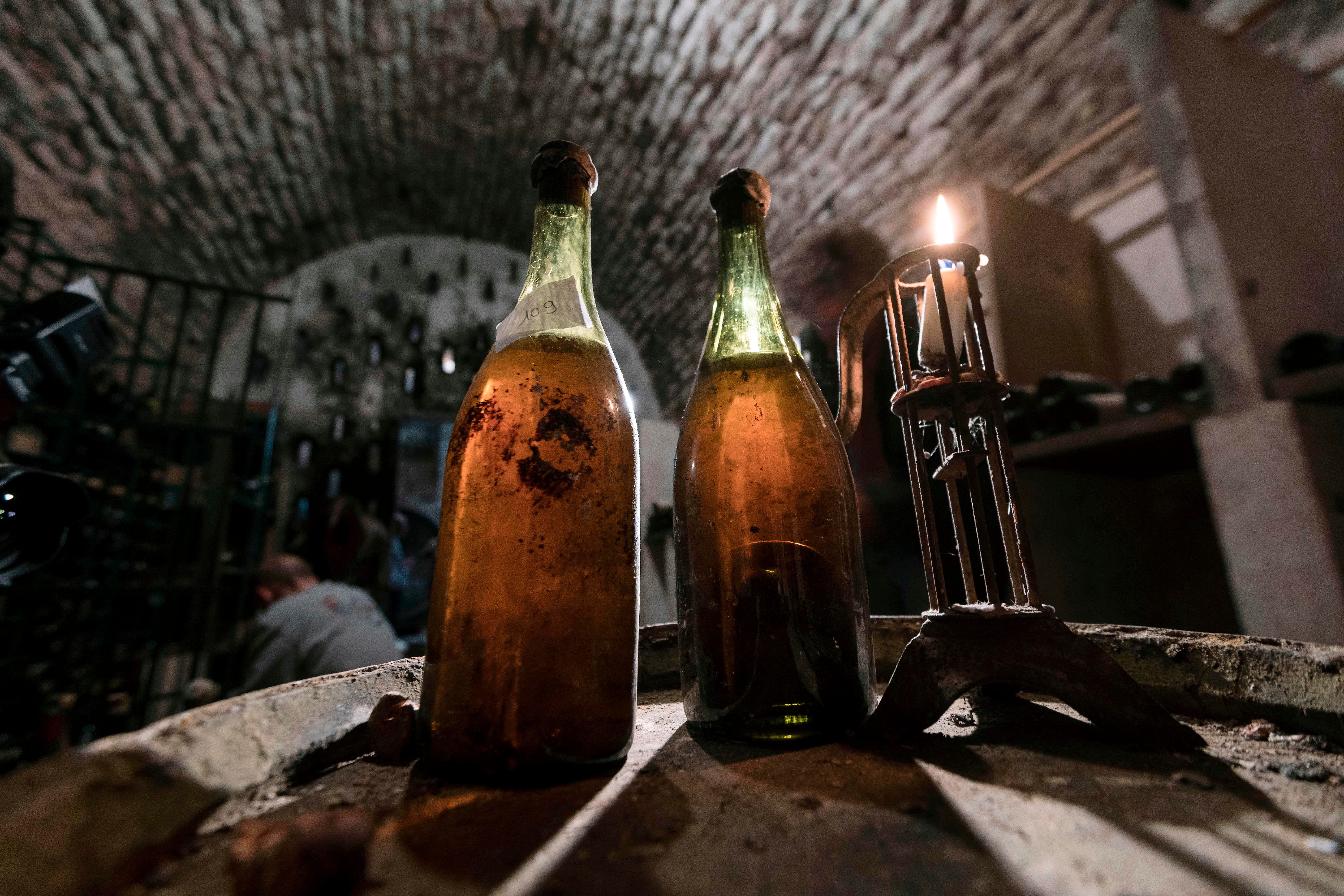
I peered through the bung of a barrel in the cellar of Domaine de Montbourgeau, as winemaker César Dériaux held his phone’s flashlight above the opening. The wine inside was covered by a delicate, grey, wrinkled-looking film, as thin as a piece of Saran Wrap floating on the surface. I was looking at the voile (the “veil”), a layer of yeast—similar to the flor in sherry barrels—that grows on the surface of vin jaune, the famed “yellow wine” of the Jura in eastern France. It’s what defines the traditional winemaking of this region—and, like sherry, it’s the source of a wholly distinctive taste that sets first-timers back on their heels, wondering what the hell they just imbibed.
Vin jaune is intense, bone-dry, with soaring acidity. It’s nutty and saline, with earthy, smoky, and spicy flavors. It’s a weird, cerebral wine that many people struggle to enjoy. But when sipped with a bite of Comté, the Jura’s iconic cheese, vin jaune suddenly makes sense in a way that feels like finally grasping some complex mathematical theorem. I was in the Jura earlier this summer, among the cows that make Comté and the vines that make vin jaune, hoping to better understand how the region’s two most famous products are produced and the affinity between them.
Vin jaune might be the Jura’s most well-known style of wine, but it’s quite rare (and often quite expensive). According to Wink Lorch’s Jura Wine Ten Years On, it accounts for less than 5 percent of wine production in the region (which produces a mere 0.2 percent of French wine). It’s made only from the ancient grape savagnin, a late-ripening variety with ripping acidity.

The wine is first fermented to dryness, then aged in old barrels, where the voile develops. The wine must spend a minimum of 5 years sous voile (under the veil) and at least 6 total in barrel, to be bottled as vin jaune. The best are made with indigenous yeasts, something that natural winemakers in the region insist on. The yeast’s growth is encouraged by how and where the barrels are stored, and how—or if—they’re cleaned.
In his cellar just outside of Arbois, I met with Emeric Foléat, the proprietor of Vignerons Les Matheny. He told me that chardonnay (the most widely planted grape in the Jura) supports only a spotty growth of yeast, but each time he fills one of his vin jaune barrels anew, the voile appears and thrives on the savagnin, “as if by magic.” The work of the supernatural, perhaps, but also Mycoderma vini, first identified by the Jura’s own Louis Pasteur as the microorganism that creates the yeast.
No racking or topping up of the barrels is allowed, so the yeast remains undisturbed and thin, and the wine takes on aromas and flavors of both biological and oxidative aging (from walnut skins and fenugreek, to dried fruit and coffee). The yeast consumes any residual sugar, so the resulting wine is searingly dry, while the alcohol rises as water evaporates through the barrels. The final wine is concentrated, complex, and can age for decades.
Vin jaune has been made this way since at least the 17th century, maybe earlier. An interesting (but unproven) theory is that the practice of aging wine sous voile was brought to the Jura from Jerez (where sherry is made) in the late 16th century, when the area fell under Spanish rule—but it's more likely that its origin was probably just a fruitful mistake.
Later that day, Marin Fumey, winemaker at Fumey-Chatelain, led me up a set of stairs to a loft where some of the domaine’s vin jaune barrels rested. He explained how the storage of the barrels impacts the taste of the wine: barrels stored in warm attics like this one see more evaporation, and a more intense and spicy wine, while those aged in cool cellars have more freshness, more citrus notes. “Sometimes our vin jaune comes only from here, sometimes it only comes from the cellar, and sometimes it’s a blend,” Fumey said.
Fumey took me on a tour of the domaine’s vineyards in his truck, and we stopped to admire a herd of Montebéliarde cows in a pasture. This is the red and white breed that’s the source of Comté cheese, and they were munching on grass just downhill from rows of savagnin vines. You might be tired of hearing this from sommeliers and wine educators, but that doesn’t make it any less true: what grows together goes together (literally right next to each other in this case).
Comté is hard to escape in the Jura. It was a part of my hearty breakfast every morning at La Closerie des Capucines, the guesthouse where I stayed in Arbois. The landscape is dotted with grazing cows, and milk trucks rumble down the highways. Driving through the town of Poligny, a sign with big colorful letters announced that I was in the “Capital of Comté.” I stopped there at the Maison du Comté, an entire museum devoted to the cheese that shares a sleek new building with the Comté interprofessional committee. They regulate every detail of making the cheese, from the minimum required grazing land that must be available per cow (1.3 hectares) to the maximum radius of the area from which each fruitière, or local cheesemaking cooperative, can source milk (25 kilometers).
After the milk is heated, molded, and pressed, the cheese is aged in a cave d’affinage, where it ripens for at least 4 months and up to 3 years before it’s sold. At the Fort des Rousses cave d’affinage, located about an hour southeast of Arbois, you can tour the long, high-ceilinged stone-walled rooms with towering wooden shelves bearing more than 100,000 wheels of cheese, staffed by workers in all-white uniforms.


Each cave d’affinage has its own totally unique microbiome that resides in the facility and ripens the wheels. It’s similar to the way each vin jaune cellar is home to its own unique microorganisms that work on the wine. For example, Dériaux of Domaine de Montbourgeau stores the family estate’s vin jaune in his grandparent’s house. He told me that when he first took over as winemaker, he moved the barrels to the cellar alongside the domaine’s other wines, before he realized his mistake and moved the barrels back. The wines just didn’t develop the same way. I noticed how each domaine’s vin jaune cellar even smelled unique. “The good smell of vin jaune,” Fumey called it.
At the Maison du Comté, a guided cheese tasting was included with the purchase of my ticket. Just like the grapes grown here and the vin jaune aging in their barrels, the cheese is influenced by the environment. It has a different flavor depending on what time of the year the milk is sourced and how old it is. In the spring and summer, the cows graze in the meadows and produce milk with a lot of carotene that gives the cheese a golden hue, like the color of a roasted hazelnut without its skin. Comté from winter milk, when the cows are fed on hay, is a lighter ecru color. Young Comté is creamy and mild, while older Comté is fruity, umami, and spicy, with notes of mushroom, dried apricots, nutmeg, and smoke.
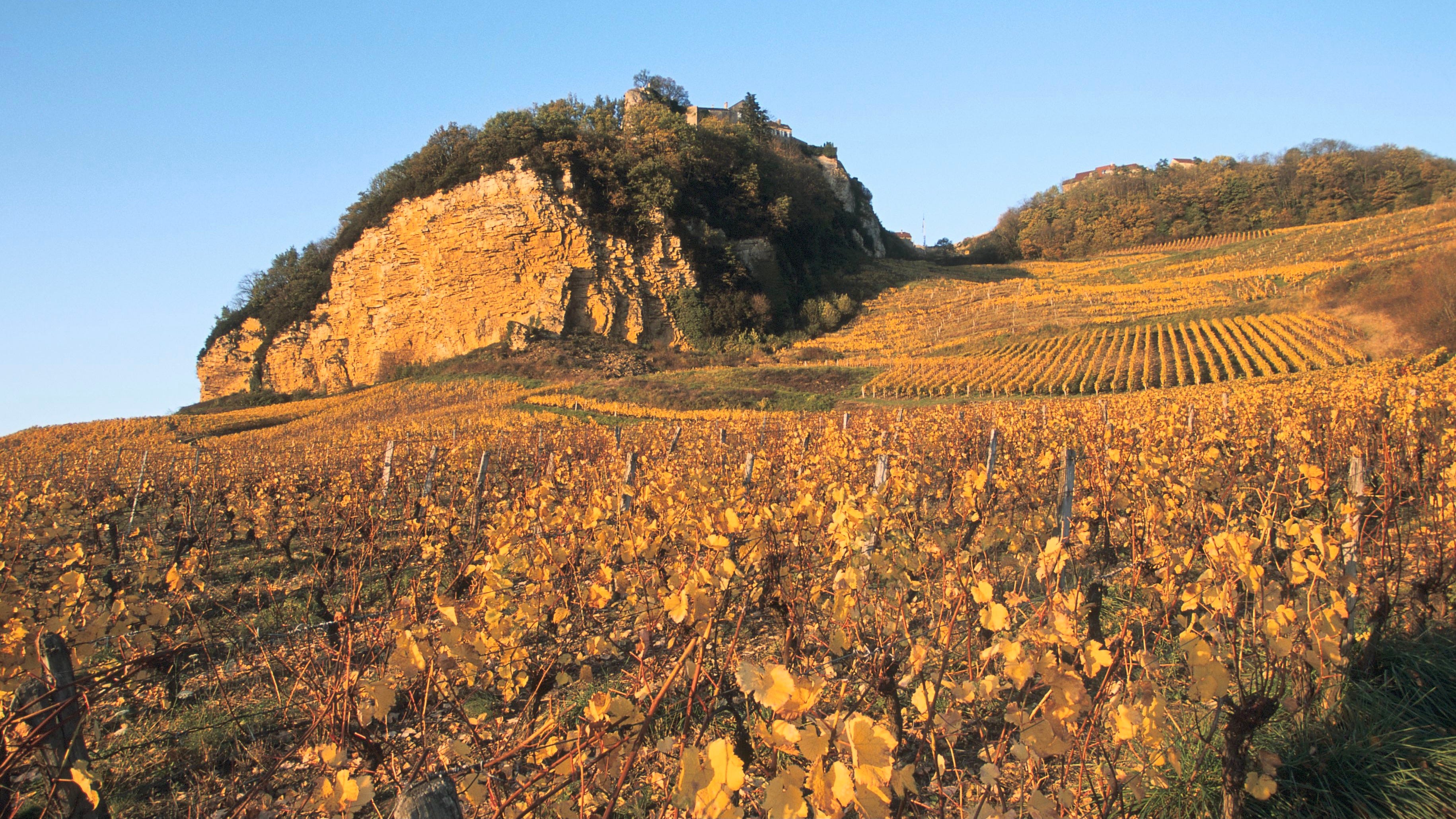
The perfect compliment for this nutty, salty, rich cheese is a nutty, salty, rich wine. On my last night in the Jura, at the restaurant Les Caudalies, the cheese chariot was wheeled around, and I was served a 2016 Domaine Philippe Butin Château-Chalon with a Comté aged 18 months. The little hilltop town of Château-Chalon is at the heart of the most revered terroir in the Jura, and only vin jaune can bear the appellation’s name on the label. The cheese tamed the acidity of the wine and revealed its full-bodied texture. Flavors harmonized, but they were also thrown into relief. The wine’s aromas changed with each swirl of the glass. I had done nothing in that moment except sit there and shovel cheese and wine down my gullet, but I felt as if I’d split the atom.
It was an “aha moment,” as sommelier Cameron Philip described it later in New York. Philip, who is opening a Jura-centric wine bar in the city this summer, agreed that the taste of vin jaune is polarizing—“deeply”—and Comté is key to appreciating it. “There are some wines that you just have to have with something else. You have to have vin jaune and Comté together,” he said. “You’re not going to forget it, and you’re going to understand it differently.”

The best part of “getting” vin jaune is that once you do, it unlocks a deeper appreciation of the entire region—especially as a point of difference to the Burgundian-style, non-oxidative white and red wines that seem to be the future of winemaking in the Jura. Vin jaune might be the past, but it’s also part of that future. Winemaker Stéphane Tissot is proving that with a unique range of single-vineyard vin jaunes, showing that expression of terroir is possible in this traditional style of winemaking, too.
After my meal at Les Caudalies, I slowly walked back to the guesthouse, the flavors of the vin jaune still in my mouth. My phone battery was dead, and I felt a frisson at the total silence of Arbois’ empty streets. I was in no hurry. As I walked, I thought of something Foléat said during my visit, about how good things—good wines—take time to make. Vin jaune is a wine that’s in no hurry. It feels like a relic, thoroughly out of step with the world today. And that is its greatest virtue.
Six Vin Jaunes From Across The Jura
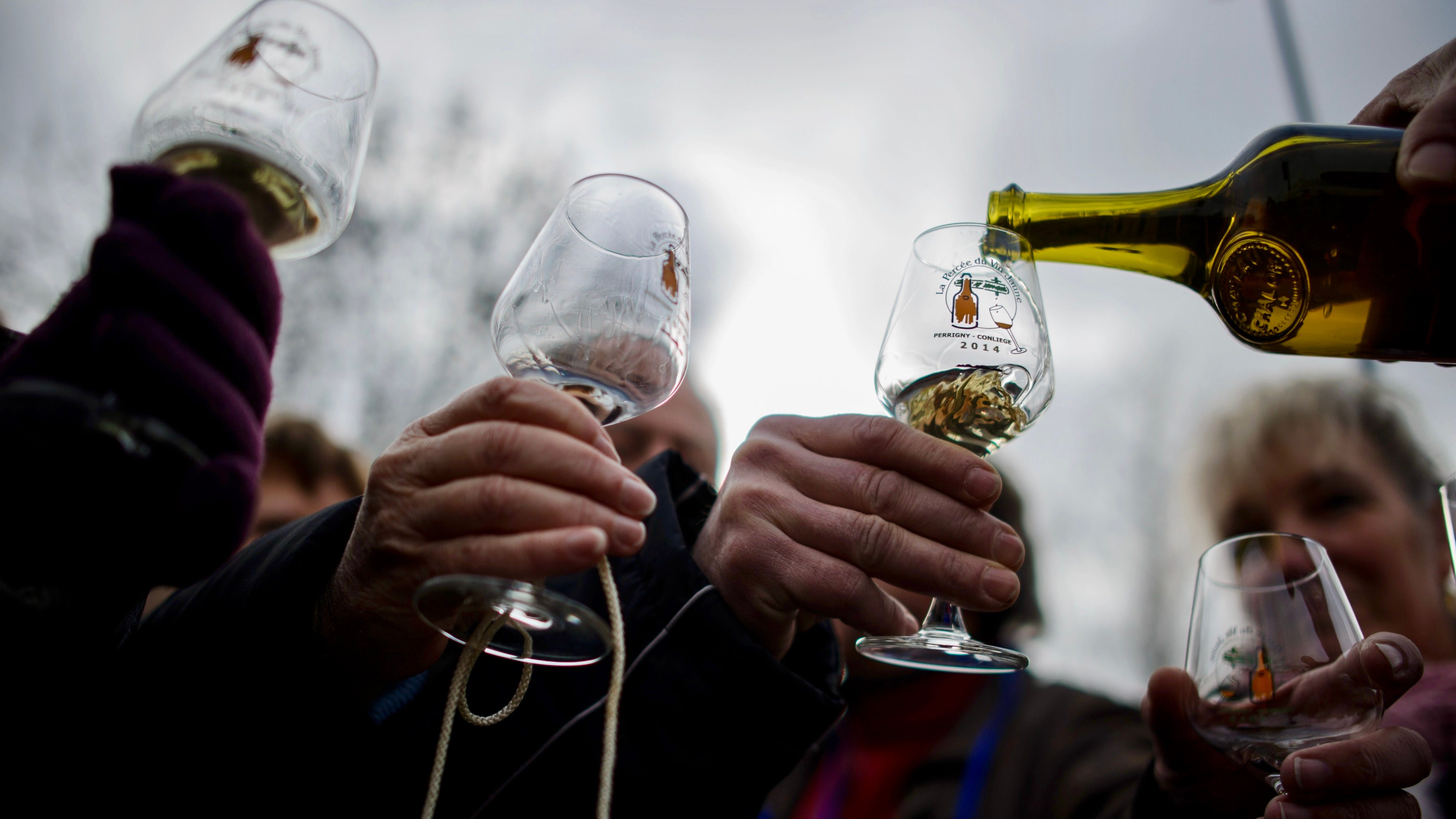
Vin jaune can be hard to find, and some of these wines that I tasted haven’t yet made it to the U.S. Because of the time and expense that goes into making them, they are not cheap. But for the quality they deliver, I would argue that these special wines offer outstanding value.
Bottle recommendations and tasting notes are for paid subscribers only.