
I approached the mustached wine steward in the camo hat at the German wine bar. Pouring wine from the window of a 19th century gothic-style mansion, he informed me—without asking what I’d like—that he was about to open something special. Blindly, I agreed. He gleefully revealed a simple-looking bottle, a Rully Blanc, from behind his Detroit Pistons jersey. He poured me a generous glass of Les Champs de l’Abbaye, and explained that it was produced by Alain Hasard and his partner Isabelle, the last winemakers left in the Burgundy village of Aluze. The wine was crafted from a small, prized lieu dit ‘La Chatalienne.’ It was never made again after 2023.
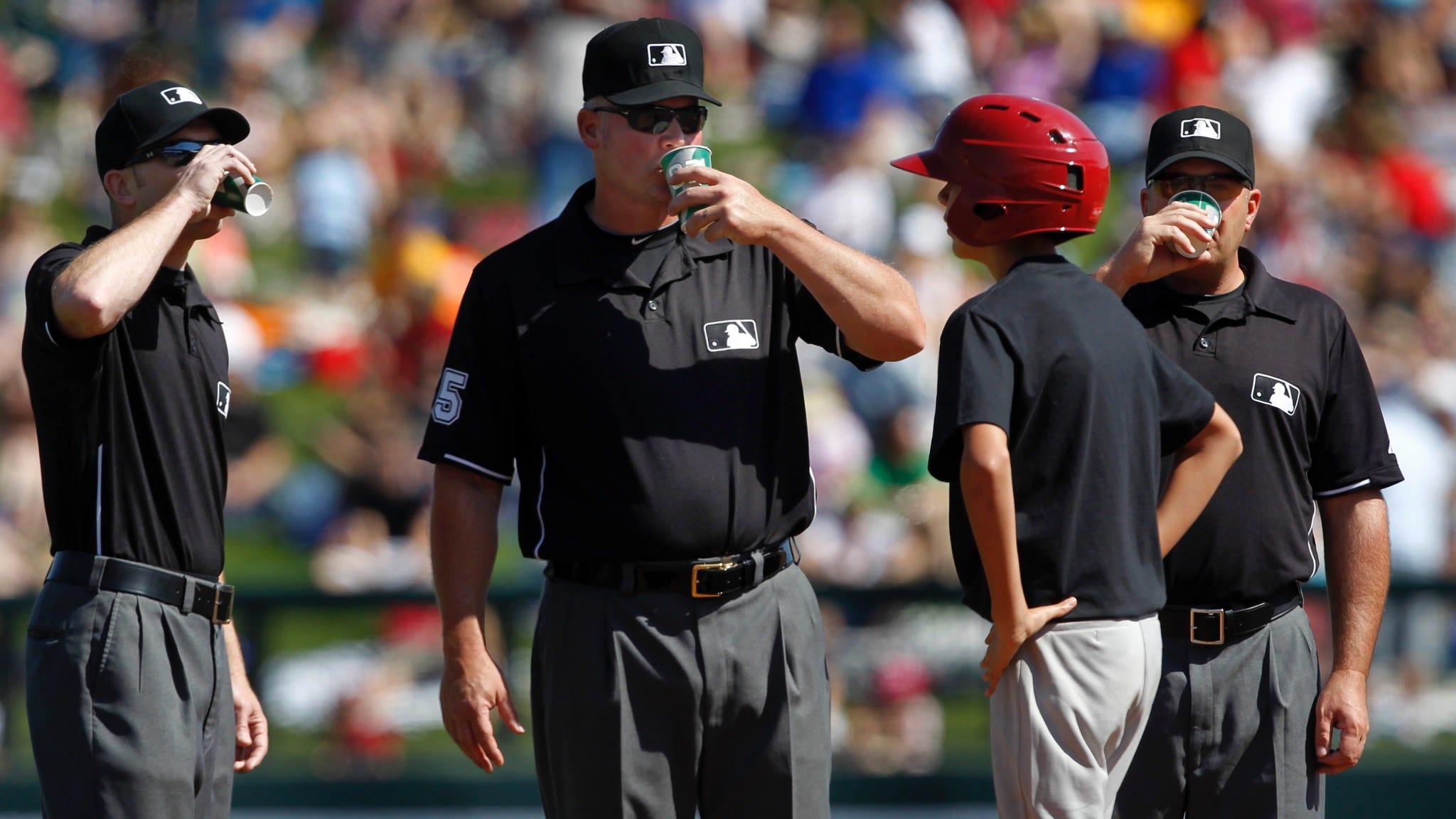
Pleased with my special little glass, I meandered through the garden to the fire pit. I joined a couple, already sitting there enjoying a beer, who I would soon come to know as Gabby, and her partner, Shawn the Umpire. I don’t remember exactly what urged Shawn to reveal he was a baseball umpire. But by the time my second glass was being poured, he was on his feet, with a small audience gathered, demonstrating his signature ring-up calls—the ways an umpire signals a called third strike from behind home plate. “There’s no parameters of what that is,” he told us, punctuating the point with an explosive drop of the hammer, his signature call for lefty hitters. The artistry of it, Shawn explained, is exactly why he loves umpiring—and exactly why, according to him, he never pursued a Major League career.
“There’s a high percentage of fascists among umpires,” Shawn said. “I’m not even joking. It attracts a lot of cops.” It’s perhaps ironic that umpires were once nicknamed “blue” due to their traditional garb, reminiscent of police uniforms. The connection between rule enforcement and baseball officiating is structural and historical, not incidental, and has over the decades lent an authoritarian personality to the role. And what does that culture do to individual expression? “They don’t want any variation or deviation. There’s a proper way,” Shane told us. The ring-up call might be the last gasp of the umpire’s artistry.
As of the 2026 season, Major League Baseball has fully implemented the ABS Challenge System—robot umpires—as part of regular play. A batter may now challenge the human umpire’s call and request a robot review. The robot’s call takes precedence. No matter what.
My new friends continued talking baseball while I became lost in thought as my sneaker unknowingly melted to the side of the fire pit. I kept thinking about what Shawn had said—that the institution didn’t resist the robot because it was already built for it. A culture organized around uniformity, authority, and the elimination of deviation doesn’t get disrupted by an algorithm. Rather, the culture becomes completed by it.
The commodity wine industry knows this feeling. The introduction of the 100-point scale, the consolidation of distribution, the birth of apps like Vivino and its successors—none of these were disruptions of wine culture. They were its natural progression. Legible, transferable signals engineered to move product efficiently through a complex supply chain. Never were they intended to be a genuine aid to the real culture of wine, but rather the natural endpoint of the “culture” manufactured by the (bulk) wine industry.


Like baseball, drinking wine is, at its core, play. Play, according to Dutch cultural theorist Johan Huizinga is voluntary, absorbing, bounded by rules—but requires tension and uncertainty. “If we’re obsessed with efficiency and precision, we’re ruining the whole thing it was supposed to be to begin,” Shawn told us during his umpire demonstration that night.
I knew exactly what he meant. When I worked in a wine bar, it was an every night occurrence: Patrons would be deep in conversation about what they wanted to drink, two or three bottles sampled out, immersed in the beautiful friction of figuring it out together; but then someone would turn to Vivino to make the final decision. Instead of trusting their own palate, the sommelier’s lead, or just the fertile give-and-take between two people in a real moment, they outsourced it to the wine robot—which informed them, with great authority, that a crowd-sourced 4.2 is objectively superior to a 3.8, regardless of whether the higher-rated wine is anything close to what they actually asked for.
Vivino has 65 million users, who essentially have a robot wine umpire in their back pockets, ready to throw an ABS Challenge at earnest, knowledgeable wine lovers anywhere. Of course, what most users don’t know is that Vivino’s recommendation engine isn’t purely in service of their discovery. It exists, in part, to clear inventory. Wines without sufficient rating volume don’t enter the system at all and automated decisions are made in Vivino’s commercial interest and then dressed up as personalization.
Wine-Searcher acts as the ABS Challenge in retail. Your local retailer has a bottle for $32, but Wine-Searcher says you can get it for $25. What it fails to tell you is where that retailer is, whether they ship to your state, what the minimum order is, shipping charges, or the facts behind why they paid so much less than your local guy for the same bottle. The transparency that Wine-Searcher promises obscures more than it reveals, nudging the everyday wine consumer to distrust their local retailer and reach instead for something that has experienced less price fluctuation. Which almost always means it was produced for consistency and mass appeal, not for anything else.
And now we have moved past challenges entirely. A growing wave of AI sommelier apps and discreet integration of AI into the apps we already know are no longer challenging the human call, they are replacing it. Every single one frames the human encounter with wine knowledge as the problem to be solved. The slight discomfort over ordering wine, the friction, the not-knowing are all now simply obstacles to be engineered away.
Yet the most valuable wine recommendations I have ever received came from a human being who knew something I didn’t, who read me correctly, and said, “Trust me on this one.”
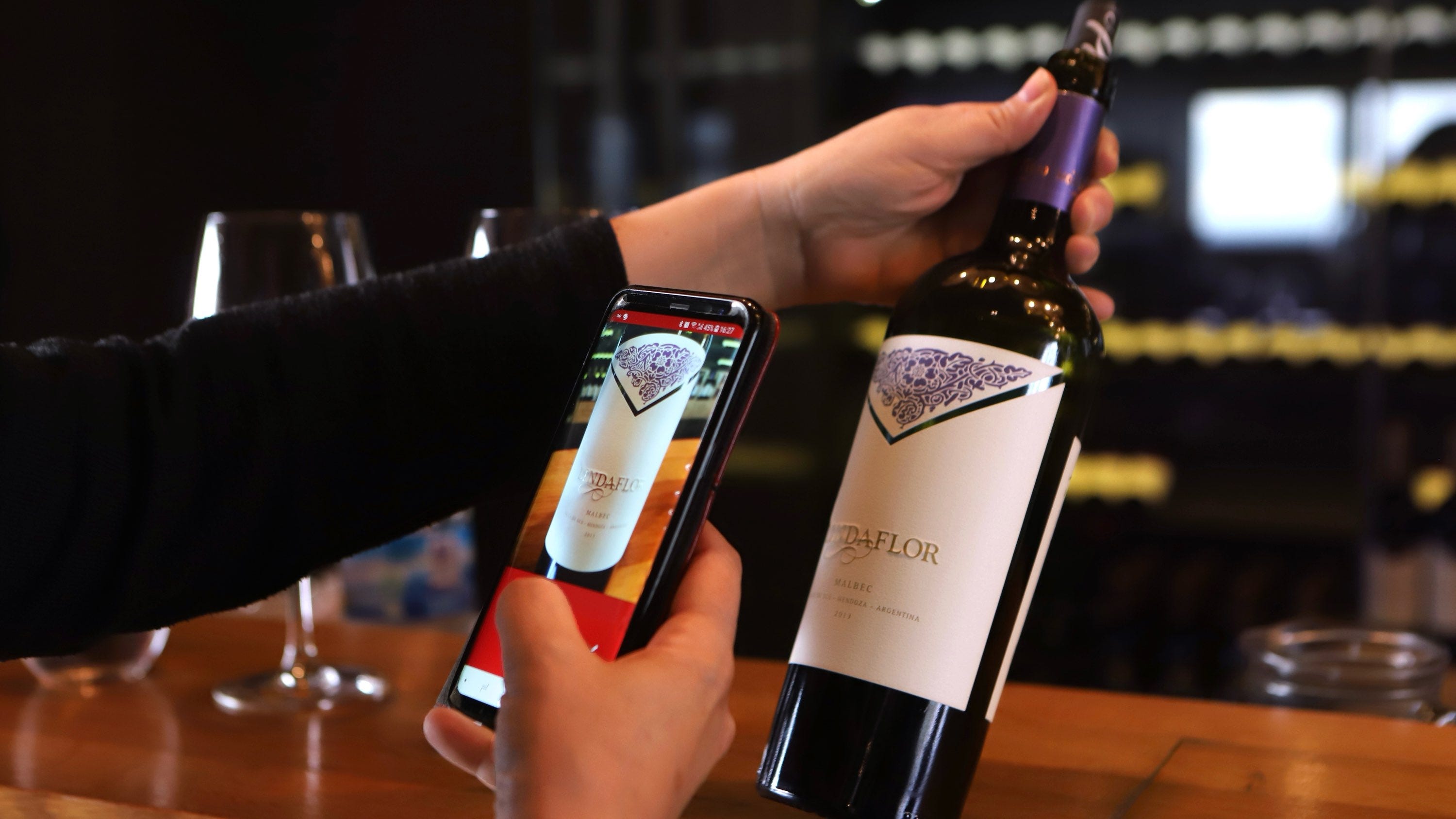
Now, I don’t intend to be insufferably anti-tech—I am not an idiot and I realize it is now a part of our lives and we must learn to live with it. What I am warning is that when we involve machine learning and algorithms in decisions like what wine to drink, we are not getting an innocent recommendation.
Wine culture is built on interpersonal recommendations. When the human is removed and the system is optimized for inventory reduction, engaging with the algorithm means deciding which wines get to exist, and which don’t. In most cases, that looks like the erasure of small, quality producers. Wines like the Rully Blanc poured for me by mustached human somm in the camo hat, get pushed further to the margins of wine until they disappear.
I reached out to Randall Bush of Loci Wines, who imports Les Champs de l’Abbaye into the States, to find out why 2023 was the last vintage. “Those are extremely unheralded wines,” he wrote to me. “It must have been hard to work that much and not really get recognition.” The work he’s speaking of is the farming, biodynamic and by hand. On Loci’s website he describes that work as “inward-looking, imbued with a passionate attention to the sites they farm and a pathos of care to the wines they produce and the people they meet.” That prose, while a tad treacly—the sort of wine talk that’s easily parodied—is also true.
Alain and Isabelle made the choice to retire and move to the Ardèche. The land was sold to a cult natural wine figure in Burgundy, Tino Kuban of Maison Glandien, who bought their excruciatingly low-yielding plots. In some way, this means the wines may finally get the recognition they always deserved. But being labeled under a fetishized name also means those same wines will now be triple the price. So, if I’d like to drink the wine I had last week with any regularity, I will need to consider taking out a small loan from my dad or finally get into selling feet pics once and for all.
If it weren’t for the somm perched in the wine window, spotting my thirst for something interesting—and me meeting him with trust and openness—would I even know this wine existed? The point is, I know now, from one simple exchange on a spring night in Detroit. But that exchange required two humans, present in a moment and paying attention to our mutual need, to connect with something beyond the physical. There is no world in which an app could have brokered the decision to open that wine, nor any algorithm that would have surfaced Alain and Isabelle’s story from the depths of information obscurity. If we keep outsourcing those moments to the robot, we won’t just stop finding wines like this. We will stop making them altogether.
Am I saying that my children may never know the transcendent pleasure of these disappearing marginal wines? Or that Shawn the Umpire’s signature hammer-drop ring-up call is already a relic and there is no coming back? Well, I’ll let you ponder that one over your next ballpark hot dog and overpriced beer this season.


Good article.
While so many people are foaming at the mouth in excitement over our AI future, I too reflect that the true pleasures in life come from human interaction. I appreciate your effort to promote those winemakers who produce their wines with their own hands, whose focus in life is the wine they make and not "inventory reduction" (a nice way to put it). Those are the wines I like to drink and I shall stockpile as many as fit in my little cellar against the day when the robots rule the world.