
In Provence, Do Appellations Even Matter?
How useful are AOCs in a huge region dominated by mid rosé? Plus: 26 bottle recommendations, from Bandol and beyond.
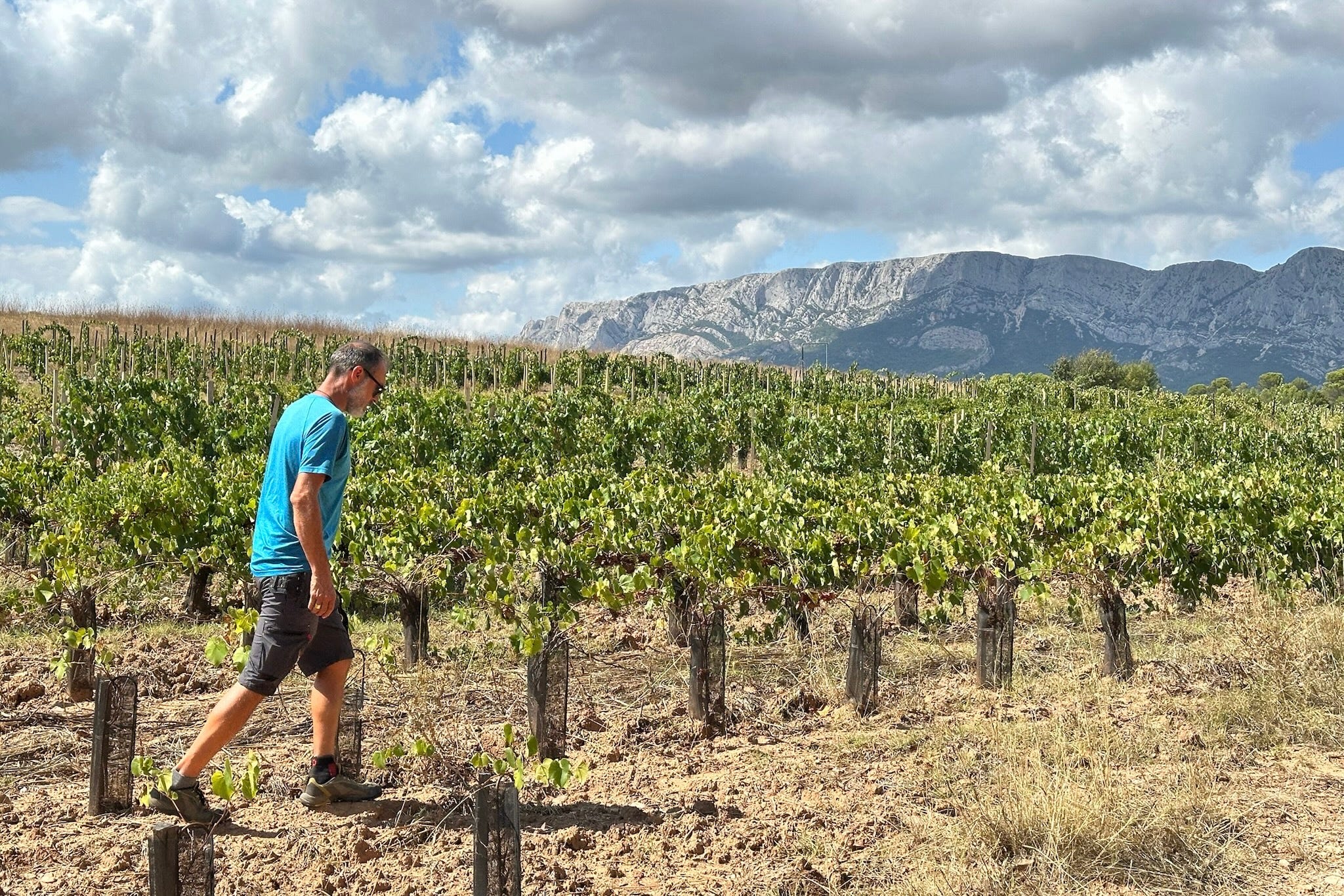
If someone mentions “Provence” and “wine” in the same breath, chances are they’re referring to rosé. Specifically, they probably mean the grenache-dominated, high-volume rosé that’s rapidly pressed and fermented with cultured yeast, before spending minimal time in tanks—the goal being to get it in the bottle and onto the shelf as quickly and cheaply as possible.
In 2024, rosé accounted for a whopping 91 percent of all AOC wine produced in the region, a pink ocean filling more than 130 million bottles. And the vast majority of that, regrettably, is pale wine that tastes like…not much of anything. Or any place. (I’m sorry, but “garrigue”—the overused word for the fragrant scrubland in the region that pops up as a descriptor in endless tasting notes—does not terroir make.) To get away from high-volume, generic Provençal wine with no real sense of place, you either have to look for a handful of very small, delimited areas, or simply don’t worry about appellations.
Why should a consumer expect to know the differences between a wine from Côtes de Provence and Côtes d’Aix-en-Provence? There are four subzones in Côtes de Provence: Sainte-Victoire, Fréjus, La Londe, and Pierrefeu. I’ve never seen a producer use any of those, so who really cares?
To find wines of place in Provence, I headed west from Nice this September into Bandol, an appellation famed for its dark, tannic, ageworthy red wines made principally from mourvèdre. It’s the only appellation in France that requires a focus on this late-ripening variety, which must be 50 to 95 percent of the blend for reds; the rest is grenache, cinsault, and sometimes syrah or carignan. It’s a small appellation of about 1,600 hectares, with less than 70 producers. As I drove along the Côte d’Azur, a pattern of condos-pizza restaurant-ice cream shop passed by the car window like a repeat pan in an old Hanna-Barbera cartoon.
I reached Saint-Cyr-sur-Mer in the west of the appellation, a small coastal town with scrub-covered rocky hillsides looking out onto the International Klein Blue of the sea. On the outskirts of town, I pulled into the long drive of Château Pradeaux, a benchmark traditionalist producer for both Bandol and Provence. The domaine’s peachy-pink house with turquoise shutters dates to the 17th century, and the property is dotted with ancient olive trees, some as old as 1000 years. Étienne Portalis met me at the cellar door and we walked through the vines radiating out in rows from the house. The estate has been owned by the Portalis family since 1752, when Jean-Étienne-Marie Portalis—an author of the Napoleonic Code—inherited it. Étienne’s grandmother, Arlette Portalis, and her mother Suzanne fled to the estate in World War II to live in the unoccupied zone libre (the free zone) and revive the property. Arlette was a key figure in the creation of the Bandol appellation, which was approved in 1941. Now, her grandsons Étienne and his brother Edouard share management of the domaine.
As we walked past the vines, farmed organically with some biodynamic practices on limestone and clay soils, his hound dog started eating some of the grapes hanging heavy from the vine, and Portalis called him away. “Once they begin to eat the grapes, you know it’s time for harvest,” he said. His team would begin picking grapes for the domaine’s rosés in just a few days. The best Bandol rosés, with a high percentage of mourvèdre, are often deep in color, complex, structured, and ageworthy—a far cry from the pale, dull examples found throughout much of the region. But rosé is not what defines Bandol.


Portalis’ grandmother rehabilitated the domaine’s vineyards after the Germans and Italians occupied the property in 1942 and destroyed the vines, replanting mostly with mourvèdre. That variety is the star of the show here, making up 90 to 95 percent of Château Pradeaux’s Bandol red—“the soul of the estate”—rounded out by varieties like cinsault or carignan to bring freshness and lower alcohol.
Portalis said it would be a struggle to find a grape that fits as well to the terroir. “It’s really the place for mourvèdre,” he said. “Pradeaux” gets its name from the fact that it is near the water (près de l’eau), about a half a mile away from the sea. Bandol is in an amphitheater formed by the surrounding hills, and the winds circulate throughout the appellation from off the Mediterranean. “It creates a microclimate that allows the mourvèdre to grow slowly,” Portalis said, “so we have a good balance between alcohol and structure.”
We stepped into the winery, where the handpicked grapes for the reds would be sorted and put into tanks to begin fermentation, without destemming. They’re then put in large oak foudres for aging. Bandol’s appellation rules stipulate a minimum of 18 months in barrel for Bandol reds; Château Pradeaux ages theirs for four years.
“That’s not a fashionable wine,” Portalis admitted. “But the best way to not be old-fashioned is to not be a fashionable wine.”
The regulations will likely be changing though: the majority of the growers in the Bandol producers’ association want to lower the requirement to age the reds to only 12 months, in the face of more and more hot vintages producing wines that don’t need to age for the full 18.
Portalis believes this is a poor idea. It seems like a simple tradition versus a the-times-they-are-a-changin’ argument. But some of this is future-proofing, to his mind. “The Provence rosé sales will decrease,” he predicted. “So in Bandol, it’s important to keep the identity here.” Even if the aging requirement is lowered, it won’t change the way anything is done at Château Pradeaux.
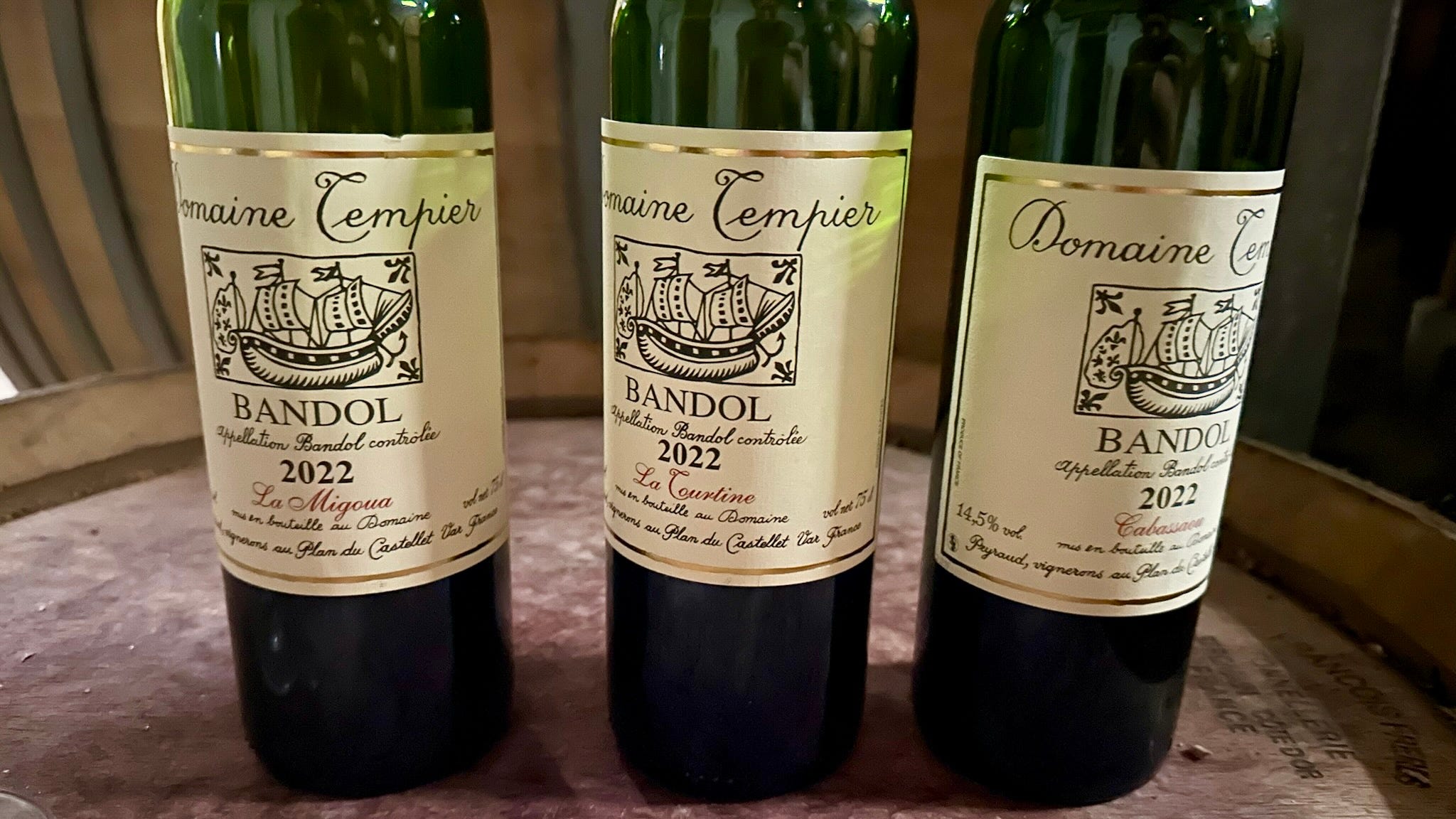
Daniel Ravier, winemaker at the storied Bandol producer Domaine Tempier, expressed similar thoughts when I met with him later that week. Domaine Tempier’s Bandol rosé has become a benchmark and highly sought after by collectors. (When the recent vintage landed at my local wine shop in Manhattan, it was sold out within an hour.)
Yet as popular as his rosé has become, Ravier is adamant that Bandol’s identity is its reds, not its pink wines.
Lucie (“Lulu”) and Lucien Peyraud of Domaine Tempier (along with Arlette Portalis) were among those who helped to establish the Bandol appellation. Ravier took over the role of winemaker from the Peyraud family in 2000 and has overseen converting the domaine to biodynamics. We walked through the cellar, full of barrels for aging the reds ranging in age, size, and cooperage—from Stockinger to Valery Desfrieches Cognac barrels. Ravier calls it “a museum of foudre.”
Bandol reds are wines of incredible longevity; they can take 10 to 15 years to just begin to reach their potential, as demonstrated by a tasting of 2011 and 1981 Tempier bottlings in the winery. They may promote longevity in their drinkers as well. We tasted the wines under a large photo of the legendary Lulu. In a satisfying affront to those who obsessively count how many ounces of water they consume daily, when Lulu Peyraud turned 100 in 2017, “she was drinking red wines and Champagne—no water,” Ravier told me. “She would say, ‘L’eau, même sous la douche, je ferme la bouche’”—for water, even in the shower, I keep my mouth shut. She lived to the age of 102.
When talk turned to the appellation rules, Ravier felt strongly that a proposed change to allow 100 percent mourvèdre bottlings was a negative one: making Bandol a blend is part of the appellation’s identity. “Sometimes if the mourvèdre is too aggressive, and you have 3 to 5 percent of very interesting carignan or something in the blend, the dimension is even greater,” he explained.
He lamented the unpopularity of the 18-month elevage rule with the growers as well, though he felt that there should be some flexibility built in, contingent on conditions, while still preserving the idea of aging the wines over two winters in wood.
Working Beyond Appellation in Provence


Pulling back for a moment from the world of Bandol, these discussions may seem like splitting hairs to a lot of wine drinkers. What’s the difference between 12 and 18 months, really? Does 95 percent versus 100 percent mourvèdre make that much of an impact? It does when you have a strong identity to protect—one that’s highly distinct from the Provence Rosé brand.
But I was about to get a little palate cleanser from all the appellation rules. Later that week, I drove east from Aix-en-Provence, bustling with students returning for classes and tourists in town for a blockbuster exhibit of the city’s most famous resident, Paul Cezanne. Heading into the foothills of the Mont Sainte-Victoire mountain range, the air was distinctly cooler and fresher. I glimpsed lavender farms, the plants long-past bloom and wet with morning dew, through breaks in the trees as I followed the winding road.
In the tiny little town of Pourrières, I met winemaker Jérôme Maillot, of Le Temps des Rêveurs. He started his winery in 2014, when he took over his family’s vines that grew grapes for the local cooperative. Working organically and biodynamically from the outset, he planted more vines and now works over 6 hectares. Maillot farms four sites in this dry, windswept part of the region, where the elevation gives a greater diurnal range, slowing ripening and retaining acidity in the grapes. His winemaking is experimental and minimalist, with just a touch of SO2 at bottling. The resulting wines are ones of remarkable freshness in this hot region.
He works with old-vine carignan and ugni blanc planted by his grandfather. Old vines are a rarity in Provence: they tend to get replanted when yields aren’t high enough to meet the massive demand for rosé. Maillot has also grafted massal selections of grenache, syrah, grenache gris, carignan gris and blanc, and macabeu, choosing late-ripening varieties resistant to climate change.
But it’s the carignan, dismissed historically as a “workhorse” grape, that he especially loves to work with. “It’s a variety which is very easy to read, how the vine is growing and developing,” Maillot explained. Carignan doesn’t have the reputation of a great variety because in the past it would produce big yields and ripened too late. With old carignan vines, Maillot’s yields are naturally restricted on these soils, producing wines of concentration and complexity.
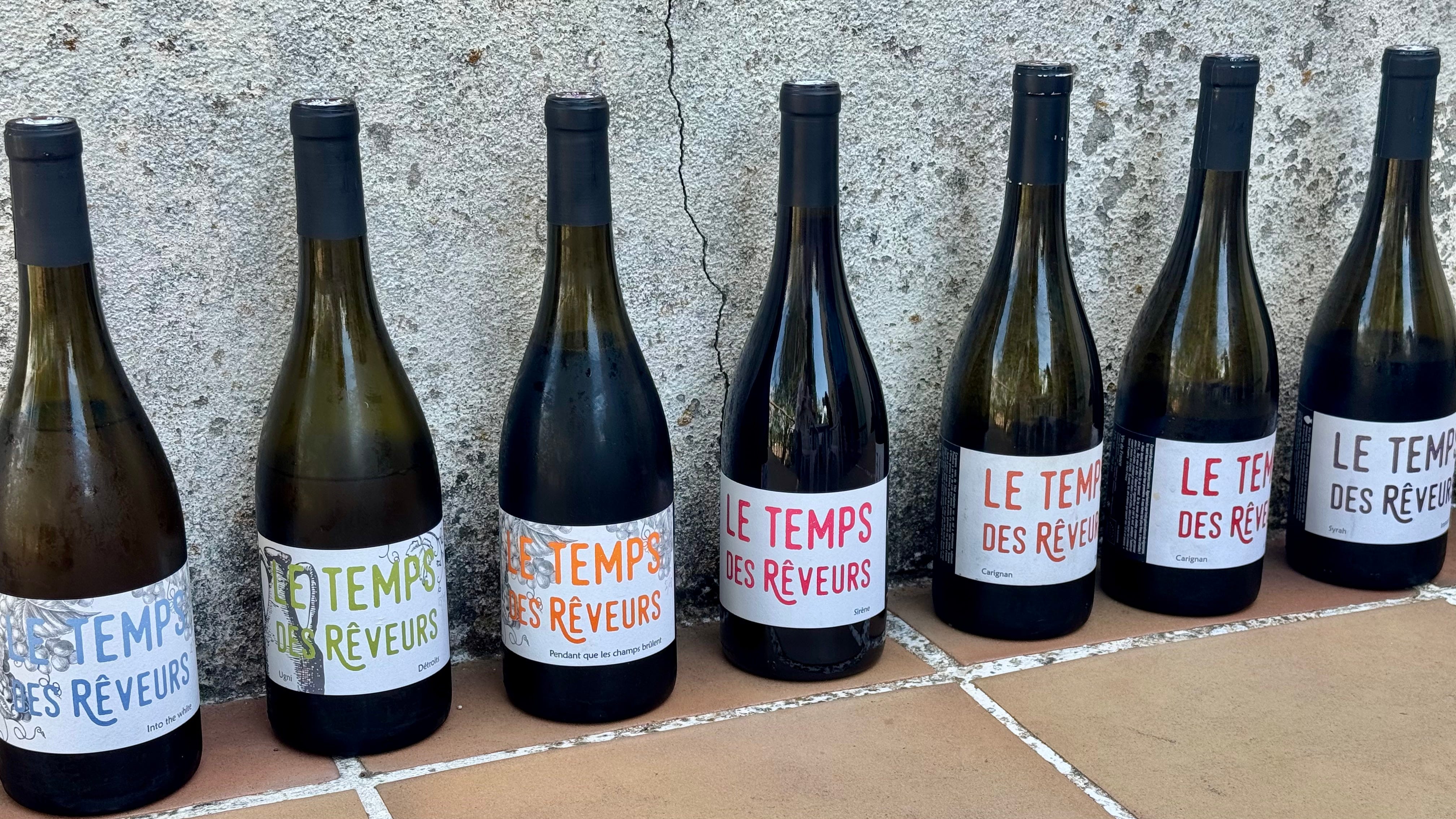
Maillot works within the delimited area for Côtes de Provence, but he eschews the appellation because it accommodates neither his experimental vinification methods nor his love of carignan. His Eric Pfifferling-esque red wine, Sirène, for example, uses the classic blend of grapes: grenache, mourvèdre, cinsault, a bit of cabernet sauvignon. But with Maillot’s winemaking techniques, it exists in that beautiful liminal space between a rosé and a red wine—outside of that bugbear “typicity” with which the Bandol producer organization is so preoccupied.
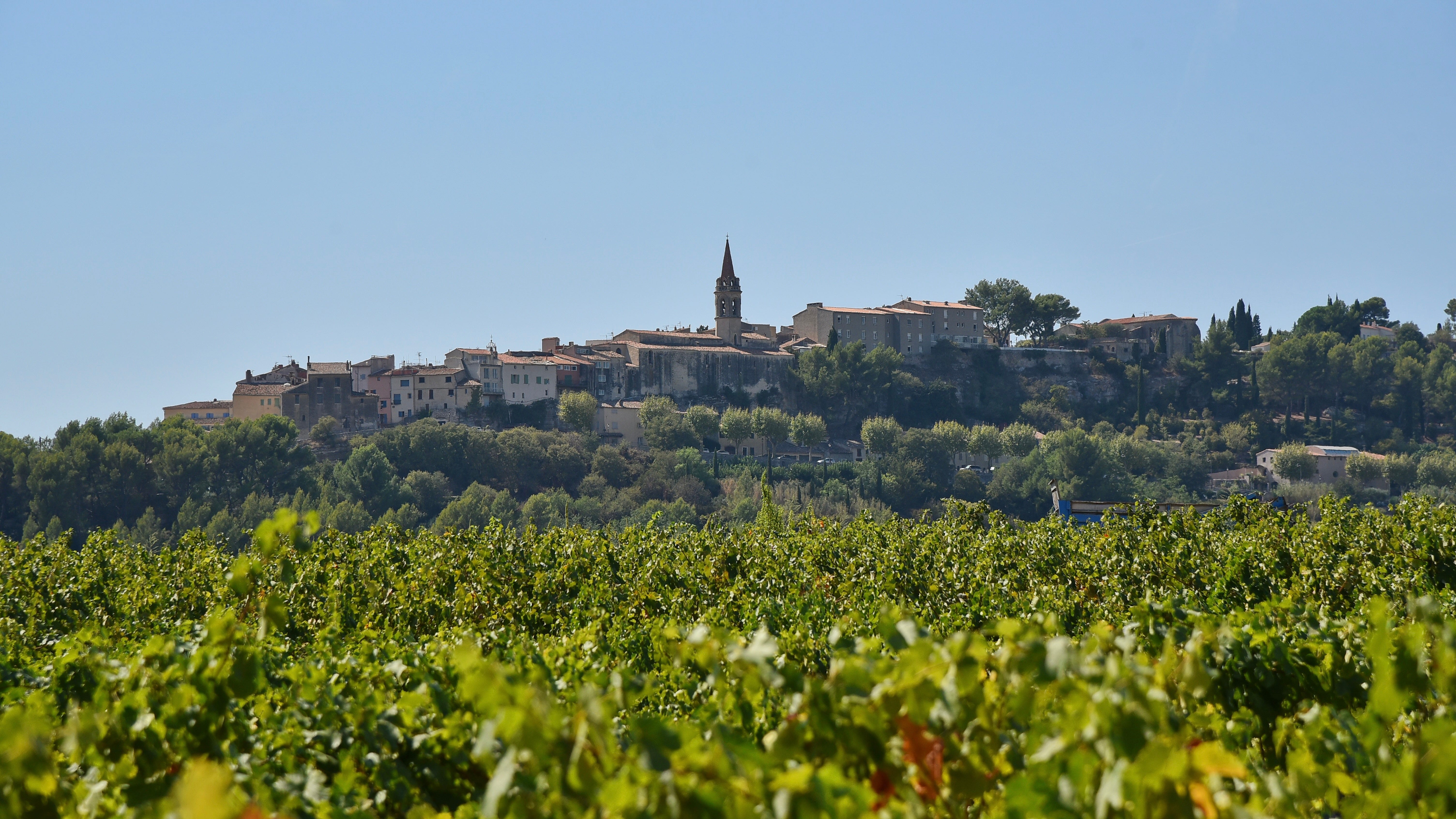
Maillot also has two 100-percent bottlings of his old-vine carignan, which is not allowed under the appellation’s mandate for blends. All his wines are thus bottled as Vin de France. This doesn’t bother him, though; he would rather put the effort he would spend fighting the appellation rules to better use selling his wines to the consumers who will appreciate what he’s doing.
There’s a lot of this happening in Provence. Beyond Bandol and maybe a few other areas, the appellation system won’t help you much. Its purpose is ostensibly quality control, but I drank some very poor AOC wines while in Provence, and several of the best I tasted were non-appellation.
I tried some gorgeous rosés while I was there, too, but there are impressive wines of every hue and style being made, both within and without the appellation system. It’s a shame that the forward-looking spirit of a lot of winemaking here is overshadowed both by Provence Rosé’s dominance and the rigid appellation regulations. One of the most stunning rosés that I tasted was Château Pradeaux’s Vesprée cuvée, but even this wine—Bandol through and through—butt up against the appellation system: in the past, it was denied Bandol appellation status multiple times for stylistic reasons, and labeled Vin de France.
All of this is to say, winemakers have so far defaulted to Vin de France when AOC regulations prove too inflexible, in Provence and throughout the country. Vin de France has become shorthand to consumers (especially young ones) for experimental winemaking, often minimal or low intervention. This serves a purpose for marketing—Vin de France is now a brand of its own, in a way. But will there come a day when the INAO has a mess of Corpinnats and Verband Deutscher Prädikatsweingüters (VDPs)—private organizations that broke away from the appellation systems—to contend with? How many Château Lafleurs will it take before things change?
Maybe this battle will simply devolve further along the lines it’s already taken, where the consumer has to simply know producer names—both the AOCs/Château Pradeauxs and the Vins de France/Le Temps des Rêveurs of the French wine world—and the story behind them to know who is making the styles of wines they want to drink in the way that consumer prefers that they be made: traditionally, transparently, organically, regeneratively, low-intervention, etc. For so many wine consumers who think in this dimension, appellation labels are already just that—simply a label.
26 Wines from Bandol and Beyond
Below are a mix of AOC wines and Vins de France from Provence, of every style and hue; some of them may not yet be available stateside, but I’ve linked to the importer’s site where wine-searcher.com comes up empty-handed. Note to importers of Provence wines: the people want more than rosé!
Bottle recommendations and tasting notes are for paid subscribers. Upgrade today!