Coffee Is The New Cocktail
Maybe it's time bartenders took some inspiration from baristas.
As I walk around New York City, I’m accustomed to seeing outrageous signs outside of restaurants, bars, and cafes. Humorous drink names, happy hour specials, and creative illustrations of beverages all constantly scream at you from outdoor blackboards, desperate pleas for you to come in. It’s not often one of these advertisements stops me in my tracks. The other day, walking near NYU in Greenwich Village, I saw it. The sign that made me stop, take a picture, and almost go inside to purchase something for research.
The Espresso Martini Latte from Blank Street. A reproduction of a reproduction, so far removed from the original subject that we’re left with a coffee-flavored candle of a drink. Ironically, this is the seasonal special being pushed onto the cult-like group of young customers known for their lack of drinking alcohol. In bright, capital-lettered font it emphasizes the “0% A.B.V.” of the new drink. This drink contains a double espresso shot, milk, hazelnut, vanilla bean, honey, cinnamon, hazelnut spread, and Himalayan pink salt. How, at all, does this connect to what Gen Z’ers think an espresso martini is supposed to taste like?
This situation led me to think about the intersection of the shifting cocktail space and the ever-growing world of craft coffee, and how they’re not all that different. Except one is shrinking and the other is booming. Why? What people, especially young people, love about coffee comes straight from the mixology playbook. Craft syrups, creative garnishes, storytelling through flavor with a robust base.
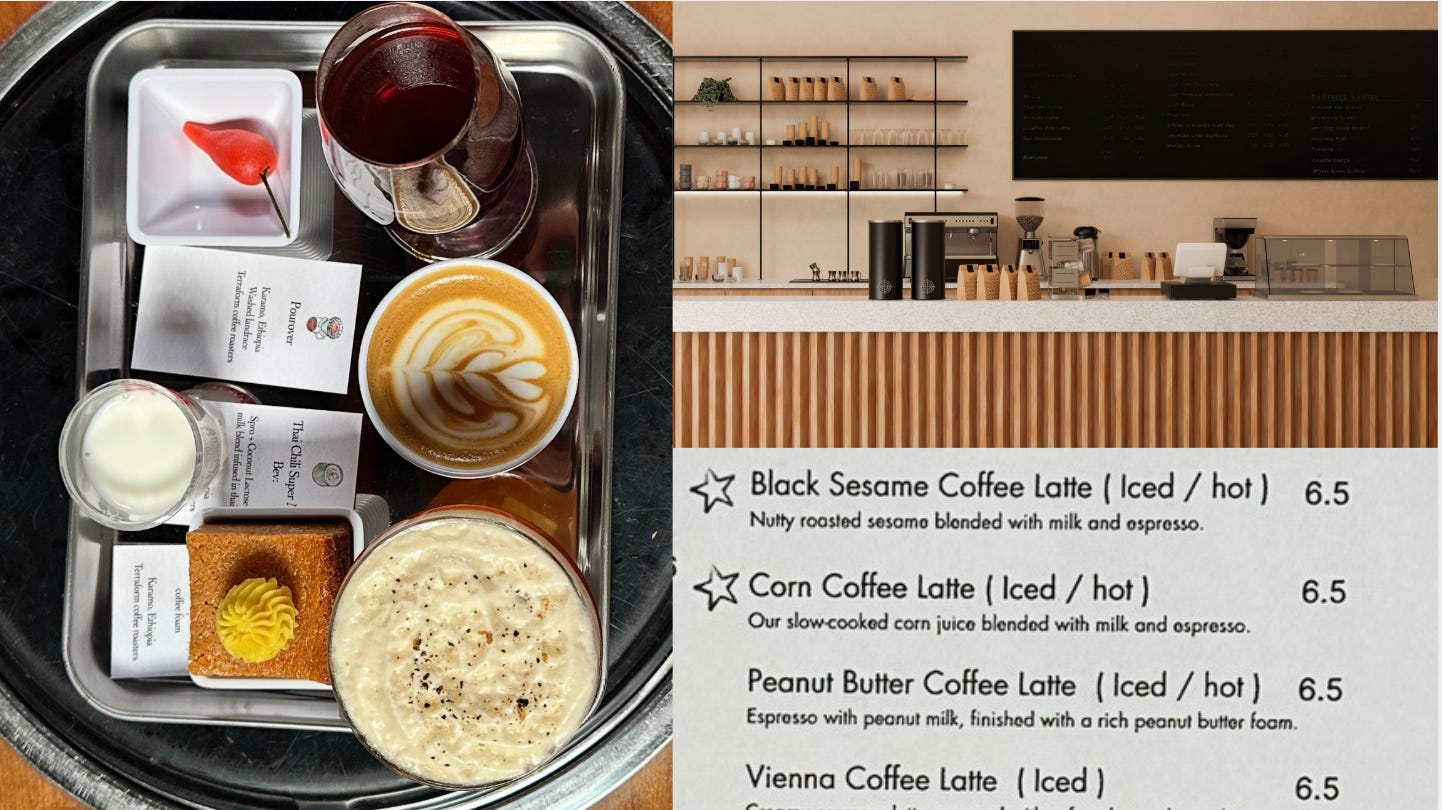
A few months ago, I went to a coffee pop-up in Gowanus, Brooklyn, hosted by a group of master baristas. The drinks were inspired by Shanghai’s coffee scene and accompanied by intricate Thai pastries. Served flight-style, you could purchase a set of three coffee-based drinks or none at all.
One of the beverages, the “Baesuk Signature Beverage” which included iced espresso, ginger and fir honey, and a light pear cold foam, is served in a cocktail-like coupe glass. It sounds pretentious, but the coffee and the experience of watching the team intensely assemble each drink was incredible. It felt more like a cocktail bar than a pop-up cafe. Within a few hours of opening their doors, they sold out of all drinks and pastries.
Coffee shops, both chains and high end ones, rely heavily on selling puffed up drinks with whips, cream tops, flavor infusions, and hook-y marketing terms. I’ve written about this a million times in a million ways but the horse isn’t dead yet. While these coffee-adjacent flavor obsessions may be seen as puffery, or the predictable affinities of unexciting American taste buds, I think they’re an opportunity for the cocktail scene to grab the attention of young people.
And it doesn’t need to be cheap grabs at quick fads or synthetic flavors. There are cocktail bars in New York where it’s hard to get a seat any day of the week, like schmuck. and Superbueno. Coincidence or not, these hyped up, trendy cocktail bars with lines out the door both have coffee and milk-based cocktails on their menus. My social media feed is overtaken by ads for a new oat-milk-based matcha liqueur and whimsical alcoholic Jell-O shots making headlines on mainstream food media websites.
Places like Dayglow in Bushwick, with other locations in Los Angeles and Chicago, serve seriously good craft coffee drinks during the day and equally as delicious cocktails and beer at night. The two menus mirror each other, with drinks inspired by films and their characters. Onyx Coffee Lab based in Rogers, Arkansas, was just recently nominated as a semifinalist for the James Beard Award for ‘Outstanding Bar.’ Onyx is most notably a craft coffee shop chain and roaster known for equitable sourcing and high-end coffee drinks. It’s the first time a coffee shop has been included in the category of ‘bar’ in James Beard history. I believe this is only the beginning of the blurring between the world of cocktails and coffee.
Just like in the specialty coffee world, younger (and usually female) consumers don’t feel welcome in snobby or purist cocktail spaces. The truth is, a lot of us don’t even know what we like. If the cocktail world bent a little towards the flavors young people know and love, they might just win them over. Like in coffee, the words ‘banana bread’, ‘cookie butter’, or even a simple ‘vanilla bean’ is enough to win us over. Then, maybe, we’ll stick around for a second round of drinks.


