
Why I'm Wary of Rosso di Montalcino
Is it just me, and my personal history with the so-called "Baby Brunello"? Maybe, maybe not.
David Master is an Italian language educator who writes The Italian Wine Profile newsletter and is co-host of the podcast, 4 Glasses to Finish. For Everyday Drinking, he has covered Sicilian frappato, red wines from Friuli, Aglianico del Vulture, and other Italian topics.
In my early 20s, I lived in the Tuscan town of Siena—where I drank a lot of Rosso di Montalcino, almost every night. My Italian roommate, who was also my landlord, was senese born and raised—and the proof was in his accent (Affumiatha, for example, instead of affumicata). Since this is what I heard everyday, I too developed a senese accent. My roommate claimed to have almost become a pro soccer player, for a club in Serie C, which is sort of like the minor leagues of Italian soccer. But, according to him, he got injured and was forced to quit.
This guy was a few years older than I was, and I looked up to him. In my young mind, he was Italy. From his fashion sense of tight-fitting sweaters and colorful scarves to the international artwork he hung on his walls, he became the filter through which I consumed Italian culture. I deferred to him, eager to learn as much as I could about Italy.
In any case, he loved Rosso di Montalcino. And therefore I did, as well. We cooked dinner together almost every night, alone or with friends we invited over—and he always opened a bottle from his perpetual stash in the kitchen. It was poured, with no frills, into a couple of repurposed Nutella glasses. Never before had I drunk wine to quench my thirst, but it was so satisfying having a sip after a few forkfuls of salty pasta and tomato sauce. He even taught me the basics of Tuscan cuisine, which consists mostly of meat- and bean-based dishes. One of the best recipes he made for me was baked crostini with stracchino cheese and sausage. The caramelized fat of the sausage mixed with the creamy cheese on top of crusty bread was a sublime combination. To this day, I have been unable to track down the correct stracchino cheese to recreate this dish. Of course, it paired incredibly with a Nutella glass full of Rosso di Montalcino.
Then, one night, I invited my first Italian girlfriend over for dinner. I’d met her at the local university one weekend: She was seeking a native English speaker to have cultural conversation, and I was happy to oblige and learn more Italian from her. She was quiet, but was incredibly gracious with her patience as I slowly mispronounced words to form sentences. I was excited for her to come over for dinner and meet my roommate.
That night my roommate and I made spaghetti al pesto together. I don’t quite recall how everything went down—most likely due to the amount of Rosso di Montalcino we drank. But I recall saying a sudden, blurry goodnight, as I watched her and my roommate make their way down the dimly lit hallway. They both disappeared behind the door to his room. There was no warning, no romancing, just an unceremonious act, almost as if it had been scripted. I had one more sip of wine and went to bed, alone. I didn’t see them until the next afternoon, and not a word was mentioned.
Needless to say, I was blindsided. It was the last thing I thought would happen, especially since the two of them had just met. Like, how did he do that? Did he use magic? After the feeling of pain dissipated, I was actually kind of impressed. When I think of that memory, I am immediately brought back to what it felt like being a foreigner in Italy, trying to fit in.
I’ve come to think of my former roommate’s cheeky maneuver as “being RdM’ed”—with an abbreviation for Rosso di Montalcino used as a verb. Regardless, I can’t help but think of him and his treachery when talking about this particular Tuscan wine.
But before diving deeper into Rosso di Montalcino, let’s first talk about sangiovese and the more famous wine from Montalcino.
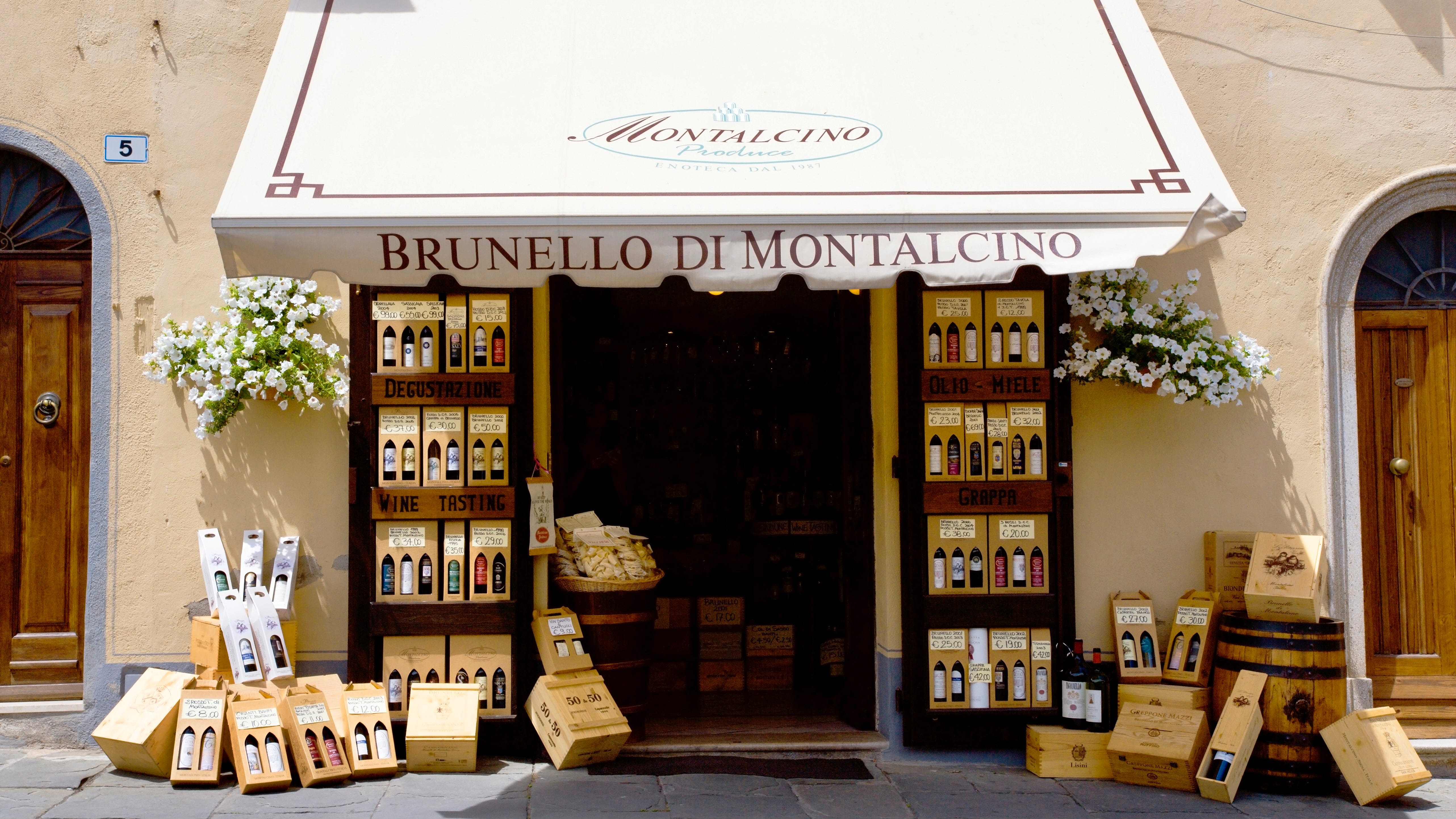
Arguably, the most prestigious wine from the sangiovese grape is Brunello di Montalcino, made within the province of Siena, in the town of Montalcino. Brunello—meaning “little brown one”—is the local name for sangiovese here. Though, technically, brunello is a specific clone of sangiovese known as sangiovese grosso, or “large sangiovese.” Confused yet? I know. Welcome to Italian wine.
Today, Brunello di Montalcino is recognized as one of the great wines of the world. Rightly so, since its quality is the result of multi-generational innovation. Its storied past dates back to the mid-19th century when Clemente Santi owned the Il Greppo estate in Montalcino. Clemente propelled Brunello into the future by being the first to plant and bottle it as a single variety. Then, his grandson Ferruccio Biondi took these vineyard practices to the next level and developed the BBS11 clone of the grape through massal selection. His vines became the mother vine for all of Brunello di Montalcino, thus giving birth to the wine we know today. Ferruccio named his winery after his grandfather, calling it Biondi-Santi, establishing it as the first ever producer of Brunello di Montalcino.
Brunello di Montalcino was one of the first areas in Italy to earn its DOC status (Denominazione di Origine Controllata) in 1966. Then in 1980, this area received the highest Italian classification status of DOCG (Denominazione di Origine Controllata e Garantita). For a wine to be labeled as Brunello di Montalcino today, it must contain 100 percent sangiovese grosso, have a minimum abv of 12.5 percent, and age for at least four years before being released, with at least two years in barrel. Riserva bottlings of Brunello di Montalcino up the ante to five years of aging.
These wines are powerhouses and can go the distance when it comes to aging. They are by no means a casual, everyday wine. They are also pricey, often above $70 a bottle. They often have bruising alcohol levels, some more the 15 percent abv, and if opened too soon, their tannins will abuse your tastebuds.
Given the fame and quality standards for Brunello di Montalcino—as well as how long they must age before ready—let’s now talk the emergence of the so-called “Baby Brunello,” as Rosso di Montalcino is colloquially known.
Rosso di Montalcino is still made in the same region as Brunello, with the same grapes, often from the same vines used to make its more prestigious counterpart. Rosso di Montalcino differs from Brunello in its aging requirements and alcohol level: it has a lower minimum abv of 12 percent, and the DOC requires it to age for only 10 months, without any specifications to barrel or bottle. Much of Rosso di Montalcino ferments in stainless steel tanks, and then is transferred to oak vessels where it completes the aging process. Oak aging varies widely, with some winemakers choosing minimal oak to highlight fruit-forward characteristics, whereas others will surpass the minimal aging requirement of Rosso di Montalcino to create a oakier wines.
Rosso di Montalcino, of course, owes its existence to the success and popularity of Brunello di Montalcino. The area saw huge growth from 1970 to 1980, when the Banfi company ripped out much of the vineyards that were used to make sweet white wine, after a failed business venture. As a result, the company pivoted to replanting the area with brunello vines, but with such rigorous aging requirements, producers needed quick revenue to help finance the new plantings. Thus, Rosso di Montalcino was born
While winemakers patiently waited for the young vines to improve, they were able to produce a younger, more affordable wine that also carried the Montalcino name, which helped to sell the wine. At first, in order to market this wine it was even called Vino Rosso dai vigneti di Brunello, or red wine from the Brunello vines, directly calling to mind the prestige of Brunello. But after receiving its DOC status in 1983, it was renamed Rosso di Montalcino.
The idea of drinking “Baby Brunello” sounds great in theory. But in practice, it’s not always a pleasant experience. Some of these wines clock in at over 15 percent abv. Yet without the long aging of Brunello, they don’t always reach harmony or balance. Too often, the wines taste hot, and subtlety of flavors (floral, fruity, spicy, or herbal) is drowned out. I find such Rosso di Montalcino to be a meal killer, overpowering any possible food pairing. Some of the meal killers are even made by reputable Brunello producers. My problem with them is that they are misleading, and ride the coattails of their greater, more prestigious Brunello counterpart, but fail to deliver a pleasurable drinking experience.
As Emma Riva wrote in a TABLE Magazine interview with Tancredi Biondi Santi:
“If you attempt to survive on name alone, the only people you’ll reach are the highest of the highest. Biondi Santi referred to that as ‘a niche of a niche of a niche.’ Wineries that rest on their high-end laurels can sustain themselves on that niche, but there’s then little room for change. ‘There’s only lower end and high end,’ Biondi Santi explained. The higher end will always be around, but where there’s room for growth is towards the middle.”
Some producers—when their Brunello wines don’t reach the quality level of the proper DOCG requirements—will declassify their wine and release it as Rosso di Montalcino. To me, that’s always seemed kind of like a relegation to the Serie C of sangiovese. I also feel like Rosso di Montalcino is too often lacking in innovation, too often opting for tradition and oak. That’s not to say that there aren't well-made—even great—Rosso di Montalcino wines out there. But if you are enamored by the fact that these wines are made by some legendary Brunello producers, you may be fooled by their middling quality. It’s faulty to assume that Rosso di Montalcino wines from well-known Brunello producers are all always going to be good.
I wish I knew all this when I was living in Siena in my 20s. As much as I don’t want to admit it, I can relate a lot to Rosso di Montalcino. I, too, tried to emulate and live vicariously through someone else during a formative time in my life. The truth is, I’d never measure up to my roommate’s effortless Italian swag. With age, I’ve learned to walk my own path.
I still enjoy Rosso di Montalcino. But my one piece of advice, practice discernment, and don’t be too quick to trust a label.
Rosso di Montalcino (Under $30) That Will Never Betray You
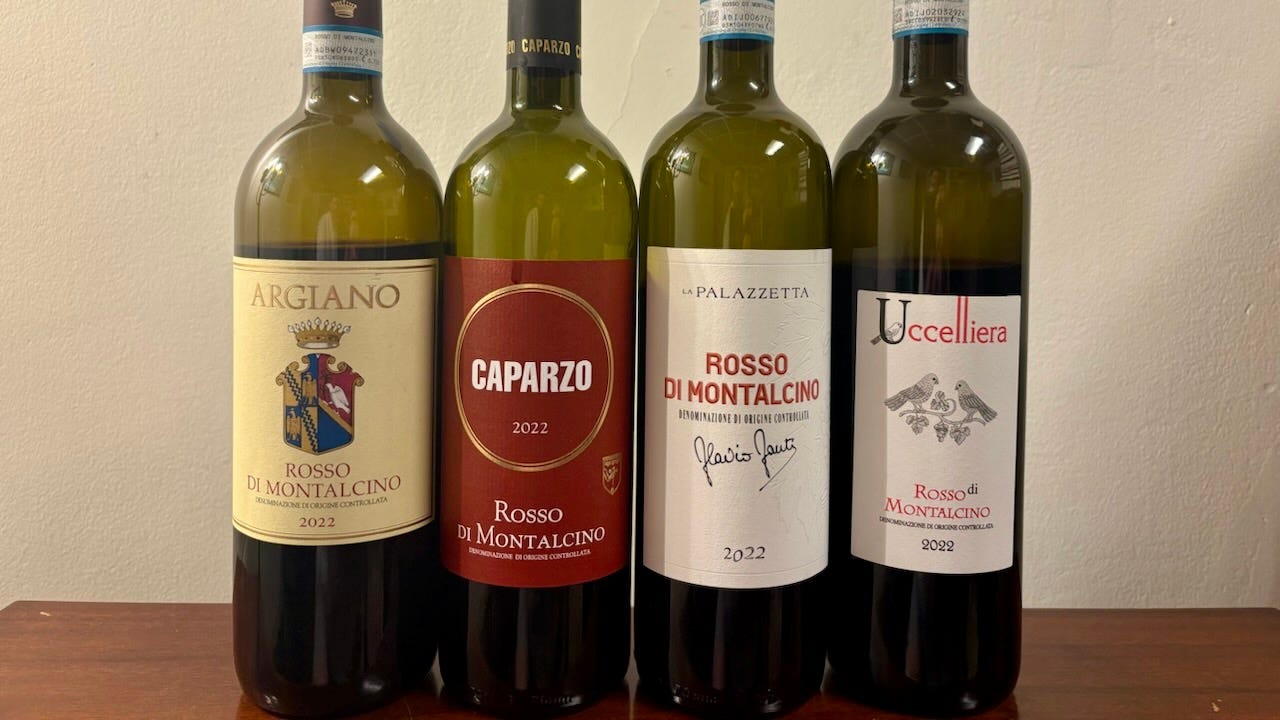
Bottle recommendations and tasting notes are for paid subscribers only. Upgrade today!
 | A guest post by
|