
Why I Love Tuscan Whites, and Why You Should, Too
Yes, there's more than just red in Tuscany. In bianco, you'll find the region's most innovative wines.
My friends and I let out a collective post-wedding exhale over a handful of half-drank bottles of wine, haphazard snack foods, and mismatched Airbnb glassware. We were all gathered to celebrate the marriage of our close friend Anastasia. After we drained a few liters, I spotted a clear bottle at the back of the fridge. “I know that wine,” I thought, plucking the 2018 Montesecondo ‘Tïn’ from behind the tub of guacamole.
In 2019, Anastasia and I had enjoyed this same vintage of Montesecondo ‘Tïn’ around an enormous farmhouse table, with friends, over a bowl of polenta with Tuscan kale. A skin-contact blend of trebbiano and malvasia from a small village on the northern edge of Chianti Classico, it was now, at eight years old, even better than I remembered.
Trebbiano toscano is possibly the most unremarkable white wine grape in the world, mostly cultivated to criminally high yields and produced into wines without much flavor or character. But this mature bottle of Montesecondo’s trebbiano toscano was incredible, and awakened memories of the season I spent in Tuscany. More broadly, it reminded me of the largely misunderstood and overlooked white wines of the region.
Anastasia and I worked together at Montesecondo during the 2019 harvest. We had both come to Tuscany curious to find what was below the tidal wave of bulk Chianti that we were positive was composed of equal parts cab concentrate, American oak, and Round-Up.


Montesecondo is a pioneering biodynamic winery in the village of San Casciano in Val di Pesa within the Chianti Classico DOCG, founded by Silvio Messana after taking control of his mother’s old vineyard in the 1990s. At the time, being an innovator in Tuscany meant looking back to the traditional way from the early 20th century and earlier. Silvio’s wife Catalina pushed him to find a better, more natural way to farm their land, while most neighboring vignaioli doubled down on industrialized farming and score-chasing wines to compete with the Parkerized reds of the era. Gradually, they were introduced to other contemporary biodynamic pioneers in Italy and France, and by 2003 were a fully integrated biodynamic farm, vinifying their first complete vintage with indigenous yeast in 2004. During our time there, we guided countless indigenous ferments in cement, stainless steel, clay, and wood—each its own special experiment in transparent, terroir-driven winemaking.
Though we produced wines labeled Chianti Classico DOCG, the real focus and excitement of the production lived inside the winery among the twenty-some clay tinaja (what wine lovers more commonly call amphora) crafted by Juan Padilla, Spain’s most internationally renowned artisan. This is where wines like the Tïn were macerated and fermented on their skins and seeds in the so-traditional-it’s-now-experimental way. Due to the fact that Tuscany has a weak system of white wine appellations, most of Tuscany’s cutting-edge white wines are labeled IGT—Indicazione Geografica Tipica—a catch-all geographic designation one step above table wine.
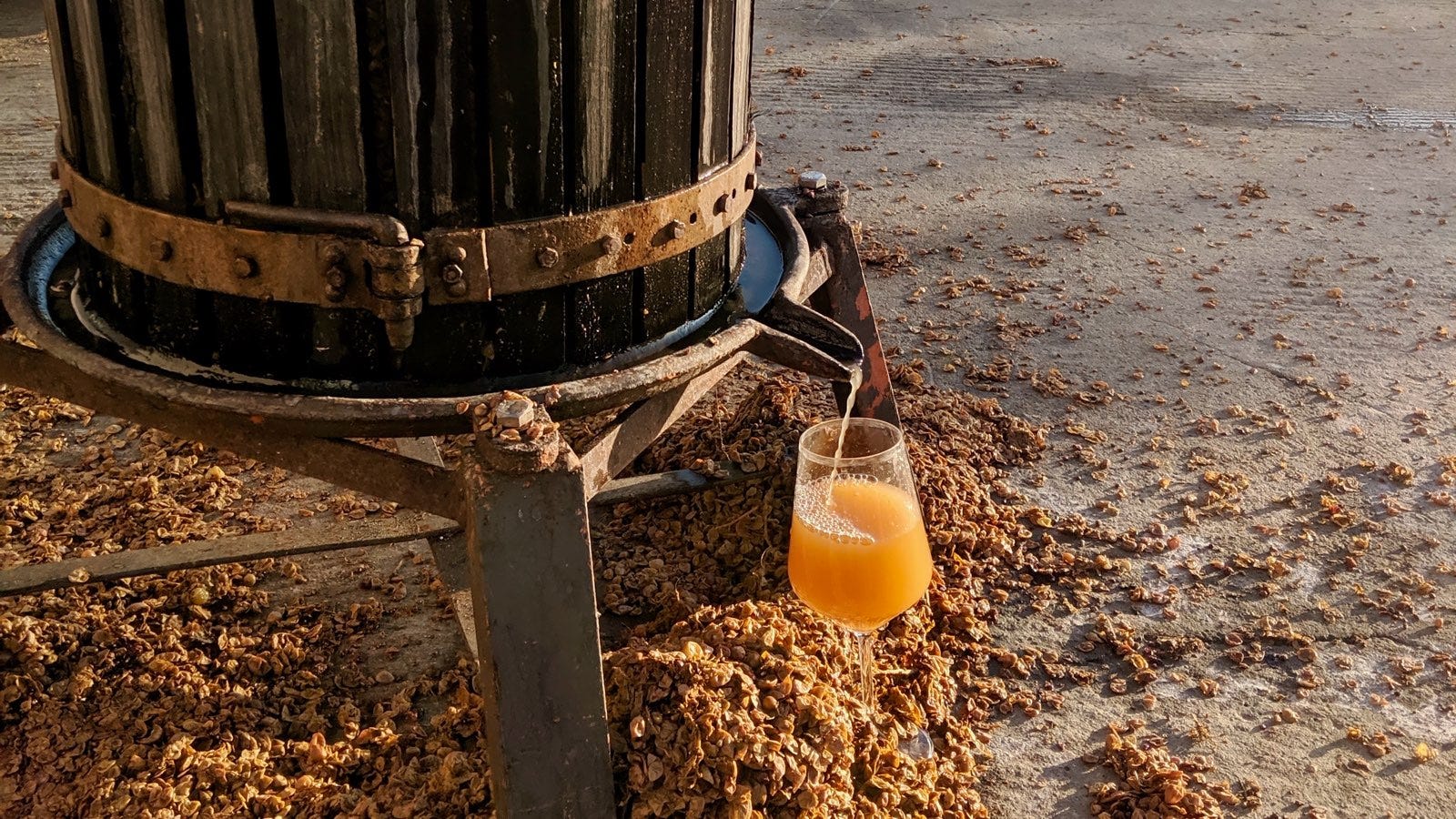
The white wines we made at Montesecondo were produced in much smaller quantities than the reds due to lower demand, which meant the process was more intimate: moving grapes to the winery in handheld bins without the high-low, filling bucket after bucket with fermented grapes and wine to carry to a small antique press that we took turns cranking until the pomace was as dry as it could get.
Many afternoons we would break up the long hot days on the crush pad with a leisurely lunch at Agriosteria del Frontoio in nearby Scandicci. This restaurant serves only hyper-local Tuscan food, most of the produce grown in their own garden, and an all Tuscan wine list spanning from the Apennines to Montalcino to the island of Giglio. Here, I discovered traditional sparkling from the aleatico grape, from the terraced vineyards on the island of Capraia, or lightly-macerated vermentino nero from the northern corner where Tuscany meets Liguria, or many other surprises and delights from the diverse range of Tuscan white wines.
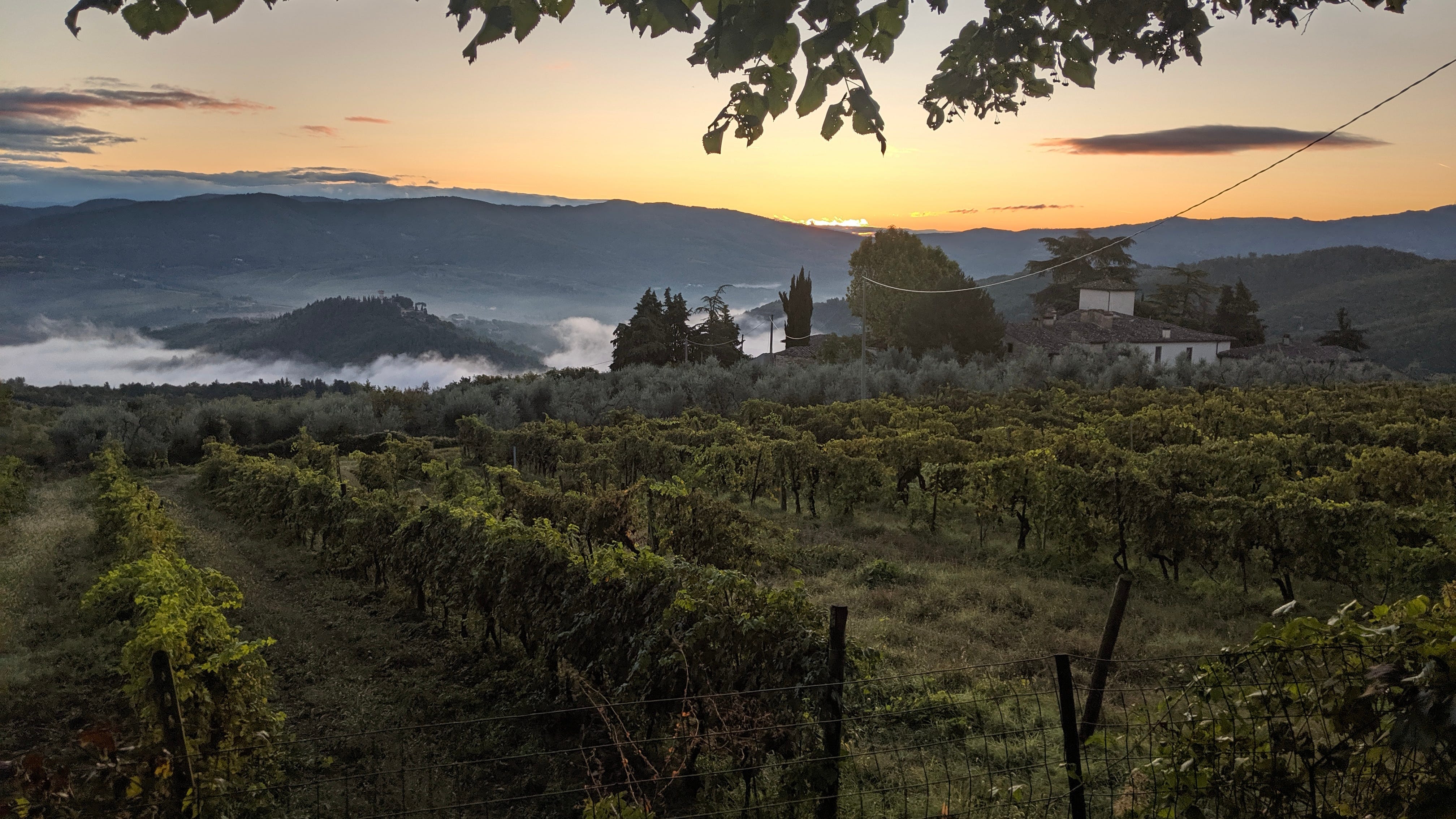
The most widely planted white grape in Tuscany is trebbiano toscano. Once sanctioned for use in Chianti Classico, it was banned by the consortium in 2006. Older vines of trebbiano that have been preserved in the Chianti zone, like the 50-year-olds used in Montesecondo’s Tïn, benefit from the reduced yield and complexity that can only come from old vines. Trebbiano toscano also responds well to fermenting with its skins to produce orange wine, another way winemakers add depth and age-worthiness to the workhorse native white grape.

About 100 kilometers to the west of Chianti on the Tuscan coast, Massa-Carrara and Maremma are home to a growing number of quality white wines made from vermentino, albarola, and ansonica. It is widely accepted that these varieties thrive in proximity to the sea, where they often mirror their surroundings in a distinct salinity. In Colline Metallifere, the mineral-rich hills high above Maremma, Ampeleia is pioneering quality winegrowing in a region not historically known for agriculture. Jason has written about Ampeleia’s bianco before, a blend of trebbiano toscano, malvasia, and ansonica. They just released a bianco version of their hugely popular Unlitro to celebrate 15 years of the rosso, a bottling of vermentino, trebbiano, and malvasia picked early to preserve acidity and keep alcohol low—in line with the global trend toward lighter, lower-alcohol whites.
Malvasia grows widely across Tuscany, and like trebbiano was historically used in the blend of Chianti Classico DOCG wines. Now, it’s mostly used to make Vin Santo. Malvasia thrives at elevation or near the coast, where its tendency for producing high-alcohol wines can be more easily controlled than the valley floors. Down in the Val d’Orcia, home of Brunello di Montalcino, there are a few producers experimenting with Rhône white grapes like marsanne, roussane, and viognier. These heat-tolerant whites are finding success in the mineral rich clay soils of the valley.
Beyond the cloak of bulk Chianti, the innovations occurring at the margins of Tuscan wine are some of the most exciting happening in any legacy region right now. The diverse whites produced here offer a new path into an ancient place. As producers across Europe continue to push back against appellation regulations, often created to protect deep-pocketed players at the expense of small, natural producers, I hope more of them follow Montesecondo’s lead, putting their energy behind the lesser-known wines worth preserving.

8 Untypical Tuscan Whites To Try
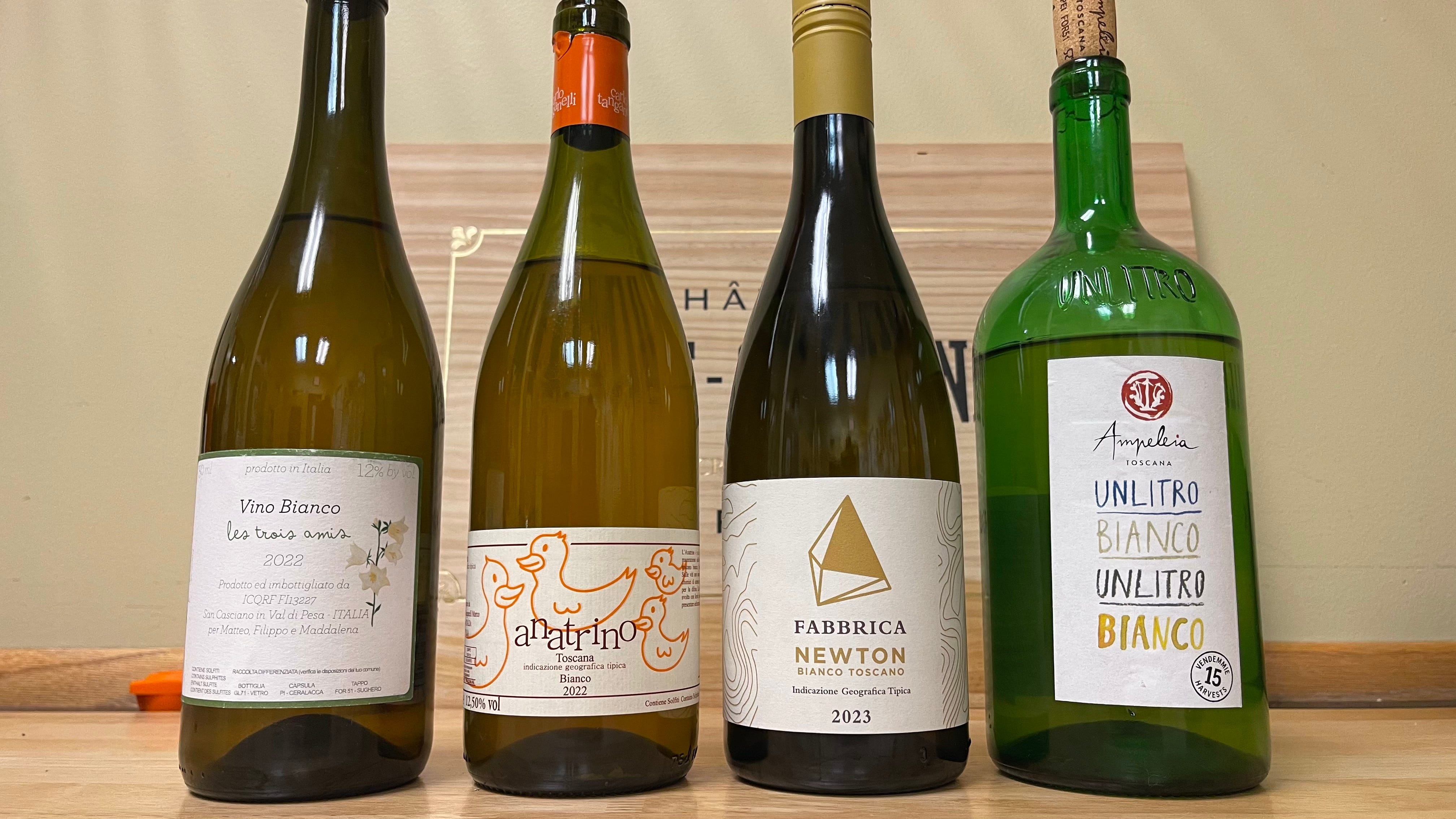
These are exciting days for Tuscan whites, with a lot of experimentation going on in the lesser-known parts of Tuscany. Here are eight bottles to look for. As always, recommendations and tasting notes are for paid subscribers only. Upgrade today!