
Rosalía and the Meaning of Sauvignon Blanc
Why the superstar's latest song about her favorite wine is the opposite of a wine flex, and a way of thinking about wine that we rarely see in pop culture.
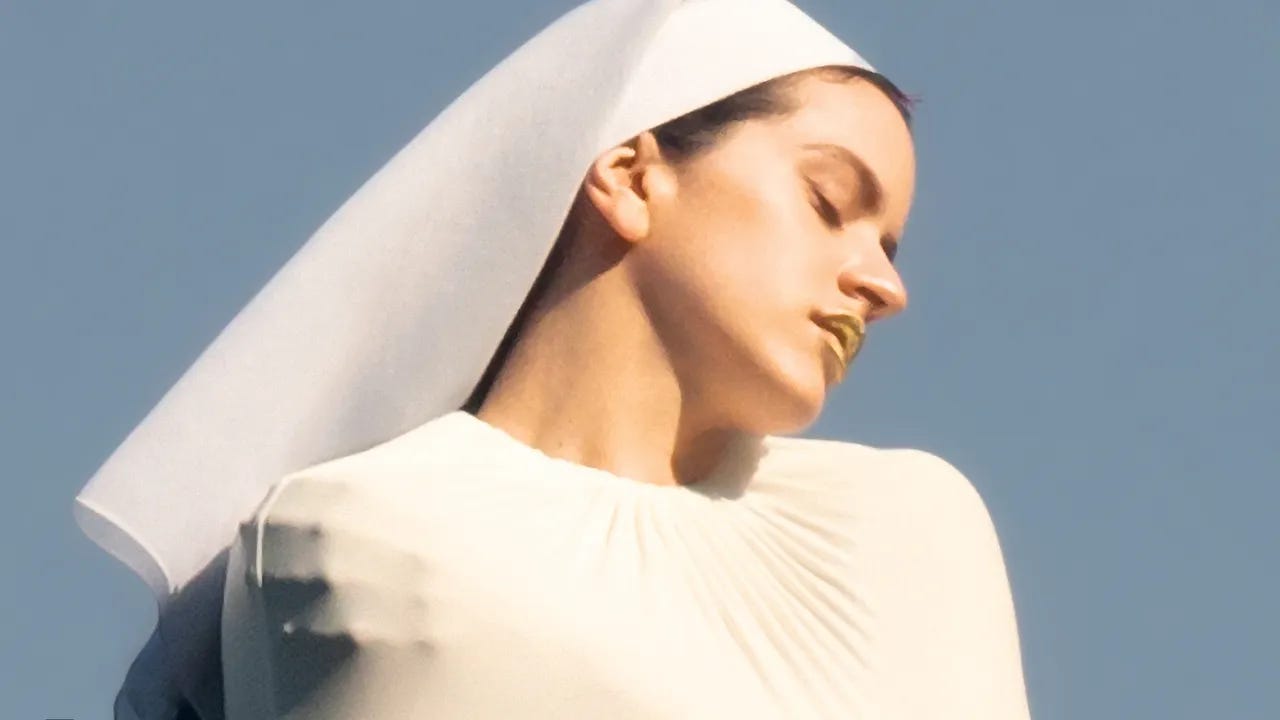
You are likely already aware of this, but Rosalía’s new album, LUX, is pretty amazing: majestic, avant-garde, genre-bending, recorded with the London Symphony Orchestra, including a cameo by Björk, and with lyrics sung in 13 different languages. The Catalan superstar’s latest is “an operatic lament for a new generation, an exquisite oratorio for the messy heart,” as ol’ Pitchfork calls it (8.6 lol).
Perhaps you also know that one of the most popular songs on LUX is “Sauvignon Blanc.”
My immediate thought upon first hearing “Sauvignon Blanc” was…uh oh. I figured we’d soon be seeing facile wine commentary on how Rosalía’s lyrics about Savvy B showed “how to make wine cool and fun again for Gen Z.” The album’s only been out for a little over two weeks, and I’ve already heard this sentiment floated casually by a number of middle-aged observers.
A friend in Spain sent me a popular food-and-drink podcast, with Spanish wine critic Santi Rivas mentioning that sauvignon blanc sales are up since LUX was released. However, much of the podcast is the middle-aged critic mansplaining to Rosalía how she should pronounce “sauvignon blanc.” He also insists sauvignon blanc is one of his least favorite grapes, singling out Spanish versions of the grape as “low quality” and New Zealand’s sauvignon blanc “quite awful.”
Apparently, it is widely known among Rosalía fans that she loves Sancerre (allegedly introduced to her by Pharrell Williams). “I love this wine,” she said in a viral video back in 2023. “Anyone who likes white wine probably already knows it. And for those who like white wine but don’t know it, well, it’s the only one I’ve tried and liked.”
Which is very interesting, and telling, because that means Rosalía came to her sauvignon blanc love the way so many other wine drinkers have. As I wrote about earlier this year in my piece “Savvy B, 4 Eva”:

How do people discover the wines they like, anyway? Deep in the wine bubble, we pretend to believe that critics or sommeliers or wine educators are the ones who stimulate the drinking public’s desires to try something new. But we know that’s not true, and Sancerre is a classic example.
No one in the wine bubble ever evangelized for Sancerre. It’s not a darling of the natural wine movement, or collectors, or influencers. Nor, to be fair, has it become a caricature or gained a vaguely trashy reputation, like pinot grigio or Prosecco. Sancerre just sort of exists. It’s generally crisp and refreshing and—as French words go—it’s relatively easy for Americans to pronounce. Normal people just like it.
The public’s love for sauvignon blanc has always driven Wine People a little crazy with sneering disdain. More than a decade ago, Sancerre blew up because it was among the favorite wines of Christian Grey—the notorious main character of the steamy, erotic, wildly best-selling romance novel, Fifty Shades of Grey. A certain type of wine gatekeeper simply hates it when people find the wines they like on their own—via pop culture—without needing a sommelier or critic’s help.
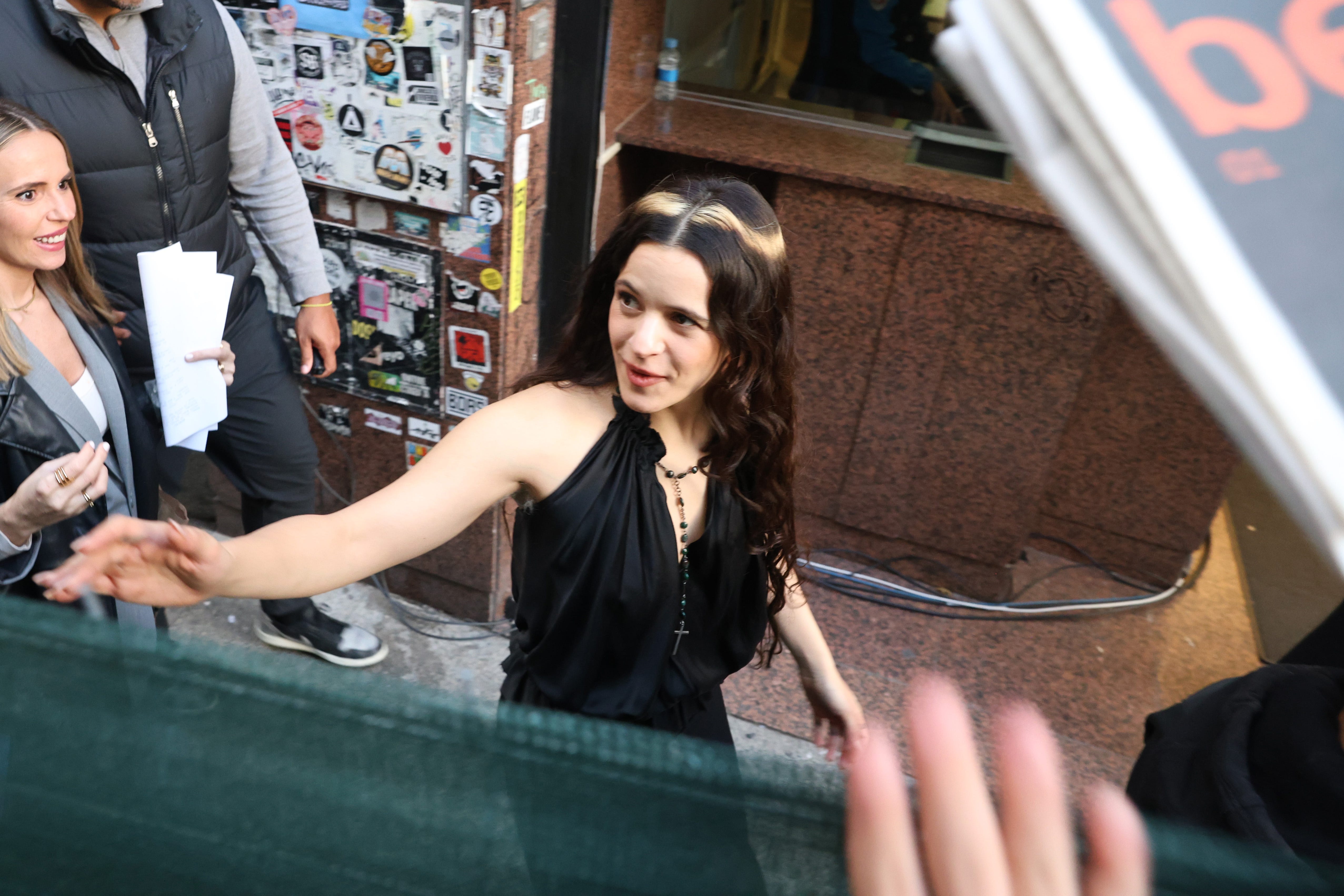
Which brings us to Rosalía’s lovely song “Sauvignon Blanc.” Which, if you listen to the lyrics, is very clearly about renouncing worldly luxuries for some kind of ascetic, quasi-religious existence with her beloved. She sings that she’ll burn her Rolls-Royce and that she doesn’t want pearls or caviar anymore. To my God, I’ll listen / My Jimmy Choo’s, I’ll throw them away / My porcelain, I’ll let it fall / And I’ll give away my upright piano. As Spencer Kornhaber says in The Atlantic, “Rosalía, like many of us, is asking herself what she’d be willing to give up to save her soul and thereby, in some small way, the world. Her autonomy? Her convenience? Her Jimmy Choos?”
You know what Rosalía is not willing to give up? Yep, her sauvignon blanc. I don’t need anything else / sauvignon blanc / at your side / my future / it will be golden.
In interviews, Rosalía has cited the influence of Saint Teresa of Ávila, the 16th century Carmelite nun and mystic who renounced her wealth for the convent. Teresa of Ávila wrote of “divine intoxication,” or spiritual ecstasy, and used the metaphor of a “wine cellar,” where God invites the soul to drink deeply of “divine love.”
Whatever Rosalía means by bringing sauvignon blanc and a 16th century mystic nun into all this, it’s very different than Drake mentioning moscato or Jay-Z name-checking Cristal or even Taylor Swift (also a Sancerre fan) and her many lyrical wine references.
In Rosalía’s operatic world of LUX, sauvignon blanc is not a luxury to be bragged about, but rather a fundamental, everyday metaphor for a humbler, less material, more spiritual, more loving life. Sauvignon blanc isn’t a wine poured for status, but rather, plentifully, for the soul.
I don’t believe we’ve seen or heard wine presented this way before in popular culture. And I hope the wine industry doesn’t take away the wrong message, as it usually does. It’s not about “making wine cool and fun again” like I’ve seen suggested recently. I’m not saying wine doesn’t need to be fun, but people also want something more right now. We’ve already been influenced, memed, brain-rotted, and overwhelmed into an algorithm-induced digital coma of “fun.”
What Rosalía is driving at transcends generational marketing. In her interview with the New York Times, she was challenged: “Are you asking a lot of your audience to absorb a work like this?” Her response:
ROSALÍA: Absolutely, I am. The more we are in the era of dopamine, the more I want the opposite. That’s what I’m craving. Sometimes I’m able to make the exercise of just shutting everything down and watching a movie in a dark space in my room.
NYT: Even that can be hard without looking at your phone.
ROSALÍA: It’s so hard. But that’s why I’m like, there has to be something that pulls us there. I don’t know if this is going to be that, but at least there’s the desire of being something that pulls you to be focused for hopefully an hour where you’re just there. You’re just here. I know it’s a lot to ask, but that’s what I want.
We can ask the same thing of our wine audience, even of the youngest wine drinkers, who are also craving that escape from the dopamine cycle. I’ve written before about how wine can offer that escape, how taking the time to enjoy a wine can be a small act of resistance. Wine can pull us there.


Santi Rivas mansplaining is his default mode, peak cringe 🤣 This, however, is a fantastic piece with zero criticsplaining; loved it!
Wonderful column. My older son turned me on to Rosalía last month. (He’s usually more into hip-hop, but his tastes are eclectic.)
I’m trying to be more eclectic in my wine choices, but I always come back to Savvy B because I like a wine that brings something to the party. Some wines, like Pinot Grigio, are “just wine.” Not bad, but there’s rarely anything interesting added to the crisp acidity. Not so with Savvy B. There’s almost always a lot going on. Also, it’s reliable and produces good wine wherever it’s grown (in my experience). When I’m in a restaurant with a crappy wine list, I know the Savvy B will be OK.