
On Barcelona: To Share or Gatekeep?
My reluctant guide to drinking and eating in Catalonia's cosmopolitan capital.
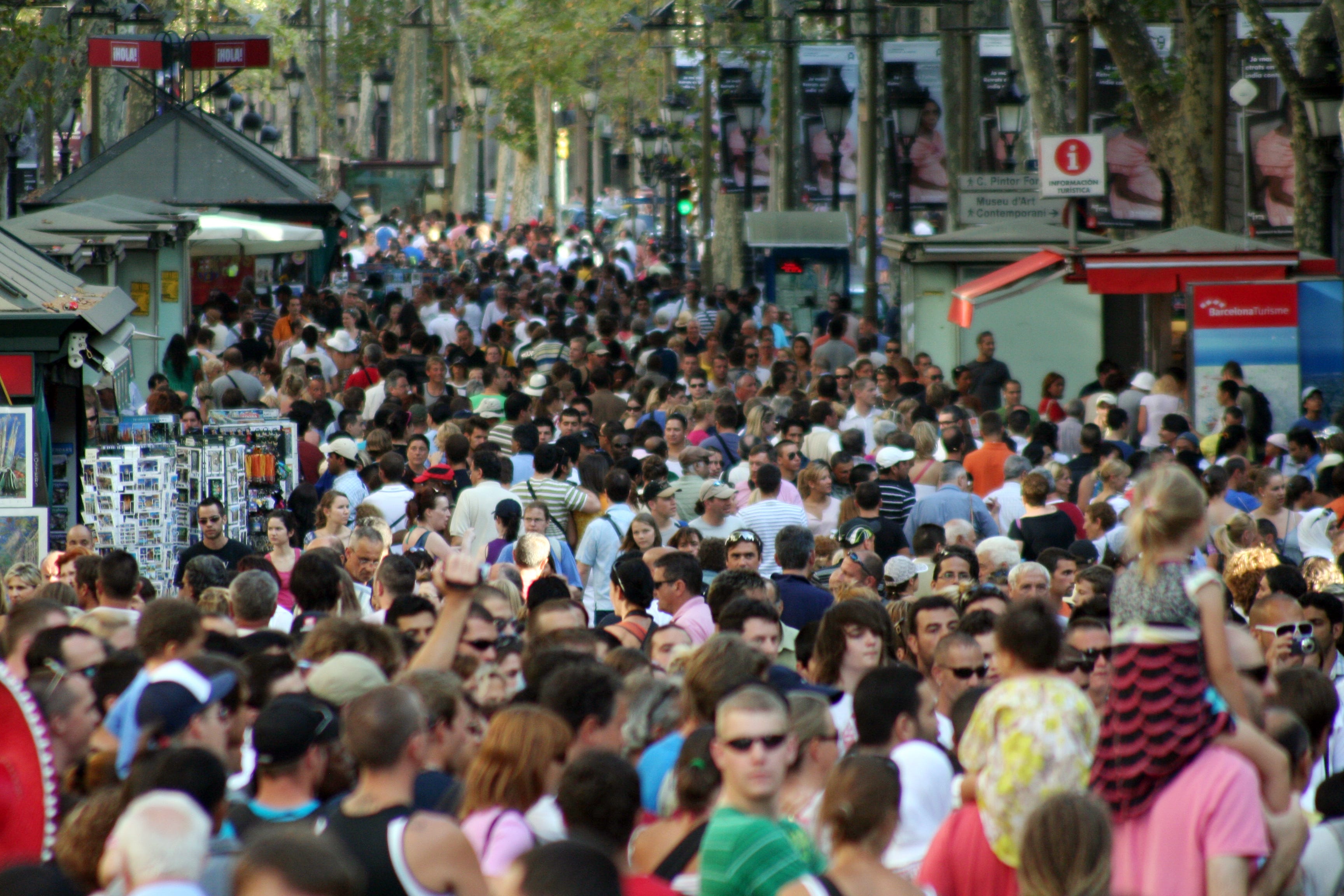
Back in June, Pico Iyer published an essay in the New York Times entitled, “The Travel Writer’s Dilemma: Share, or Gatekeep?” In that piece, Iyer explores the conundrum facing those of us who write about the cities we love. “Destinations are fragile, on several fronts,” he writes, “many can’t bear the weight of thousands.” Iyer asks a pressing question facing travel publishing: In an over-touristed world, should we broadcast our discoveries, our “hidden gems,” our special places, or hide them away?
As soon as a secret gets widely distributed, it’s a secret no longer. That “hidden treasure” I’m so eager to tell you about becomes a lot less hidden, and less of a treasure, the moment I share it.
What’s a travel writer to do? The very premise of the job is to tell you about attractive possibilities that you might not otherwise know about. But as those little-known jewels become better known, readers grow understandably indignant (that quiet and reasonably priced cafe is suddenly unquiet and unreasonably priced), while locals wonder how much to curse the onslaught of visitors and how much to try to make the most of them.
Iyer mostly talks about his adopted home of Kyoto. But he also touches on my beloved Barcelona, similarly overrun with tourists:
Now a mention of a “secret” bar in Barcelona may reach 11 million readers in every corner of the planet, many of whom are on their way to Spain very soon — or at least know of others who will be.
I touched on the tourism problem in Barcelona last month in my essay “The Wine Drinker as Flânuer”:
I was an overprivileged visitor in Barcelona, an over-touristed city—and a city whose residents are fed up with the tourist deluge. So much so that hundreds of people recently took to Barcelona’s streets for anti-tourism demonstrations that included chants of “tourists go home” and spraying visitors with water guns. Two particular flashpoints are cruise ships (depositing 1.6 million day trippers a year onto La Rambla and into the Gothic quarter) and Airbnb (for which Barcelona intends to revoke all existing licenses in 2028).
In fact, I was one of those visitors renting an Airbnb, on the top floor of a building in Poble Sec with a nice terrace and a lovely view of Montjuïc. When I told a Catalan friend (whom I call the Catalan Poet) that I wanted to buy an apartment like the Airbnb I was renting, she eyed me silently for a moment as she rolled a cigarette. We were drinking vermouth outside a bar called Garbí, crowded with off-duty taxi drivers, and named after a hot wind that blows from the Sahara and allegedly drives people mad. The Catalan Poet had just attended an anti-gentrification protest in her working-class neighborhood of Sants. After she lit her cigarette and took a drag, she told me the only way she would approve of my “contribution to the gentrification” would be if I learned Catalan.

So, this is my dilemma in writing about Barcelona. I want to share my favorite spots with you, dear reader, I do. And yet, when I do, I run the risk of swelling the crowds at the places I enjoy—many of which are small, with limited seating and bar space.
This is not a silly debate over what’s “local” and what’s “touristy.” That’s begging the wrong question. Barcelona is already full of tourists—but so is Paris, New York, Lisbon, Reykjavík, and many other places that people enjoy. Everyone knows that the best places in the world must strike a precarious balance. Geoff Dyer talks about this phenomenon in his travel book Yoga for People Who Can’t Be Bothered to Do It. Dyer discusses his favorite bar in Rome, the San Calisto:
Restaurants and resorts often boast of their “exclusive” status, but most of the world’s best places are the opposite of exclusive—and nowhere was less exclusive than the Calisto. The Calisto made a prison look exclusive. It wasn’t just that everyone was welcome; everyone was actually there. Heroin addicts, film directors, journalists, models, garbage collectors, tourists, drunks, nutters, doctors, waiters from other bars that had already closed—they all ended up at the Calisto.
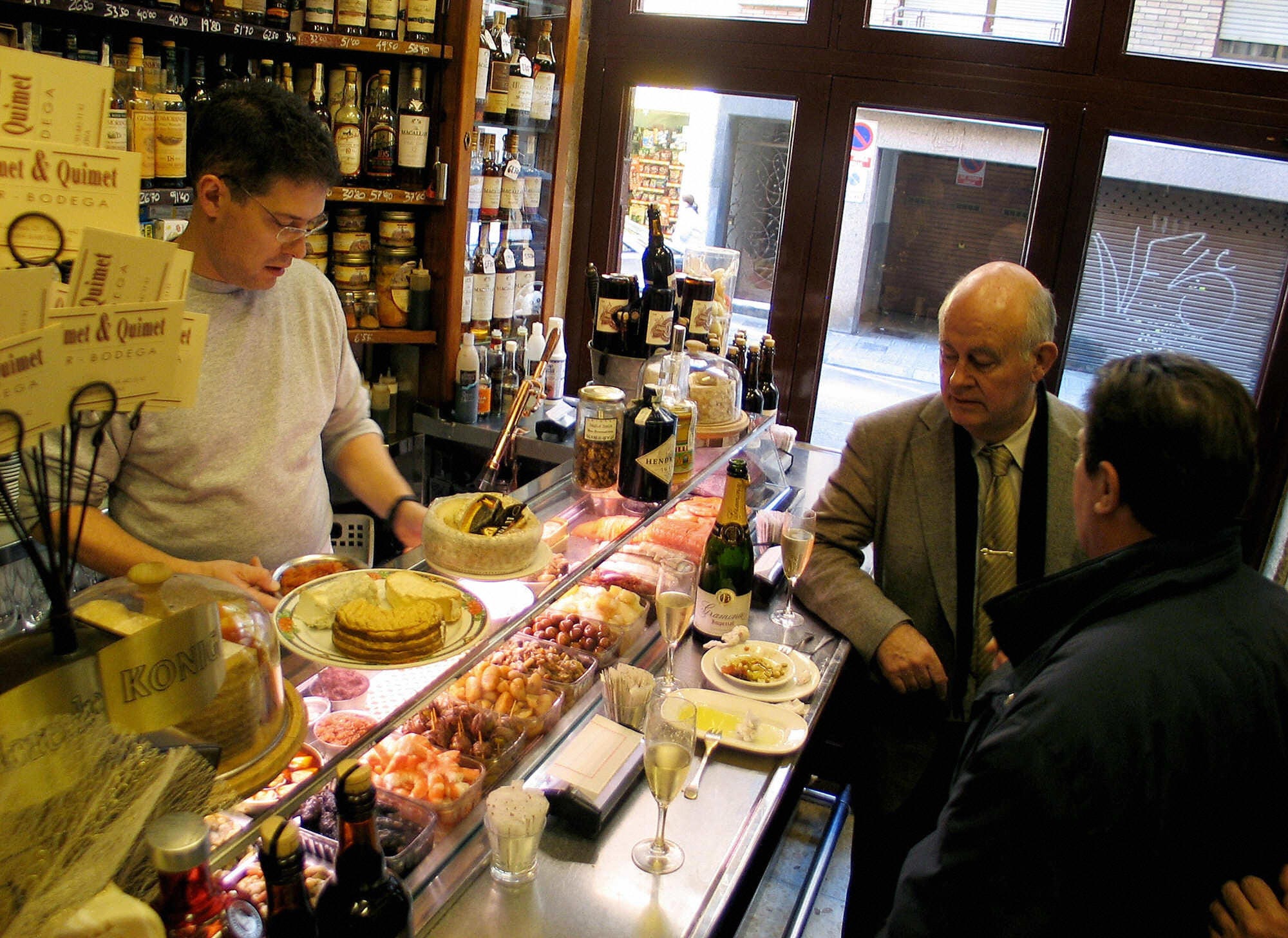
In Barcelona, when I think about places that are both touristy and local, I think of a place like Quimet & Quimet, a classic tapas bar in the Poble Sec neighborhood that’s been open since 1914. It’s a closet-sized space that can only fit about 20 people, standing up, enjoying house vermouth, sparkling wine, and great tapas based on conservas—the apricots topped with creamy cheese and anchovies is amazing, as is the tuna belly, sea urchin, and a dish that’s a slab of brie with artichoke, piquillo pepper, and caviar.
Quimet & Quimet is not a secret spot at all, and teeters on the edge of being lost to tourism—at lunchtime and in the evening, the line stretches down the block. But if you happen to time it right—say just at noon, before the typical lunch hours, or just before 10 pm, well after the tourists have eaten—the experience can be magical. A lot of contemporary Barcelona can be like this (don’t worry, Quimet & Quimet is probably the most touristy place I will mention).
Since a lot of the places I mention below are still uncrowded, like Quimet & Quimet was 15 or 20 years ago, I’m attempting to strike a balance here between sharing and gatekeeping. Some of this is straightforward. I’m putting all of my recommendations behind a paywall. That means that 95% of my readers—the ones who do not pay for my newsletter—won’t be seeing them unless they upgrade to paid. This eases my conscience and my own impact on the over-tourism of Barcelona.
And I am totally gatekeeping three of my absolute favorite places—two neighborhood restaurant/bars in Poble Sec and one late night bar in Gràcia. I will share these, however, with my Founding Members, and so feel free to upgrade for those.
My Guide to Drinking & Eating in Barcelona


