
Is Wine an "Experience" or a "Thing"?
Where does wine fit into the prevailing late-capitalist ethos of buying experiences over stuff?
People want experiences, not things. How many times have those of us in the lifestyle space heard this trope? For more than a decade, it’s been nearly gospel in the world of fashion, entertainment, media, and hospitality: Younger generations of consumers would rather spend money on experiences than on acquiring goods. Outlets from Ad Age to Scientific American to Psychology Today have delved into the various underlying reasons for this shift, but there is no denying that it’s become the prevailing consumer ethos. It’s now the common wisdom.
The “buy experiences, not things” mantra is perhaps the most pernicious of late-capitalist messaging—selling us on a virtue-signaling path to happiness that washes away all the sins of materialism and conspicuous consumption. In its purest sense, “experiences over things” is a nice ideal for society to aspire to. Yet in reality, the “experiences, not things” chatter of the marketplace almost never involves, say, going for a walk in the park on a sunny day, or talking to a stranger at the local dive bar, or staying up late in a deep conversation with friends, or spending the day in bed with someone you love. The “experiences” are almost always, like, spending thousands on a “spontaneous” weekend in Vegas or Paris or Nashville, or heading off to dive with dolphins/sharks/stingrays, or squeezing into an overcrowded, uninspired music festival, or flying thousands of miles to stand in line at some famous landmark, so you can take the same photo you saw on Instagram.
Ok, maybe as someone who makes his living on the lifestyle beat, I’m being a bit negative. But I guess I’m wondering how wine actually fits into this “experiences over things” philosophy. A bottle of wine is a thing, a consumer good to be acquired. Yet wine is also a catalyst for an experience, or at least it can be. Perhaps wine’s position here, stuck somewhere in the middle of the experiences-versus-things dichotomy, is part of the reason the wine industry is facing a worldwide crisis.
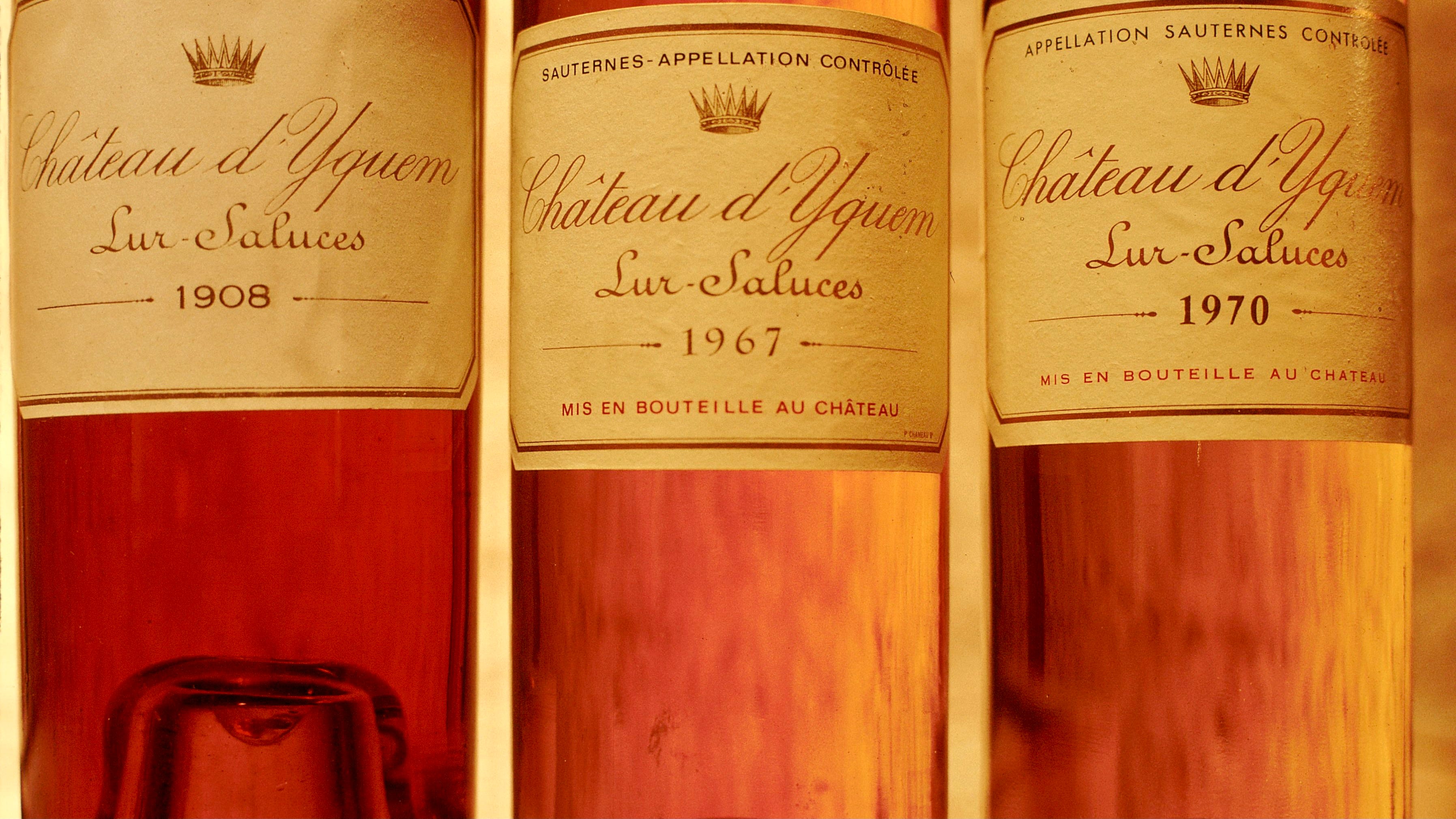
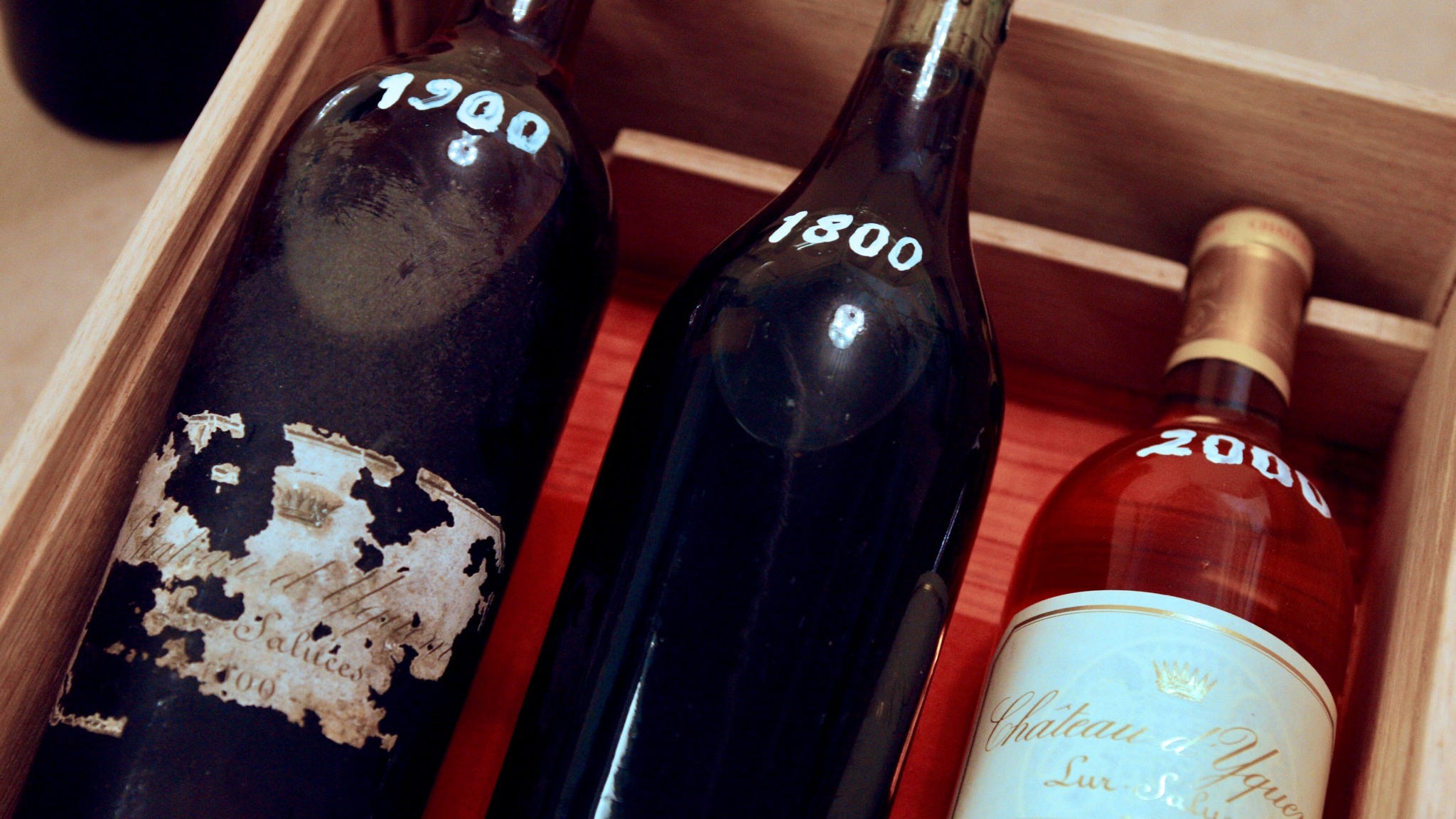
I’ve been thinking about all this since I read a short piece in The Economist a few weeks ago, headlined (in print) “The parable of Château d’Yquem.” The article uses Château d’Yquem, the legendary Sauternes—the pricey, sweet, noble-rot wine of Bordeaux—as its example of a “luxury asset” in decline. By 2023, a bottle of Château d’Yquem had risen in price around 60 percent since the decade before. This was basically the same rise for classic cars, aged whiskeys, private jets, boats, watches, etc. In fact, a “luxury-investment index” produced by Knight Frank, showed a 70 percent increase in luxury goods from 2015 to 2023.
Then, in 2023, things started changing. The Knight Frank luxury goods index is now down six percent and further decline is predicted. The price of first-growth Bordeaux wine is down 20 percent, second-hand Rolex watches are down 30 percent, sales of fine art are in steep decline. Apparently, young consumers are not the only ones eschewing luxury goods. So are the ultra-rich, of all ages.
“Why the bear market in plutocrat assets?” asked The Economist. “It seems unlikely that the super-rich are struggling.”
By way of explanation, the writer reaches for Thorstein Veblen’s 1899 social-science classic, The Theory of the Leisure Class. Veblen famously argues that luxury is defined by “scarcity and rivalrousness.” Or in The Economist’s translation: “A good is truly luxurious not just because it is costly, but because one person’s consumption diminishes others’ ability to have it.”
Which, let’s be candid, is kinda gross when you think about it in those naked terms. But this is precisely where we are in the world of wine right now. What are you really flaunting, after all, when you post that unicorn bottle on Instagram?
The problem right now is that “fancy goods are everywhere,” according to The Economist:
“Lots of vineyards make great wine: is the best Bordeaux really that much better? Lab-grown diamonds are identical to the real thing. Anyone with a bit of dosh can claim a Kiton jacket from a second-hand marketplace or charter a private jet. Art-world innovators talk of “fractionalizing” old masters, with hundreds of people owning a piece of a Rembrandt. These days everyone enjoys the finer things in life—and they post about it on social media. Such things are no longer scarce or rivalrous. So they no longer seem as luxurious.”
What is now seen as luxurious? Experiences, obviously. Dinners at three-star Michelin restaurants (some rising nearly 80 percent in price since 2015), enjoying the rooftop pool at Le Bristol hotel in Paris (doubling in price since 2019), being in the audience at a New York fashion week show, tickets to the Super Bowl, Wimbledon, or the Met Gala—all of which have doubled in price in just the past few years.
To track this, The Economist constructed an “ultra-luxury-services index,” which shows that the market for “experiences” has risen by 90 percent since 2019, and has soared since the luxury goods index declined in 2023.
On experiences like these, says The Economist, “there are no good deals any more, which makes it even more satisfying to tell others that they were not there.” When eating at a Michelin-starred restaurant, “you buy not just the food—but the knowledge that, for those few hours, nobody else on Earth could sit at your table.”
So, where does wine fit into all of this? Obviously, the idea of scarcity in wine has changed. Rare unicorn wines still command attention and are still a rivalrous flex. But often they’re off-piste wines like Domaine des Miroirs from Jura, Domaine Belluard from Savoie, Richard Leroy from Anjou, or the only bottle of 1950 Bründlmayer St. Laurent in existence that I tasted from the cellar (if I’m feeling rivalrous). If you’re rich enough, you can always buy something like Jacque Selosse or Clos Rougeard or Domaine Coche-Dury or Domaine Ganevat. But this kind of unicorn hunting is the douchey aspect of wine that people supposedly hate.
On a less unicorn level, we explored how the idea of traditional prestige wines has broken down in our Everyday Drinking Wine Bar Index a few months ago. Older generations’ idea of prestige wines (Napa, Brunello, Bordeaux, etc.) holds almost no meaning to the younger wine drinker. The wine bar itself has perhaps become the most accessibly curated experience, particularly at bars with lists focused around specific regions or styles—Central and Eastern Europe, New Spain, orange wine, etc.

But even the classic wine experiences feel old hat. Any night of the week, you can pay to attend a wine dinner hosted by a winemaker and/or a distributor sales rep. Wine tasting rooms are so crowded in popular regions (looking at you Napa and Sonoma) that you often need to book reservations and pay exorbitant fees. I’ve been impressed by the new generation of consumer tasting events that attempt to appeal to a younger generation—such as Karakterre in Williamsburg that I wrote about last week, or the Pop et Hip Hop event in Champagne event that Sarah Parker Jang will be writing about soon.
But I wonder if wine needs to try so hard to present itself as more of an experience than a thing. After all, simply opening a bottle of wine—on a sunny day in the park, during a late night conversation on a roof deck, on a lazy, decadent afternoon in bed—is the prelude to experience. The drinking of the wine in a place with people is the experience. We would do well to remember that. Perhaps it’s more a matter of shifting perspective, framing, and being open to more possibilities.
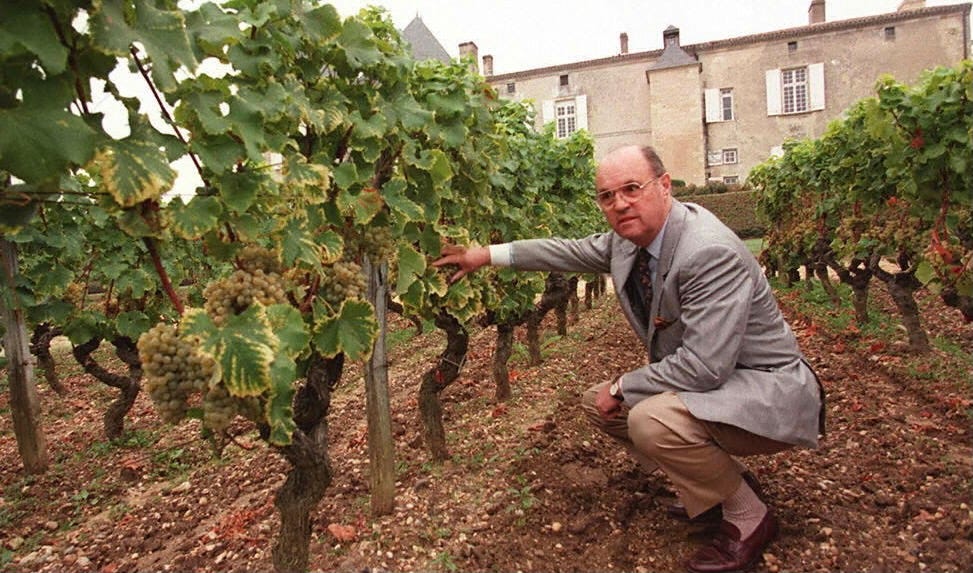
Since The Economist brought up Château d’Yquem, let’s stay with Sauternes as an example. Outside of that one prestige brand, Sauternes in general has been in crisis for at least a decade. “Why is no one buying Sauternes?” asked Drinks Business, in 2015.
In the late 2010s, out of survival mode, some Sauternes producers started looking at cocktail culture, and pitching the sweet wine as a cocktail ingredient. There was even a riff on the mojito called the saujito. This was innovation in a time of crisis.
But the mere thought of using Sauternes in cocktails caused an outrage in staid Bordeaux. In 2020, Count Alexandre de Lur Saluces—the former owner of Château d’Yquem—wrote an angry open letter to the French publication Terre de Vins, railing against the trend of using Sauternes in cocktails, saying it was “arrogant” to think that Sauternes wines could be enhanced through mixology.
“You seem convinced that as it stands, [Sauternes] has no future. That this wine belongs to the past,” wrote the Count. “So you want to improve it with various subterfuges: ice cubes in the glasses, orange or lemon zests, sparkling water, etc. No doubt you were thinking of shock as a ‘marketing’ means to shake the consumer. I wish you luck. He is not that silly and will not be manipulated.”
The Count ended on an aristocratic flourish: “Sauternes wine does not deserve an improvement but a protection, that which one grants to the witnesses of civilization.”
When this kerfuffle happened, cocktail historian Derek Brown wrote a counter-argument, entitled “Cocktails Will Save Sauternes.” In it, Brown wrote: “Though it may offend Count Lur Saluces’ sensibilities, history is on the side of the mixologist. Using still, sparkling, and dessert wines—even Sauternes—is an old and enduring tradition, one that I think Sauternes producers would do well to embrace to boost sales and preserve their own traditions.”
Is a cocktail more of an experience than a wine? I don’t know. Maybe that is like asking if a hot dog is a sandwich. But is the participatory or experiential aspect of cocktails—where one can play along at home with a shaker—why wine has lost ground to cocktails over the last decade? I don’t know. But I’d love to hear your thoughts.
I read the article too and I thought it was thought-provoking: splitting demand into services and goods clarifies what people are looking for (though they haven’t accounted for the big correction post-covid of course).
It’s not that people don’t want wine—quite the opposite. Rather, consumers value access, rare tastings, community… That’s why I disagree with the conclusion that wine is less desirable.
I was in Oakland this year and tacked on a day trip to visit Napa for the first time, hoping that I’d find some hidden gems or change my feelings about the region and the wines but left unimpressed. They may have succeeded in turning the region into a playground for the ultra rich, but it’s hard to put into words how sterile and anonymous it all felt. Even when we visited a winery known for their sustainability, the staffer we tasted with couldn’t answer basic questions about their agriculture or wines but talked on and on about how expensive the wines of their neighbors are.
I think the natural wine movement and regions like Burgundy, Piedmont, etc. appeal to people because the wine itself is often just one part of the experience in tandem with learning about the land and the people, while regions like Napa and Bordeaux have put less emphasis on any of this while emphasizing prestige and glamour instead. I’m certainly not the kind of consumer choosing between Richard Leroy and Petrus, but if the choice before me is an anonymous Cabernet blend or a wine with a story to tell about its home and the people that produced it, I’m always going to pick the latter.