
Cachaça Loves Rhubarb. But Then, Cachaça Loves Everything.
My muddled search for new spring and summer cocktails continues.
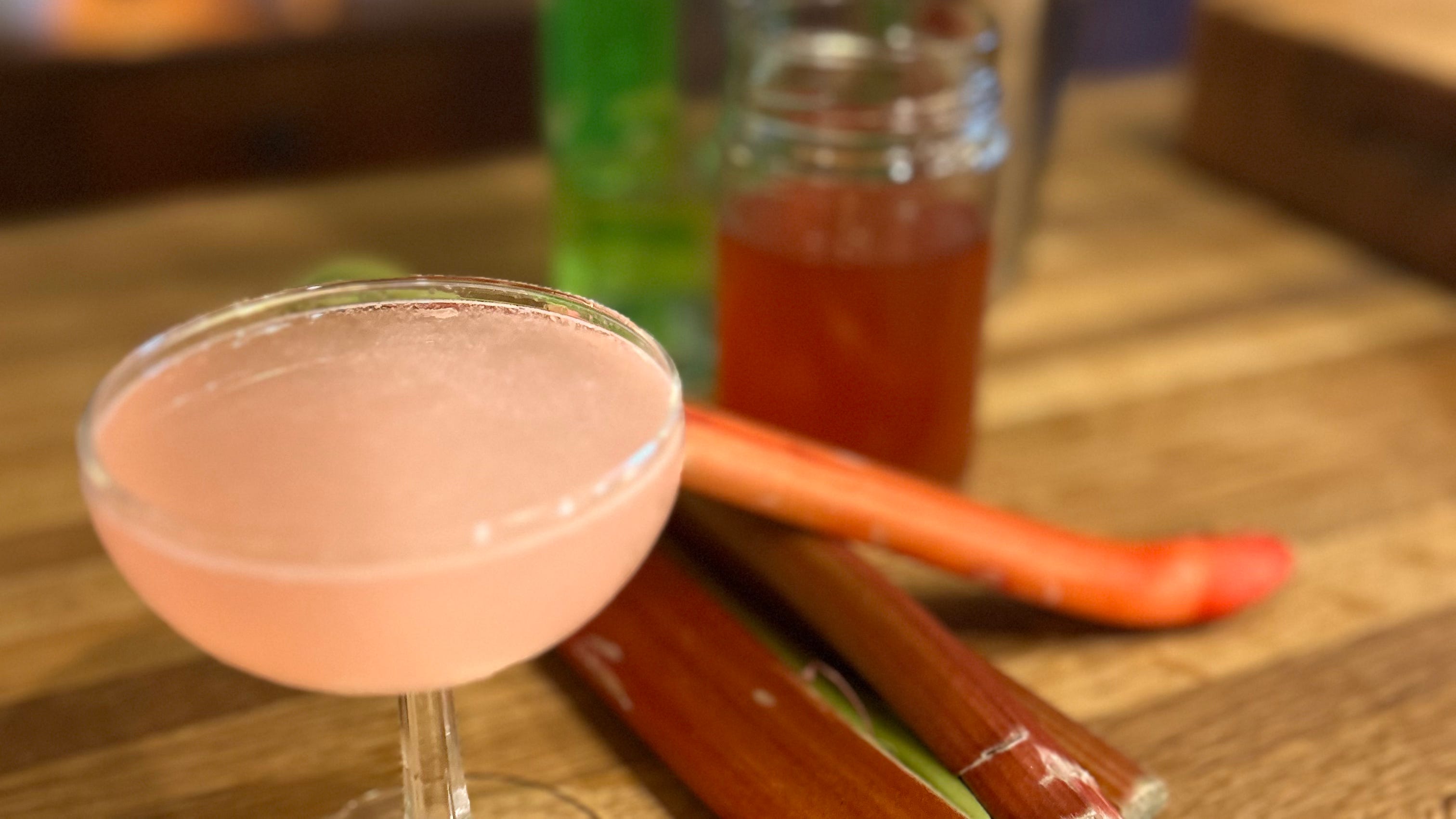
This whole exercise began because I got a bunch of rhubarb in my farm share box last week. I didn’t see myself baking a rhubarb pie, and so I was thinking about what to with it. As with strawberries (as I mentioned a couple of weeks ago), I’ve wondered why rhubarb isn’t used in cocktails more. So I decided to make some rhubarb syrup and see what I could do with it (all recipes below).

The first thing I learned is that rhubarb, while making a lovely crimson-pink-colored syrup, isn’t exactly the boldest flavor in the world. “Subtle” would be the diplomatic term for the flavor. My colleague, Sarah Parker Jang, shared her rhubarb syrup recipe, which involved a vanilla bean pod and pink peppercorns, but I wanted to get at the raw essence of rhubarb—whatever that might be—and see what happened.
Once I had my rhubarb syrup I started by adding it to a gin and tonic, and then to a margarita. The results were…fine. These were certainly pretty drinks. But I realized very quickly that the subtle essence of rhubarb was being overshadowed by the big flavors and aromas of the gin and the tequila. Did I basically just have a pink simple syrup on my hands?
I was sort of at a loss, until I spotted an old friend on the shelf, a bottle of Leblon cachaça. That’s when I knew what had to be done. I would be making a daiquiri with two ounces of cachaça, one fresh-squeezed lime, and a half ounce of my rhubarb syrup, shaken, strained and served up. Delightful. Yes, the Strait of Hormuz is still blocked, and AI is still going to ruin our lives. But for one moment, cachaça—rum’s funky Brazilian cousin—saved the day.

While I have never visited Brazil, cachaça and I go back a long ways. When I first started writing about cocktails in the late 2000s, cachaça seemed to be poised for a moment. The mojito was a mega-popular cocktail at that time, but the cachaça-fueled caipirinha always felt superior to me. A number of cachaça brands loudly entered the market. I don’t know what happened, exactly, but the cachaça revolution in the U.S. never really happened. You see it around, but it’s sort of drifted to the back of the bar.
While rum is often made with molasses, cachaça is made exclusively from fresh, unrefined sugarcane juice, which gives it a more vegetal, more earthy flavor. It shares more in common with another pure favorite of mine, rhum agricole from Martinique and Guadalupe.

While there are plenty of aged molasses-based rums I love to sip, I find that cachaça and young rhum agricole bring something special to cocktails.
What I’ve come to love about cachaça is how amazingly well it plays with all sorts of fruits, spices, and herbs. It’s the perfect spirit to mix with muddled fresh fruit. That’s why it’s always been used in a batida or caipirinha.
Perhaps a brief word on the caipirinha: It’s more of a technique than any particular recipe. I start with cutting a lime into eighths and muddling it in an old-fashioned glass with a tablespoon of sugar (turbinado is the classic). Toss in two ounces (or so) of cachaça and fill the glass with crushed ice. Cover the glass with a shaker, give a quick shake and pour all of the ingredients, including the ice, back into the drink. (One little tip on limes: Once you slice the lime into eighths, take the knife and carefully cut off the little white strip of pith left on top, as well at the tiny ends of the peel, to reduce bitterness).
Yes, cachaça is a spirit meant for muddling. And in this world of optimized cocktail bars and Diageo World Class branded mixology, the muddler has become a tool of disdain among many bartenders. Much like the espresso martini, if you really want to darken a bartender’s mood, order a bunch of muddled mojitos or caipirinhas on a busy Friday night.
But here’s the thing. There’s a reason muddling fresh fruit can be better that purees and juices. With the expression of the pith and the skin of limes or other citrus, you get a much rounder flavor. But it’s not just the flavor. You also get all the essential oils and aromatics. It’s hard to reproduce that without muddling. I have a delicious recipe for a blackberry-and-red-wine caipirinha below that exemplifies why muddling works.
Which perhaps has taken us far away from rhubarb syrup. But this winding road is what always happens when experimenting and searching for new cocktails to try. To close the loop, my suggestion is to replace the tablespoon of sugar in your caipirinha with the rhubarb syrup. Muddle away!
Cachaça Cocktails (And a Rhubarb Recipe)


Blackberry and Red Wine Caipirinha
Because cachaça is so bold and full-flavored, it’s a natural for pitcher drinks with lots of fruit ingredients. This was created by my friend Duggan McDonnell, a (legendary? infamous?) San Francisco bartender, pisco entrepreneur, and former owner of Cantina, which was a staple of the late 2000s cocktail renaissance.
12 blackberries
3 limes, cut into eighths
1 orange, cut into eighths
1 tablespoon sugar
6 ounces cachaça
2 ounces red wine
Crushed ice
Muddle the blackberries, limes, orange and sugar in a large pitcher. Take your time. Add the cachaça and red wine; stir vigorously for at least 1 minute. Refrigerate for about 1 hour before serving. When ready to serve, stir again, then pour into wineglasses or old-fashioned glasses filled with crushed ice. Garnish with more blackberries.
Thieves’ Punch
This sangria-like punch that is one of my go-to, easy-to-make pitcher drinks for a party. The Thieves’ Punch swaps out red wine for port and brandy for rum and it’s a flat-out crowd pleaser (particularly if your crowd is a little boozier, as mine is).
Thieves’ Punch was also created by Duggan McDonnell. His original recipe calls for white rum, but I like to use cachaça because it’s funkier and sharper and stands up to the other strong flavors. If you use rum, I suggest a rhum agricole, made from fresh-pressed sugarcane juice. The simple syrup is slightly variable according to your taste and what sort of cachaça/rum you’re using—taste as you stir and add accordingly. This recipe calls for an eyebrow-raising amount of bitters, but don’t skimp on them: They keep things balanced.
16 ounces cachaça (or white rum)
5 ounces port (ruby or tawny)
10 ounces freshly squeezed lime juice (from about 5 limes)
3-4 ounces simple syrup
20 dashes Angostura bitters
1 cup ice, plus more for serving
Lime wedges
Combine the rum, port, lime juice, simple syrup, and bitters in a large pitcher. Add the cup of ice, then stir vigorously. Strain into ice-filled old-fashioned or small wine glasses. Garnish with lime wedge. Serves 8.
Watermelon Mint Smash
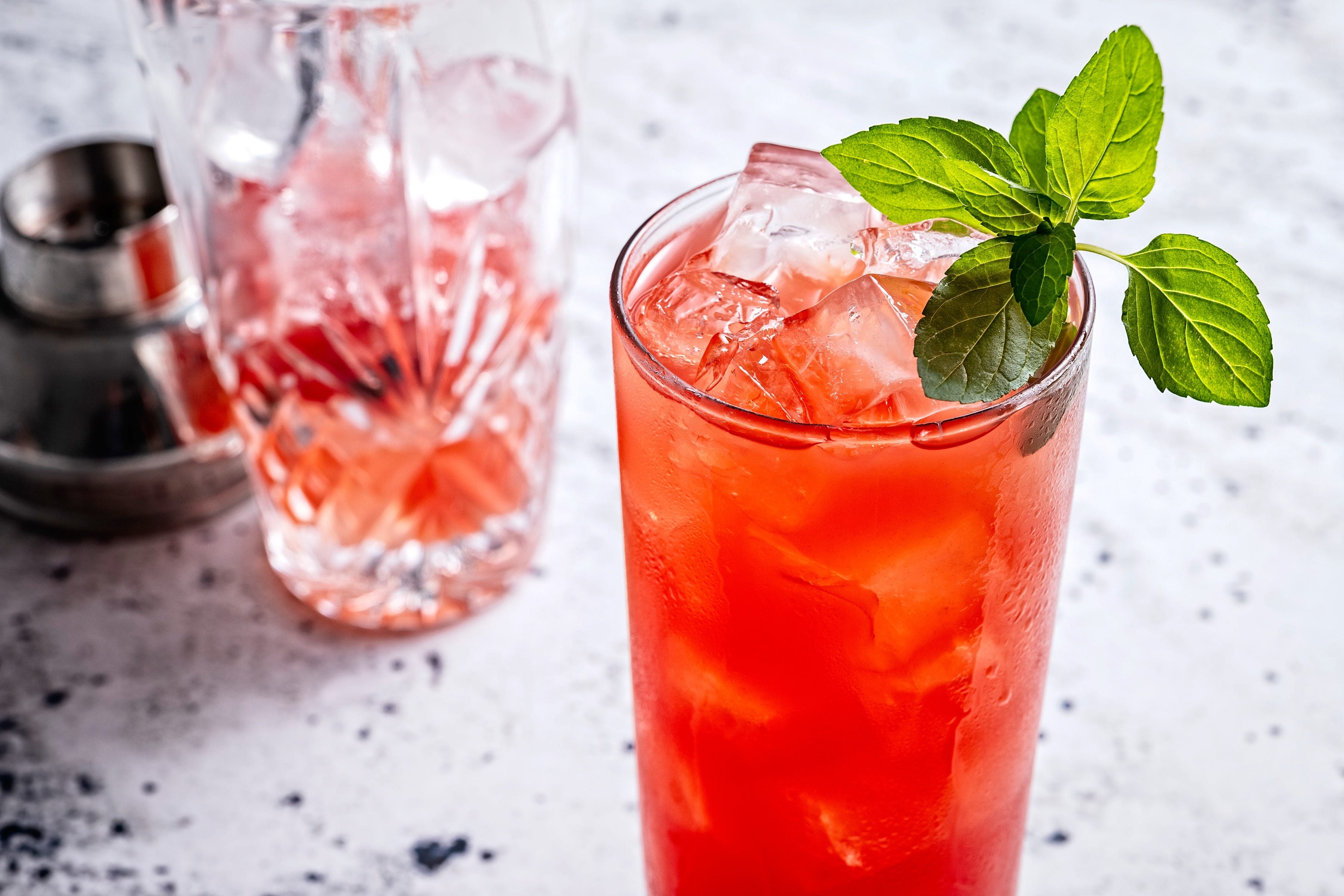
Cacaçha simply loves to mix with fresh fruit and herbs, and summer watermelon is no exception. Unlike a caipirinha or mojito, this drink is strained, so the pulverized pulp, seed, and leaves stay in the shaker.
6 to 8 mint leaves, plus 1 sprig for garnish
1 cup watermelon chunks (seedless works best)
½ ounce simple syrup (or perhaps the rhubarb syrup below)
2 ½ ounces cachaça
Muddle the mint leaves, watermelon, and syrup in a cocktail shaker. Add the cachaça, then fill with the ice and shake well. Strain into an ice-cube-filled highball glass. Garnish with the mint sprig.
Rhubarb Syrup
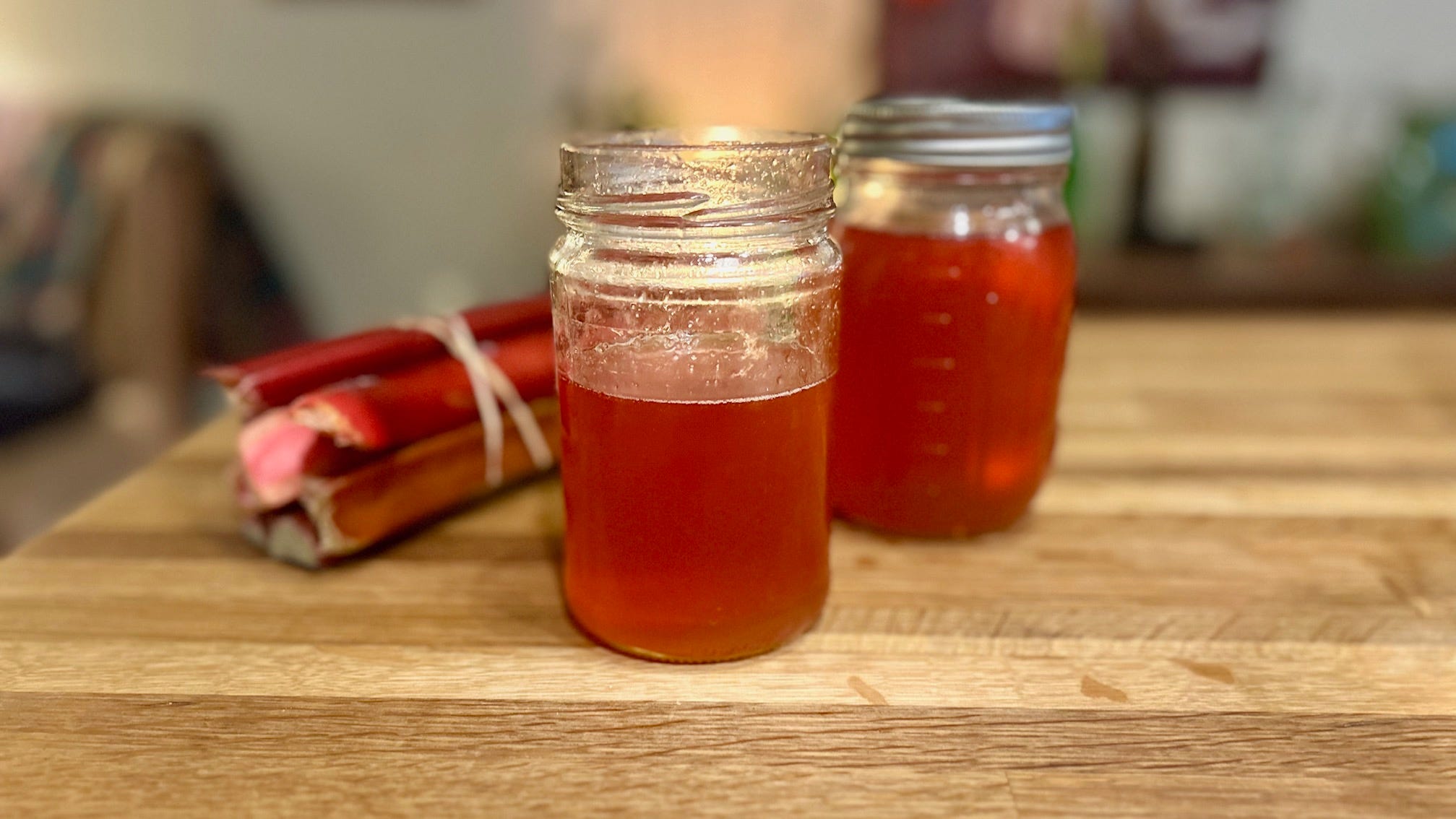
Of course, you can’t just muddle a rhubarb stalk into a shaker. To work with this ingredient, you have make a rhubarb syrup that can be added to various cocktail recipes. You make rhubarb syrup much like simple syrup, a 1:1 ratio of water and sugar, plus the rhubarb.
2 cups chopped rhubarb stalks (leaves removed)
2 cups water
1 ½ cups granulated sugar
Combine the chopped rhubarb and water in a medium saucepan and bring to a boil over medium-high heat, then reduce the heat to a simmer. Simmer for about 10 minutes, or until the rhubarb is very soft and has broken down, and the liquid has turned a vibrant pink or crimson color. Remove from heat and let the mixture cool slightly.
Strain the mixture through a fine-mesh sieve into a bowl or pitcher to separate the liquid from the pulp. Gently press on the solids with a spoon to extract as much liquid as possible. Avoid pushing pulp through the strainer, since you want a clear syrup.
Return the strained liquid to the saucepan, add the sugar, and heat until the sugar is fully dissolved, about 5 minutes. Simmer on medium-low heat for another 15 minutes until the mixture reduces into a syrup.
Cool the finished syrup completely before transferring it to an airtight jar or bottle for storage. Rhubarb syrup can be stored in the refrigerator for up to 2-3 weeks.
Rhubarb Gin & Tonic
2 ounces gin
½ ounce rhubarb syrup
¼ ounce lime juice
3 ounces tonic water
Lime slice
In a highball glass filled with ice, add gin, rhubarb syrup, and lime juice. Give a quick stir, then add the tonic water and stir some more. Garnish with a lime slice.
Rhubarb French 75
1 ½ ounces gin
¾ ounce fresh lemon juice
½ rhubarb syrup
2-3 ounces sparkling wine (prosecco, cava, etc.)
Lemon peel twist
In a shaker filled with ice, add gin, lemon juice, and rhubarb syrup, and shake well. Strain into a champagne coupe or flute, then top with sparkling wine. Garnish lemon peel twist.
Cachaça can be beautifully infused with other ingredients. I tried one with fig leaves and it was fantastic. In Brazil, it's very common with honey (melzinho). It's so versatile!
Ok, so now I have investigated this a bit. First I made the syrup using rhubarb from the garden. I’m short on cachaça and rum agricole in the summerhouse bar, so I used pink gin instead and lemon juice and egg white. Absolutely beautiful!! Now last week I made another syrup based on the same recipe but used lilac flowers instead of rhubarb (also from the garden). The syrup itself i fantastic. Then today I decided to go for broke and mixed it with Sakura gin (yes, highly floral), lemon and egg white. The result was… a floral nuclear bomb. I really liked it, but my wife dropped the dreaded “soap” word… Well, I might tryt it again using ordinary London dry, we’ll see. I may also try the lilac syrup with rum and maybe… cachaça? We’ll see. Oh, and thanks for the excellent recipe!